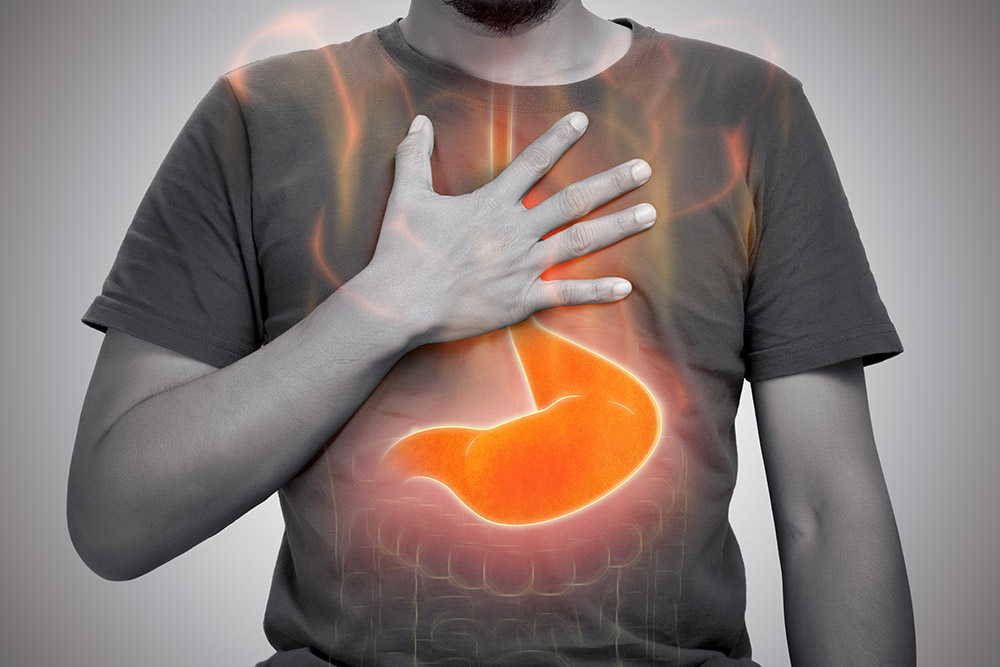








You are not the only ones to be in Jersey Village, TX and wake up with a burning feeling in the chest, or the throat. Heartburn at night is among the most prevalent complaints of the digestive system in the Houston metropolitan region - and it can be a big trouble in terms of sleep and life quality.
However, why do you think heartburn is worse at night? And what can you do about it?
This is a comprehensive guide to a breakdown of the causes, symptoms, local lifestyle triggers, treatment options and when to visit the medical care in Jersey Village.
Heartburn is a burning sensation in the chest which occurs when the stomach acid moves in the opposite direction into the esophagus. This retrograde motion is called an acid reflux.
Heartburn is occasional. Nevertheless, persistent night symptoms could be the sign of Gastroesophageal Reflux Disease (GERD) - more severe and chronic version of acid reflux.
There are several science-backed reasons heartburn intensifies after dark.
During the day, gravity helps keep stomach acid where it belongs — in your stomach. When you lie flat at night, acid can more easily travel upward into the esophagus.
This is especially problematic if:
Your digestive system naturally slows down in the evening. If you eat a heavy Texas-style dinner — think brisket, fried foods, queso, or spicy Tex-Mex — your stomach may still be processing food when you go to sleep.
A full stomach increases pressure and makes reflux more likely.
While awake, you swallow frequently. Swallowing helps push acid back down and saliva helps neutralize it. During sleep, both decrease significantly — allowing acid to linger longer in the esophagus.
Nighttime reflux is more common in people who:
Extra abdominal pressure forces stomach contents upward.
Living in Jersey Village — part of the greater Houston area — comes with certain lifestyle patterns that can trigger nighttime heartburn:
These regional habits can increase reflux risk.
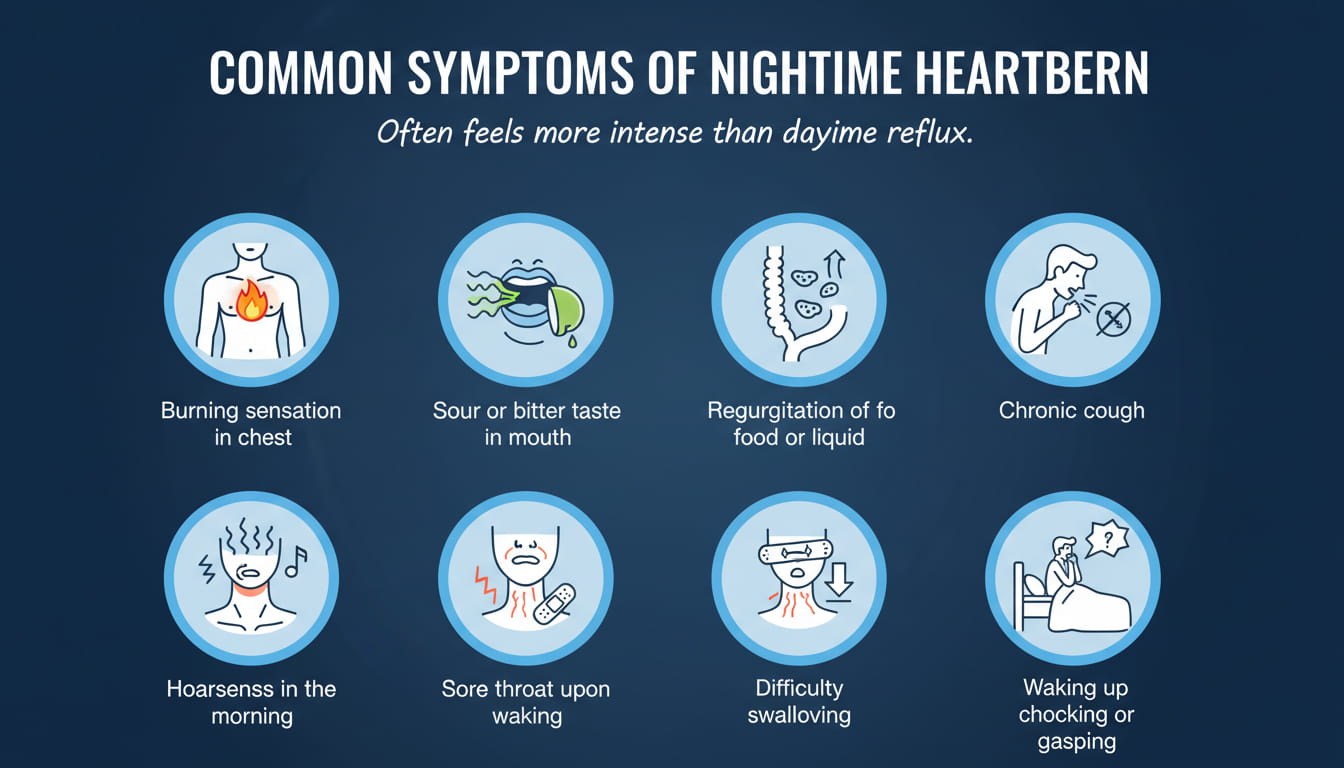
Nighttime heartburn often feels more intense than daytime reflux. Symptoms may include:
If these symptoms occur more than twice per week, you may have Gastroesophageal Reflux Disease.
Several factors increase your likelihood of experiencing nighttime reflux.
Common triggers in the Jersey Village area include:
Occasional reflux is normal. But chronic nighttime heartburn can lead to complications such as:
If you experience:
Seek immediate medical attention to rule out heart conditions or advanced reflux disease.
The good news? Nighttime heartburn is often preventable with lifestyle adjustments.
If you typically go to bed at 10:30 PM, finish dinner by 7:30 PM.
Use:
Stacking regular pillows doesn’t work well — it bends your body instead of elevating your upper torso.
Choose lighter dinners such as:
Avoid:

Even losing 5–10% of body weight can significantly reduce reflux symptoms. In Harris County, where obesity rates are above national averages, weight management is one of the most effective reflux prevention strategies.
Alcohol relaxes the lower esophageal sphincter — the valve that keeps acid in your stomach. Try stopping alcohol consumption at least 3–4 hours before sleep.
Research shows sleeping on the left side reduces acid exposure compared to the right side.
If lifestyle changes aren’t enough, medications may help.
Local primary care providers and gastroenterologists in the Jersey Village and Houston area may prescribe:
Nearby hospitals include:
These facilities offer diagnostic testing and specialist referrals if needed.
Yes. Chronic stress can:
Jersey Village residents commuting to downtown Houston often experience high work-related stress, which may contribute to nighttime symptoms.
Stress reduction strategies:
Pregnant women frequently experience nighttime reflux due to:
Always consult a healthcare provider before taking medication during pregnancy.

Schedule an appointment if:
Early intervention prevents complications.
Jersey Village’s proximity to Houston means:
All of these increase the risk of nighttime reflux.
Addressing heartburn early improves sleep quality, productivity, and long-term digestive health.
When you are asking yourself, why do I get heartburn at night the answer is usually a mix of gravity, the timing of food consumption, food preferences, stressful situations and lifestyle habits.
As a simple intervention, eating earlier, managing weight, and raising the head of the bed may incredibly decrease symptoms to many Jersey residents of the Village.
Nevertheless, chronic nighttime heartburn must never be disregarded. Long-term effects of acids may cause severe complications like the Barrett's Esophagus and Gastroesophageal Reflux Disease.
Persistent symptoms would require one to consult a local healthcare provider to have the appropriate evaluation and treatment.
Dr. Bharat Pothuri is a Board-Certified Gastroenterologist and Hepatologist. With extensive experience in digestive health, he specializes in advanced endoscopic procedures, chronic GI disorder management, and preventive care. Dr. Pothuri is dedicated to providing expert, patient-focused insights to help improve gut health and overall well-being.
Heartburn happens when stomach acid refluxes into the esophagus; lying down and slow nighttime digestion make symptoms worse.
Lying flat removes gravity’s help, allowing acid to travel upward more easily.
Yes — eating close to bedtime increases stomach pressure and reflux risk.
Burning chest sensation, sour taste, regurgitation, chronic cough, hoarseness, and waking choking or gasping. (
Spicy foods, fried foods, BBQ, chocolate, carbonated drinks, and coffee may worsen symptoms.
Eat earlier, elevate your head, choose lighter meals, maintain healthy weight, avoid alcohol before bed, and sleep on your left side.
Antacids, H2 blockers (Pepcid), and proton pump inhibitors (Prilosec, Nexium) may provide relief.
If symptoms occur 2+ times per week, OTC meds don’t help, sleep is disrupted, or you have swallowing difficulty.
Yes — stress can increase acid production, slow digestion, and heighten sensitivity. /p>
Yes — hormonal changes and increased abdominal pressure often lead to reflux during pregnancy; consult a healthcare provider for safe treatment.