
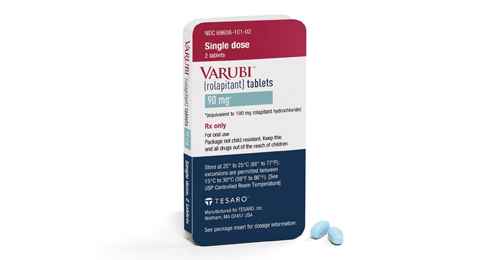








| Brand Name | Varubi |
| Generic Name | Rolapitant |
| Drug Class | NK1 Receptor Antagonist |
| Availability | Prescription |
| Manufacturer | Tesaro, Inc. |
| Indications | Chemotherapy-Induced Nausea and Vomiting (CINV) |
| Type | Tablet |
| Doses | 180 mg oral once before chemotherapy |
| Route | Oral |
| Side Effects | Neutropenia, hiccups, decreased appetite, dizziness |
| Interactions | May interact with CYP3A4 inhibitors, warfarin, clopidogrel |
| Overdose | Overdose information is limited; seek immediate medical attention if overdose is suspected. |
| Missed Dose | Take the missed dose as soon as possible. If it's almost time for the next dose, skip the missed dose and resume your regular schedule. Do not double doses. |
| Contraindications | Hypersensitivity; avoid with CYP3A4 substrates like pimozide. |
| Alternatives | Aprepitant, Fosaprepitant, Netupitant |
| Co-Pay Assistance Program | Available |
| Patient Assistance Program | Available |
Dr. Bharat Pothuri is a Board-Certified Gastroenterologist and Hepatologist. With extensive experience in digestive health, he specializes in advanced endoscopic procedures, chronic GI disorder management, and preventive care. Dr. Pothuri is dedicated to providing expert, patient-focused insights to help improve gut health and overall well-being.
Rolapitant is the medication that is used in the prevention of nausea and vomiting related to chemotherapy. It acts by antagonistic action of the neurokinin-1 (NK1) receptor in the brain.
Rolapitant inhibits the neurokinin-1 receptor whose action is important in vomiting reflex. Rolapitant inhibits the nausea and vomiting caused by chemotherapy by inhibiting this receptor.
The side effects are usually fatigue, dizziness, and constipation. The side effects are serious but not common and may consist of allergic reactions or liver damage.
Rolapitant comes in iv (infusion) and oral administration before chemotherapy. The dosage should be taken depending on your treatment plan.
Pregnancy when taking Rolapitant must be determined as beneficial as compared to the side effects. It is absorbed during pregnancy, so consult with your healthcare provider.
In case you forget to take a dose, then take the medicine immediately, but never before it gets to the time when the next dose is to be taken. Do not take two doses at once.
Rolapitant is a drug that is specifically used in the prevention of nausea and vomiting caused by chemotherapy, not in preventing motion sickness. Motion sickness could be treated with other drugs.
Rolapitant begins its action within few hours to prevent nausea and vomiting following chemotherapy the effects of which last up to 5 days after the drug is taken.
There are potential interactions between rolapitant and other drugs, especially the hepatic drugs. Never forget to notify your health care provider on all the medications.
Yes, the use of Rolapitant with other anti-nausea drugs 5-HT3 or corticosteroids is usually intended to complement its effects in the prevention of chemotherapy-induced nausea and vomiting.
Related Conditions |
Related Blogs |
|---|---|