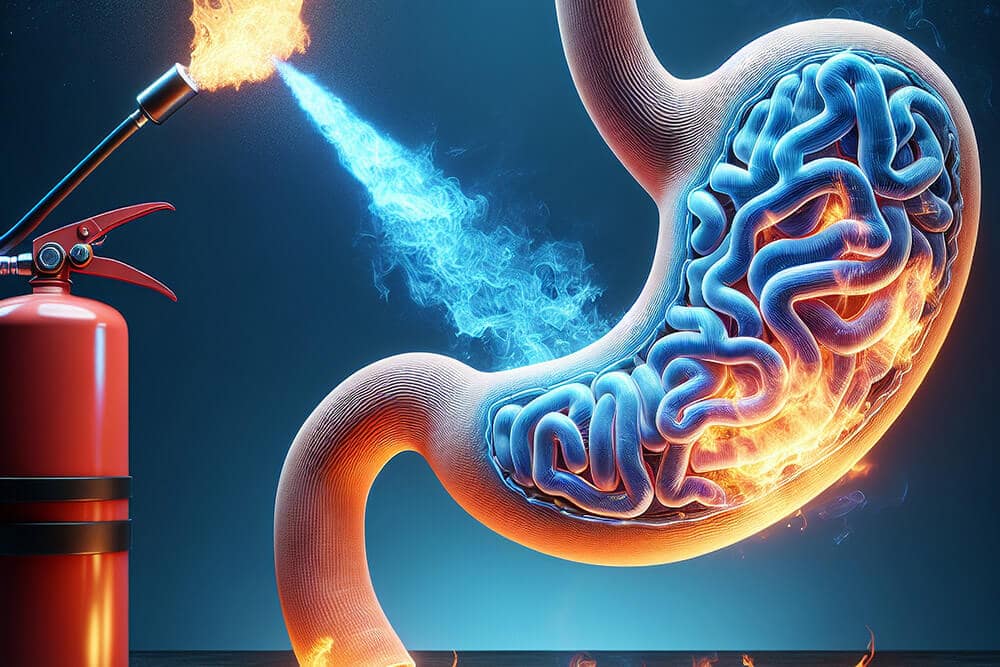
What Is an Esophageal Ulcer?
An esophagus ulcer is a hole in the lining of the esophagus the hollow in the stomach that transports food and liquid down a pipe made up of muscles running down your throat. It may result in pain, bleeding, scarring and constriction of esophagus unless treated.
Common Causes and Risk Factors
- GERD (chronic acid reflux) which kills esophagus lining.
- Regular or regular intake of NSAIDs (e.g., ibuprofen, naproxen).
- These infections include Candida (yeast) or herpes simplex virus.
- Smoking cigar and alcoholism.
- Zollinger-Ellison syndrome (gastrin-secreting tumors which are infrequent).
- Weakened immune mechanism or severe chronic diseases.
Signs and Symptoms
- The chest pains are either sharp or burning at the mid chest.
- Difficulty in swallowing food or drinks.
- Unremitting heartburn or sour taste.
- Bloody nausea and vomiting.
- Vaguely without any cause, weight loss or anorexia.
How Dr. Rishi Diagnoses Esophageal Ulcer?
Dr. Chadha uses a step-by-step approach:
Medical History and Medication Review
He examines your symptoms, diet, NSAID or alcohol and other risk factor intake.
Physical Examination
He examines the tenderness of your throat, chest and stomach or pain.
Upper Endoscopy (EGD)
- He Directly looks at the ulcers or inflammatory lesions of the esophagus.
- Obtains some biopsy to eliminate the infection or benign tumor.
Acid (pH) Monitoring
The measurements of the acid exposure and reflux events in the esophagus are measured with the assistance of 24 hour PH probe test.
Laboratory Tests
Laboratory tests of infections (e.g. Candida or herpes) and tests of the percentage of iron in the blood to diagnose anemia.
Frequently Asked Questions
What is the ICD 10 of esophagus ulcer?
The code is K22.1 of Ulcer of the esophagus.
Why do I prophesy, that it is an ulcer and not sore throat?
The ulcers also result in severe permanent pains and can also bleed during a swallow as opposed to sore throat.
Can acid reflux cause ulcers?
Yes. Chronic GERD may result in damage of the esophagus linings and ulcers.
Can I treat this at home?
A change in diet and the intake of NSAIDs might assist in restoring the functions, yet the medical inspection and treatment are required.
What is the test that is conducted to identify an esophaginal ulcer?
The most acceptable mode of diagnosis and elimination of other causes is an upper endoscopy (EGD) with a biopsy.
How long does healing take?
With the help of sufficient medical attention and change in lifestyle, most of the esophageal ulcers will be healed within the 4-8 weeks.
Is there esophageal cancerous ulcer?
Most ulcers are benign. An endoscopy and a biopsy is a good choice in eliminating malignancy.
Does smoking affect healing?
Yes. Smoking slows down the healing of ulcers and predisposes you to the reoccurrence of the ulcers.
Are children exposed to the risk of esophageal ulcers?
Reflux or infection is not severe and can also result in ulcers to the children.
Where can I learn more?
Visit the Mayo Clinic: mayoclinic.org