Celiac disease is not just a reaction to bread, pasta, or gluten.
It is a chronic digestive and immune disorder. When a person with celiac disease eats gluten, the immune system reacts and damages the small intestine. Gluten is found in wheat, barley, and rye.
The small intestine is where much of the body’s nutrient absorption happens. When that lining is damaged, the body may struggle to absorb iron, calcium, vitamin D, folate, B vitamins, and other nutrients.
That is why untreated celiac disease can cause problems far beyond bloating or diarrhea.
NIDDK explains that celiac disease can cause long-lasting digestive problems and keep the body from getting the nutrients it needs. It can also affect areas outside the small intestine.
Why Untreated Celiac Disease Is Serious
Celiac disease can be easy to underestimate.
Some patients have obvious symptoms. Others have mild, vague, or mostly non-digestive symptoms. A person may not have daily diarrhea or severe abdominal pain, but the immune reaction can still be active.
NIDDK states that people with celiac disease who have no symptoms can still develop complications over time if they do not get treatment.
This is why diagnosis matters.
Untreated celiac disease may lead to:
- Ongoing small-intestinal inflammation
- Poor nutrient absorption
- Iron deficiency anemia
- Vitamin deficiencies
- Bone loss
- Chronic fatigue
- Weight loss
- Fertility-related concerns
- Neurologic symptoms in some patients
- Persistent digestive discomfort
- Higher risk of rare complications
The goal of treatment is not only to reduce symptoms. It is to stop ongoing immune-triggered intestinal damage.
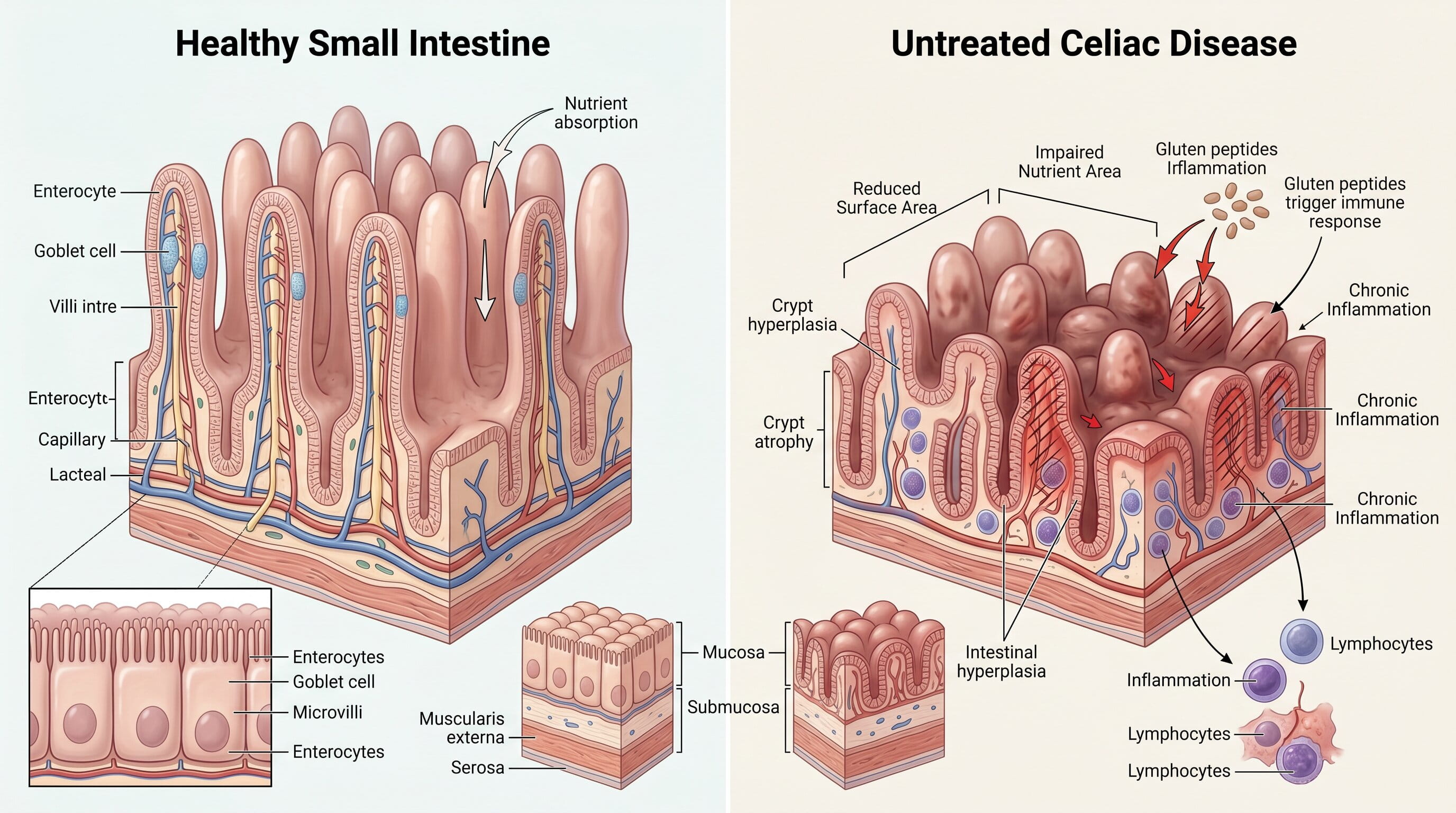
What Gluten Does in Untreated Celiac Disease
In people without celiac disease, gluten does not damage the small intestine.
In people with celiac disease, gluten triggers an immune response. This immune response damages the villi, which are tiny finger-like structures lining the small intestine.
Villi help absorb nutrients from food. When they become damaged or flattened, absorption becomes less effective.
This can lead to malabsorption.
Malabsorption means the body is not absorbing enough nutrients, even if the person is eating enough food.
Cleveland Clinic explains that damage to the small intestine can prevent the intestine from doing its job and may lead to malabsorption and malnutrition if celiac disease goes untreated.
Complication 1: Long-Term Digestive Symptoms
Untreated celiac disease can cause ongoing digestive symptoms.
These may include:
- Bloating
- Gas
- Diarrhea
- Constipation
- Abdominal pain
- Nausea
- Greasy stools
- Foul-smelling stools
- Poor appetite
- Unexplained weight changes
Some patients have symptoms every day. Others have symptoms that come and go. Symptoms may worsen after gluten exposure, but they can also become less predictable over time.
This is one reason celiac disease may be confused with IBS, food intolerance, lactose intolerance, or chronic indigestion.
Complication 2: Iron Deficiency Anemia
Iron deficiency anemia is one of the most important complications of untreated celiac disease.
Iron is absorbed mainly in the upper small intestine, which is often affected by celiac disease. If the intestinal lining is damaged, the body may not absorb enough iron.
This can lead to:
- Low ferritin
- Low iron
- Low hemoglobin
- Fatigue
- Weakness
- Pale skin
- Dizziness
- Shortness of breath
- Fast heartbeat
- Poor exercise tolerance
Mayo Clinic lists anemia, usually from iron deficiency due to decreased iron absorption, among the non-digestive signs of celiac disease.
In some adults, anemia may appear before major digestive symptoms. That means a patient may feel tired for months or years before celiac disease is suspected.
Complication 3: Vitamin and Mineral Deficiencies
Untreated celiac disease can interfere with absorption of several nutrients.
Common deficiencies may include:
- Iron
- Folate
- Vitamin B12
- Vitamin D
- Calcium
- Zinc
- Magnesium
These deficiencies may cause symptoms such as fatigue, weakness, numbness, poor concentration, muscle cramps, mouth ulcers, low mood, or bone problems.
This is why celiac disease should not be treated casually. If the small intestine is damaged, the issue is not just gluten-related discomfort. It is a nutrient absorption problem.
Complication 4: Bone Loss and Osteoporosis
Celiac disease can affect bone health.
When the body does not absorb enough calcium and vitamin D, bones may weaken over time. This can increase the risk of osteopenia, osteoporosis, and fractures.
Mayo Clinic notes that celiac disease complications can affect bone health, including osteoporosis or osteomalacia, and in rare patients can increase the risk of certain malignancies.
Bone loss is especially important because it may develop silently. A person may not know bones are weak until a fracture occurs or testing shows low bone density.
Complication 5: Weight Loss and Malnutrition
Untreated celiac disease can cause weight loss if the body cannot absorb nutrients properly.
Some patients lose weight because:
- Food triggers discomfort
- Appetite decreases
- Diarrhea becomes frequent
- Nutrients are not absorbed well
- Inflammation affects digestion
- The diet becomes limited without guidance
Malnutrition does not always mean someone looks extremely thin. A person can have nutrient deficiencies even at a normal weight.
This is why blood testing and medical follow-up are important after diagnosis.
Complication 6: Chronic Fatigue
Fatigue is one of the most frustrating effects of untreated celiac disease.
It can happen because of:
- Iron deficiency
- Vitamin deficiencies
- Poor calorie absorption
- Chronic inflammation
- Poor sleep from digestive symptoms
- Reduced food intake
- Ongoing immune activity
Fatigue may be mistaken for stress, overwork, poor sleep, or aging. But when fatigue occurs with bloating, diarrhea, constipation, anemia, or weight changes, celiac disease should be considered.
Complication 7: Fertility and Pregnancy-Related Concerns
Untreated celiac disease may be associated with fertility or pregnancy-related concerns in some patients.
This may be related to nutrient deficiencies, chronic inflammation, low body weight, or other health effects of untreated disease.
Patients should not assume celiac disease is the cause of infertility or pregnancy loss, because many factors can be involved. However, unexplained reproductive concerns combined with GI symptoms, anemia, or family history may justify testing.
For women who are pregnant or planning pregnancy, confirmed celiac disease should be managed carefully with a strict gluten-free diet and appropriate medical guidance.
Complication 8: Neurologic Symptoms
Celiac disease can sometimes involve symptoms outside the digestive tract.
Some patients may report:
- Headaches
- Brain fog
- Tingling or numbness
- Balance issues
- Poor concentration
- Nerve-related symptoms
These symptoms are not specific to celiac disease. Many conditions can cause them. But when they appear with digestive symptoms, anemia, or nutrient deficiencies, celiac disease may be part of the evaluation.
Complication 9: Dermatitis Herpetiformis
Dermatitis herpetiformis is a skin condition strongly linked with celiac disease.
It usually causes an intensely itchy, blistering rash. It may appear on the elbows, knees, scalp, back, or buttocks.
Mayo Clinic describes dermatitis herpetiformis as a blistering skin condition associated with gluten intolerance and linked with small-intestinal changes seen in celiac disease.
Some people with dermatitis herpetiformis may have fewer digestive symptoms, but the condition still reflects gluten-related immune activity.
Complication 10: Persistent Inflammation Even With Mild Symptoms
One of the biggest misconceptions is that mild symptoms mean mild disease.
That is not always true.
Some people with celiac disease have few symptoms but still have intestinal damage. Others may normalize their symptoms because they have lived with bloating, fatigue, constipation, or anemia for years.
The absence of severe pain does not always mean the condition is harmless.
This is why proper diagnosis and follow-up are important.
Complication 11: Increased Risk of Rare Serious Conditions
Most people with celiac disease improve with a strict gluten-free diet.
However, untreated or poorly controlled celiac disease may be associated with rare but serious complications, including refractory celiac disease and certain intestinal cancers.
These outcomes are uncommon, but they are part of the reason long-term untreated disease should not be ignored.
A medical review notes that the risk of lymphoma and other malignancies is increased in celiac disease, especially when diagnosis happens late in the clinical course.
This does not mean every patient with celiac disease will develop cancer. It means proper diagnosis, gluten-free treatment, and follow-up are important risk-reduction steps.
Can Untreated Celiac Disease Cause Symptoms Without Stomach Pain?
Yes.
Celiac disease can be present even without obvious stomach pain.
Some patients mainly have:
- Fatigue
- Low iron
- Low vitamin D
- Headaches
- Brain fog
- Mouth ulcers
- Bone loss
- Skin rash
- Infertility concerns
- Mild bloating
- Constipation
This is why celiac disease is sometimes missed or diagnosed late.
Can You Have Celiac Disease Without Diarrhea?
Yes.
Not every patient with celiac disease has diarrhea.
Some people have constipation. Some have bloating. Some have anemia. Some have mostly fatigue or vitamin deficiencies.
Digestive patterns vary from person to person. A lack of diarrhea does not rule out celiac disease.
What Happens If You Keep Eating Gluten With Celiac Disease?
If you have confirmed celiac disease and continue eating gluten, the immune reaction can continue.
This may lead to:
- Ongoing villous damage
- Persistent symptoms
- Poor nutrient absorption
- Continued anemia
- Vitamin deficiencies
- Bone health problems
- Delayed healing
- Long-term complications
For confirmed celiac disease, the gluten-free diet must be strict and lifelong. The American College of Gastroenterology guideline states that current treatment requires strict adherence to a gluten-free diet and lifelong medical follow-up.
Is Occasional Gluten Exposure Dangerous?
For confirmed celiac disease, even small or occasional gluten exposure can matter.
Some people feel symptoms immediately after gluten exposure. Others do not feel obvious symptoms but may still have immune activity.
That is why patients with celiac disease need to learn about:
- Hidden gluten
- Cross-contact
- Food labels
- Restaurant risks
- Shared kitchen equipment
- Sauces and processed foods
- Medication or supplement ingredients
A dietitian can be very helpful after diagnosis.
Can Untreated Celiac Disease Heal on Its Own?
No.
Celiac disease does not usually go away on its own while gluten remains in the diet.
Symptoms may fluctuate. A person may feel better for a while. But if celiac disease is active and gluten continues, intestinal damage can persist.
Treatment requires a gluten-free diet and medical follow-up.
Why Self-Diagnosis Can Be Risky
Many patients remove gluten and feel better. That improvement may be real, but it does not prove celiac disease.
Symptoms may improve because of:
- Less gluten
- Less wheat
- Fewer processed foods
- Lower FODMAP intake
- Less overeating
- Reduced lactose or additives
- Overall diet improvement
The problem is that if celiac testing is not done before going gluten-free, diagnosis becomes harder.
If you suspect celiac disease, testing should usually happen while you are still eating gluten.
Why Diagnosis Should Happen Before Going Gluten-Free
Celiac blood tests and biopsies are most accurate when gluten is still being consumed.
If gluten is removed before testing, antibody levels may fall and intestinal healing may begin. This can make results harder to interpret.
Testing may include:
- Tissue transglutaminase IgA
- Total IgA
- Additional antibody testing in selected cases
- Upper endoscopy with small-intestinal biopsy
- Nutrient testing
- Genetic testing in certain situations
If you already stopped gluten, tell your gastroenterologist before testing.
How Untreated Celiac Disease Is Diagnosed
If untreated celiac disease is suspected, a gastroenterologist may begin with a detailed history.
The evaluation may include:
- Symptoms and diet review
- Family history
- Celiac blood tests
- Iron studies
- Vitamin levels
- Liver enzyme testing
- Upper endoscopy if needed
- Small-intestinal biopsy
- Review for other GI conditions
The goal is to confirm whether celiac disease is present and identify complications such as anemia or nutrient deficiencies.
What Happens After Treatment Starts?
Once celiac disease is confirmed, treatment usually begins with a strict gluten-free diet.
Over time, this can help:
- Reduce inflammation
- Heal the small intestine
- Improve nutrient absorption
- Improve anemia
- Reduce bloating or diarrhea
- Improve energy
- Lower risk of complications
NIDDK states that a gluten-free diet can relieve symptoms and heal small-intestinal damage, but people with celiac disease need to follow the diet for life.
How Long Does Healing Take?
Healing time varies.
Some people feel better within weeks. Others need months. In adults, intestinal healing may take longer, especially if disease was present for years before diagnosis.
Recovery depends on:
- Strict gluten avoidance
- Severity of intestinal damage
- Nutritional status
- Accidental gluten exposure
- Other digestive conditions
- Age at diagnosis
- Follow-up care
Follow-up testing helps confirm that treatment is working.
When Symptoms Continue After Treatment
If symptoms continue after starting a gluten-free diet, possible causes include:
- Hidden gluten exposure
- Cross-contact
- Lactose intolerance
- IBS
- SIBO
- Microscopic colitis
- Inflammatory bowel disease
- Slow healing
- Refractory celiac disease in rare cases
Persistent symptoms should be reviewed by a gastroenterologist instead of assuming the diet has failed.
Who Is at Higher Risk of Complications?
Complication risk may be higher when:
- Diagnosis is delayed
- Gluten exposure continues
- The gluten-free diet is not strict
- Nutrient deficiencies are untreated
- Follow-up care is missed
- Symptoms are ignored
- The patient is diagnosed later in adulthood
- There are other autoimmune conditions
Early diagnosis and consistent treatment can lower risk.

When to See a Gastroenterologist
You should see a gastroenterologist if you have symptoms or lab findings that suggest celiac disease.
Important warning signs include:
- Chronic bloating
- Recurrent diarrhea
- Persistent constipation with abdominal discomfort
- Unexplained anemia
- Low ferritin
- Low vitamin D
- Unexplained weight loss
- Chronic fatigue
- Greasy or foul-smelling stools
- Family history of celiac disease
- Symptoms after eating gluten
- Itchy blistering rash
- Ongoing symptoms despite diet changes
For patients in Houston, Cypress, Katy, or Jersey Village, GastroDoxs can evaluate suspected celiac disease, chronic digestive symptoms, unexplained anemia, nutrient deficiencies, and the need for endoscopy or biopsy.
Practical Steps If You Think Celiac Disease Is Untreated
If you suspect celiac disease, take these steps:
- Do not stop gluten before testing unless advised.
- Write down symptoms and food triggers.
- Ask about celiac blood testing.
- Bring previous lab results, especially iron and vitamin levels.
- See a gastroenterologist if symptoms are persistent.
- Ask whether upper endoscopy is needed.
- If diagnosed, follow a strict gluten-free diet.
- Schedule follow-up testing to monitor healing.
This approach helps avoid delayed diagnosis and protects long-term health.
Final Answer: What Happens If Celiac Disease Goes Untreated?
Untreated celiac disease can continue damaging the small intestine and interfere with nutrient absorption.
Over time, this may lead to chronic digestive symptoms, iron deficiency anemia, vitamin deficiencies, bone loss, weight loss, fatigue, fertility concerns, neurologic symptoms, and rare serious complications.
Even mild or silent celiac disease can cause problems over time. If symptoms, anemia, nutrient deficiencies, or family history suggest celiac disease, proper testing should be done before starting a gluten-free diet.