








Hematemesis (vomiting blood) is a serious symptom that indicates bleeding in the upper gastrointestinal (GI) tract. One of the most common causes of hematemesis is peptic ulcers, which are open sores that develop on the stomach or duodenum lining. These ulcers can bleed when they erode into blood vessels, leading to significant blood loss. In some cases, the bleeding may be severe enough to cause vomiting blood, which can be alarming.
Peptic ulcers are caused by various factors, including infection with Helicobacter pylori bacteria or the use of nonsteroidal anti-inflammatory drugs (NSAIDs). They can also be linked to alcohol consumption, smoking, or other lifestyle factors. While peptic ulcers are common, they can lead to dangerous complications like hematemesis if not properly managed.
In this blog, we’ll explore the relationship between peptic ulcers and hematemesis, the symptoms of peptic ulcers, how they’re diagnosed, and what treatment options are available to manage and prevent further bleeding.
A peptic ulcer is an open sore that forms on the lining of the stomach, small intestine, or esophagus. It occurs when the protective mucous layer of the digestive tract is damaged, allowing stomach acid to irritate the underlying tissue.
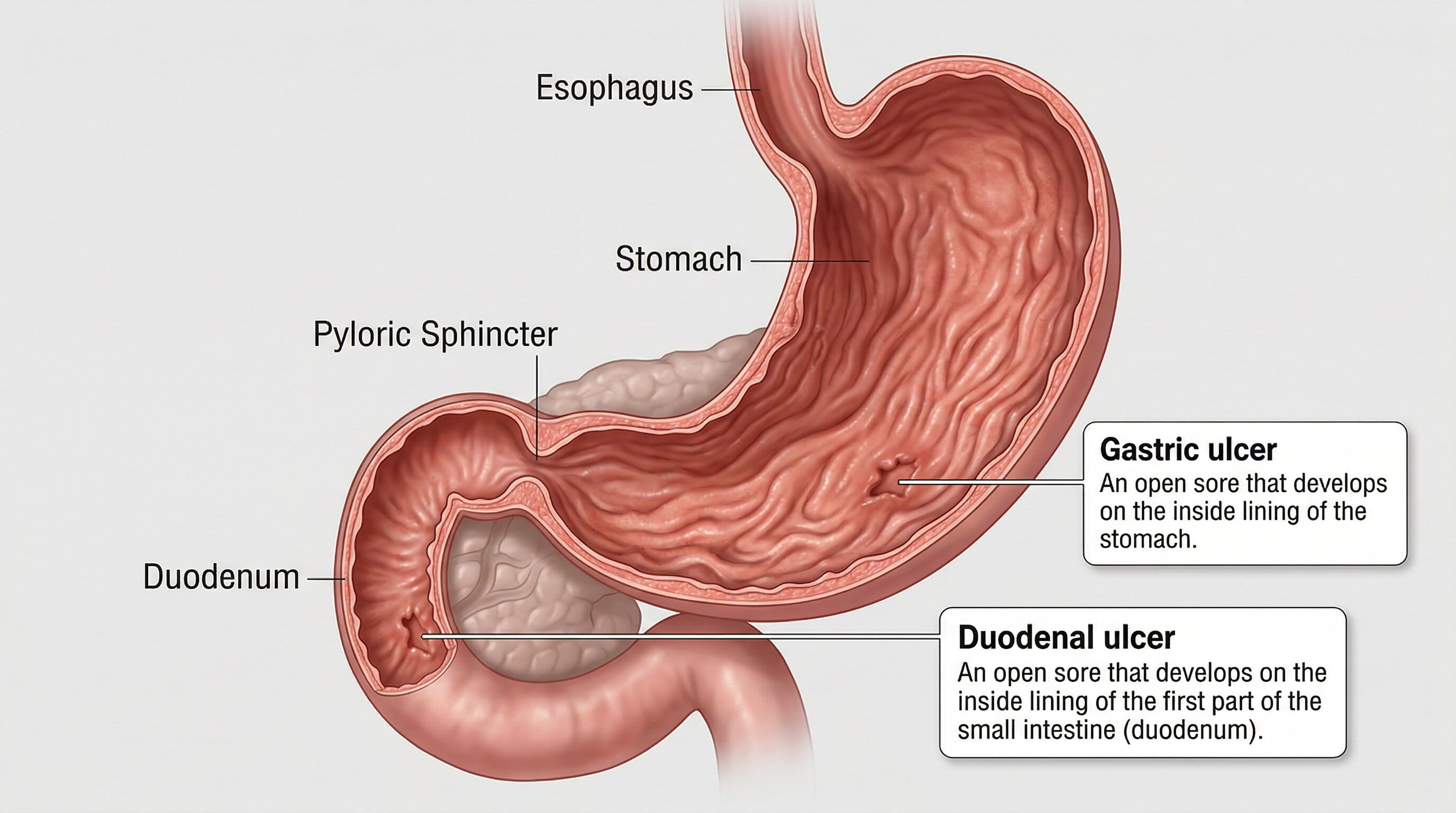
Peptic ulcers are often classified into two types:
These ulcers are common and can occur in people of all ages. In many cases, they are caused by an infection with the bacterium Helicobacter pylori, which weakens the stomach lining. Long-term use of NSAIDs, such as aspirin or ibuprofen, can also contribute to ulcer formation by irritating the stomach lining.
Peptic ulcers can lead to hematemesis in several ways:
The symptoms of peptic ulcers vary depending on the severity of the ulcer and its location, but common signs include:
To diagnose a peptic ulcer, doctors may use several tests and procedures:
Treatment for peptic ulcers aims to heal the ulcer, reduce stomach acid, and stop any bleeding. The specific treatment plan will depend on the cause and severity of the ulcer.

If a peptic ulcer causes bleeding, endoscopic treatment may be used. The doctor can stop the bleeding by using techniques such as:
In severe cases, surgery may be necessary, especially if the ulcer is large, recurrent, or causing significant bleeding. Surgical options may include:
While it may not be possible to prevent every case of peptic ulcer disease, certain lifestyle changes and precautions can significantly reduce the risk of developing ulcers and experiencing hematemesis:
Hematemesis can be a frightening symptom, especially when it’s caused by peptic ulcers. Ulcers can erode the stomach or duodenal lining, causing significant bleeding. Prompt diagnosis and treatment are key to preventing complications such as shock, anemia, and long-term health issues. By understanding how ulcers cause bleeding and the steps for treatment and prevention, you can take action to protect your digestive health and reduce the risk of vomiting blood.
Dr. Bharat Pothuri is a Board-Certified Gastroenterologist and Hepatologist. With extensive experience in digestive health, he specializes in advanced endoscopic procedures, chronic GI disorder management, and preventive care. Dr. Pothuri is dedicated to providing expert, patient-focused insights to help improve gut health and overall well-being.
Yes, peptic ulcers can cause bleeding when they erode into blood vessels, leading to hematemesis (vomiting blood).
The most common causes of peptic ulcers are infection with H. pylori bacteria and the long-term use of NSAIDs.
Peptic ulcers are treated with proton pump inhibitors (PPIs), antibiotics (for H. pylori), and antacids to reduce stomach acid. In severe cases, endoscopic treatment or surgery may be required.
You can reduce the risk of peptic ulcers by avoiding excessive alcohol use, smoking, and NSAID overuse. Stress management and a healthy diet can also help prevent ulcers.
If you vomit blood, seek immediate medical attention, as it may be a sign of a serious GI issue. Large amounts of blood or signs of shock require emergency care.