
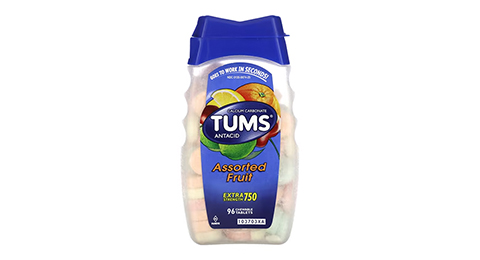








| Brand Name | Tums |
| Generic Name | Calcium carbonate |
| Drug Class | Antacids, Minerals and electrolytes |
| Availability | Prescription only |
| Manufacturer | GlaxoSmithKline |
| Indications | Tums is used to prevent or to treat a calcium deficiency. |
| Type | Tablet |
| Doses | 500mg |
| Route | Oral |
| Side Effects | Hives; difficulty breathing; swelling of your face, lips, tongue, or throat. |
| Interactions | Calcium can make it harder for your body to absorb certain medicines. If you take other medications, take them at least 2 hours before or 4 or 6 hours after you take Tums. |
| Overdose | Your Tums dose may need to be adjusted as you make changes to your diet. |
| Missed Dose | Do not take extra medicine to make up the missed dose. |
| Contraindications | kidney disease;kidney stones;cancer;a parathyroid gland disorder; or high levels of calcium in your blood. |
| Alternatives | Caltrate, Tums Extra Strength 750, Tums Chewy Bites, Tums Ultra 1000 |
| Co-Pay Assistance Program | Available |
| Patient Assistance Program | Available |
Dr. Bharat Pothuri is a Board-Certified Gastroenterologist and Hepatologist. With extensive experience in digestive health, he specializes in advanced endoscopic procedures, chronic GI disorder management, and preventive care. Dr. Pothuri is dedicated to providing expert, patient-focused insights to help improve gut health and overall well-being.
Calcium carbonate is employed to deal with calcium deficiencies, osteoporosis, acid indigestion, and heartburn, by supplying calcium in the body and also neutralizing stomach acid.
Calcium carbonate acts by antagonizing excessive stomach acid and supplying calcium to the body that is required to keep bones strong and muscles in proper functioning.
Some frequent side effects are constipation, bloating and gas. With large dosage, there can be kidney stones or hypercalcemia (high level of calcium).
Calcium carbonate is normally administered by mouth either in form of tablet or chewable, along with meal or without meal. Depending on the amount of the calcium requirement, your healthcare provider will prescribe the right dosage.
Calcium carbonate does not pose much threat during pregnancy. Never start taking any type of supplement during pregnancy though, and in this case, check with your healthcare provider first.
In case of any omission of a dose, take it immediately that you remember unless you are nearly due to take the next dose. Do not take two doses at once.
Overuse of Calcium Carbonate may result in kidney stones, particularly in individuals who have been having problems related to kidney problems. The recommended dosage should be observed, and one needs to be hydrated.
Yes Calcium Carbonate may cause interactions with various medications such as antibiotics and thyroid medication. Never forget to notify your health provider of all the medicines you are taking.
Calcium carbonate is usually well known to relieve heartburn as well as indigestion, usually within a few minutes of use.
Calcium carbonate is also used to prevent and treat osteoporosis by maintaining adequate levels of calcium although this treatment should go hand in hand with other interventions such as vitamin D and exercises to maintain optimal bone health.
Related Conditions |
Related Blogs |
|---|---|