








Heartburn may appear abruptly such as after a hot dinner, after midnight snack or even after a hectic working day. To most residents of Cypress, TX, the greatest issue is not only why it occurs, but also how long it is going to last.
Is it common that heartburn should take a few minutes? Hours? Days?
In this comprehensive local guide, we’ll break down:
In case you are a resident of Cypress or Northwest Houston, the length of heartburn is something you should know about so that you can take the correct actions to get relieved.
Heartburn refers to a burning feeling in the chest which is a result of stomach acid being released back to the esophagus. This retrograde movement is referred to as acid reflux.
Heartburns are occasional. Nonetheless, common or sustained symptoms could be signs of Gastroesophageal Reflux Disease (GERD) - a chronic gastrointestinal disorder which needs medical intervention.
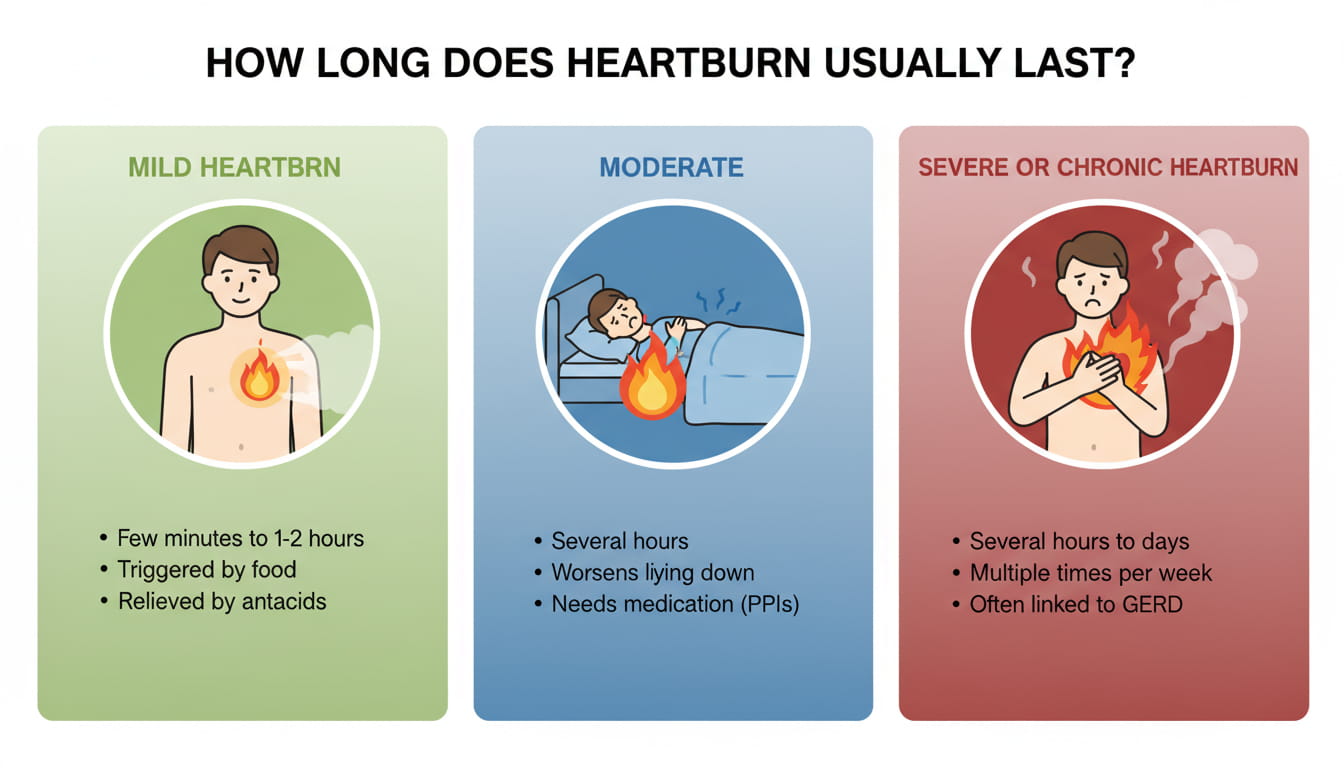
The duration of heartburn depends on the cause and severity.
For many Cypress residents, heartburn after heavy Texas-style meals (fried food, barbecue, Tex-Mex) can last 2–4 hours if untreated.
Several factors influence duration:
Fatty and spicy foods take longer to digest. Popular local favorites like brisket, queso, and fried seafood can prolong symptoms.
Late dinners are common for commuters working in Houston. Lying down shortly after eating allows acid to stay in contact with the esophagus longer.
Cypress, like many areas in Harris County, has above-average obesity rates. Extra abdominal pressure increases reflux duration.
A structural condition that makes reflux more frequent and prolonged.
Chronic stress can increase acid production and pain sensitivity.
Occasional heartburn that resolves within 1–2 hours isn’t typically serious. However, you should seek evaluation if:
Persistent symptoms may signal Gastroesophageal Reflux Disease.
Yes — but it usually means something more than occasional reflux. If heartburn lasts several days, possible causes include:
Long-term acid exposure may lead to complications like Barrett's Esophagus, which requires medical monitoring.
If left untreated:
In Cypress’s hot climate, dehydration combined with heavy meals may worsen and prolong symptoms.
Different treatments can provide varying relief times for heartburn:
For chronic sufferers in Cypress, PPIs often reduce symptom duration significantly when taken consistently.
Heartburn at night often lasts longer because:
Some people wake up multiple times due to burning pain. Elevating the head of the bed can shorten episodes.

Cypress residents may face unique reflux triggers:
These lifestyle patterns can extend heartburn duration if changes aren’t made.
If you’re currently experiencing heartburn, try:
To reduce frequency and duration:

If heartburn lasts longer than expected or becomes frequent, consult a provider. Nearby healthcare options include:
Primary care providers or gastroenterologists can perform:
Early evaluation prevents complications.
Heartburn pain:
Heart attack symptoms:
If unsure, call emergency services immediately.
Heartburn can affect different populations in various ways. Here's how:
Heartburn may last longer due to hormonal changes and pressure from the growing uterus.
More likely to have chronic reflux and longer-lasting symptoms.
Persistent heartburn in children should always be evaluated.
Ignoring prolonged heartburn can lead to:
Early treatment dramatically reduces these risks.
Hot Texas weather may indirectly contribute:
Hydration and portion control can reduce symptom length.
So, how long does heartburn last?
For most Cypress residents, mild heartburn lasts a few minutes to a couple of hours. However, if symptoms persist beyond that — or occur multiple times weekly — it may signal Gastroesophageal Reflux Disease.
Heartburn that lasts days, disrupts sleep, or interferes with daily life should never be ignored.
With proper diet changes, lifestyle adjustments, and medical care when needed, you can dramatically reduce both the duration and frequency of heartburn episodes.
If symptoms continue, consult a healthcare provider near you for personalized treatment options.
Dr. Bharat Pothuri is a Board-Certified Gastroenterologist and Hepatologist. With extensive experience in digestive health, he specializes in advanced endoscopic procedures, chronic GI disorder management, and preventive care. Dr. Pothuri is dedicated to providing expert, patient-focused insights to help improve gut health and overall well-being.
Heartburn is a burning sensation in the chest caused by stomach acid backing up into the esophagus, often triggered by food, lying down, or other factors.
Heartburn may last from a few minutes to several hours, depending on the cause and whether it’s treated.
Triggers like fatty or spicy foods, eating late, obesity, or GERD can make heartburn last longer or recur frequently.
Yes, occasional heartburn that resolves within a short time is usually normal, but frequent or prolonged symptoms need evaluation.
Heartburn occurring multiple times per week or lasting longer despite treatment may suggest gastroesophageal reflux disease (GERD).
Yes — changes like avoiding trigger foods, not eating before bed, and maintaining a healthy weight can reduce frequency and duration.
Antacids and acid reducers can provide relief and shorten episodes, especially for mild heartburn.
Seek medical care if symptoms are frequent, severe, or resistant to treatment, or if you have difficulty swallowing or chest pain.
Yes — persistent heartburn over several days can indicate an underlying problem like GERD and should be evaluated by a healthcare provider.
Dehydration may worsen symptoms; staying hydrated and avoiding excessive soda/acidic drinks can help manage episodes.