1.9K Reviews | 4.7 Star Rating | 20+ years of experience | 72k+ Patients Treated
Choledocholithiasis Gastroenterologist - Dr. Scott Liu
Get individual treatment of choledocholithiasis through Dr. Scott who is a specialist gastroenterologist in Houston. Possesses causes, symptoms and advanced diagnosis methods, e.g., ERCP and MRCP. Learn the eating habits, minimum invasive measures and supportive care in GastroDoxs in order to prevent complications, make the recovery easier.
Dr. Scott Liu, MD, is a board-certified gastroenterologist with over six years of experience and a background in military medicine. He earned his medical degree from the University of Maryland, Baltimore, completed his Internal Medicine residency at Naval Medical Center Portsmouth, and finished his Gastroenterology fellowship through the National Capital Consortium. Dr. Liu provides comprehensive care for a broad range of digestive conditions, including abdominal pain, acid reflux, liver disease, chronic diarrhea, and colon cancer screening. He is a member of the American College of Gastroenterology and is known for his disciplined, patient-focused approach and clear communication.
Common Causes and Risk Factors
History of gallstones
Age over 40
Female sex
Rapid weight loss or obesity
Family History Family history of problems with the gallbladder.
Liver disease (e.g., cirrhosis)
Blood related ailments such as hemolytic anemia.
Signs and Symptoms
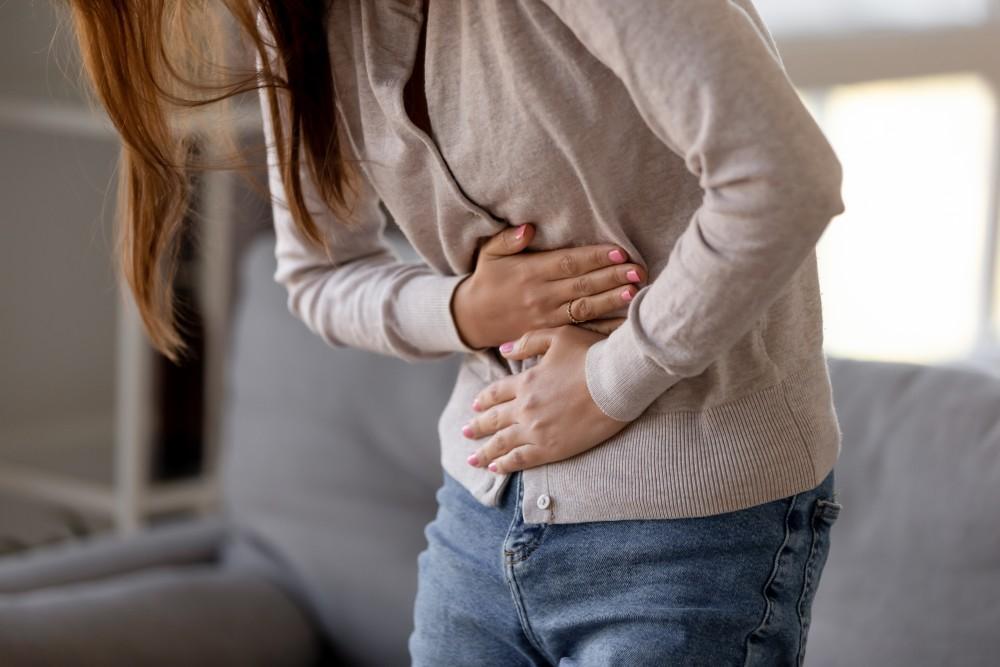
Abdominal pain, upper right or mid-abdomen.
Jaundice (colored skin and eyes)
Soothed dark urine and light-coloured stool.
Nausea and vomiting
Fever and chills (characterizes potential infection)
Unintended weight loss
How Dr. Scott Diagnoses Choledocholithiasis ?
Dr. Scott uses a step-by-step approach:
Medical History and Exam
He asks about what the character was and when did you have epigastric pain and whether you had any history of jaundice or fever, whether you have passed any gall stone in the past, whether you have taken alcohol, whether you have lost weight rapidly and other risk factors.
Blood Tests
In order to assess obstruction or inflammation, he requests liver-function serums (AST, ALT, ALP), total and direct bilirubin, pancreatic enzyme (amylase, lipase) and inflammatory-based serums.
Imaging Studies
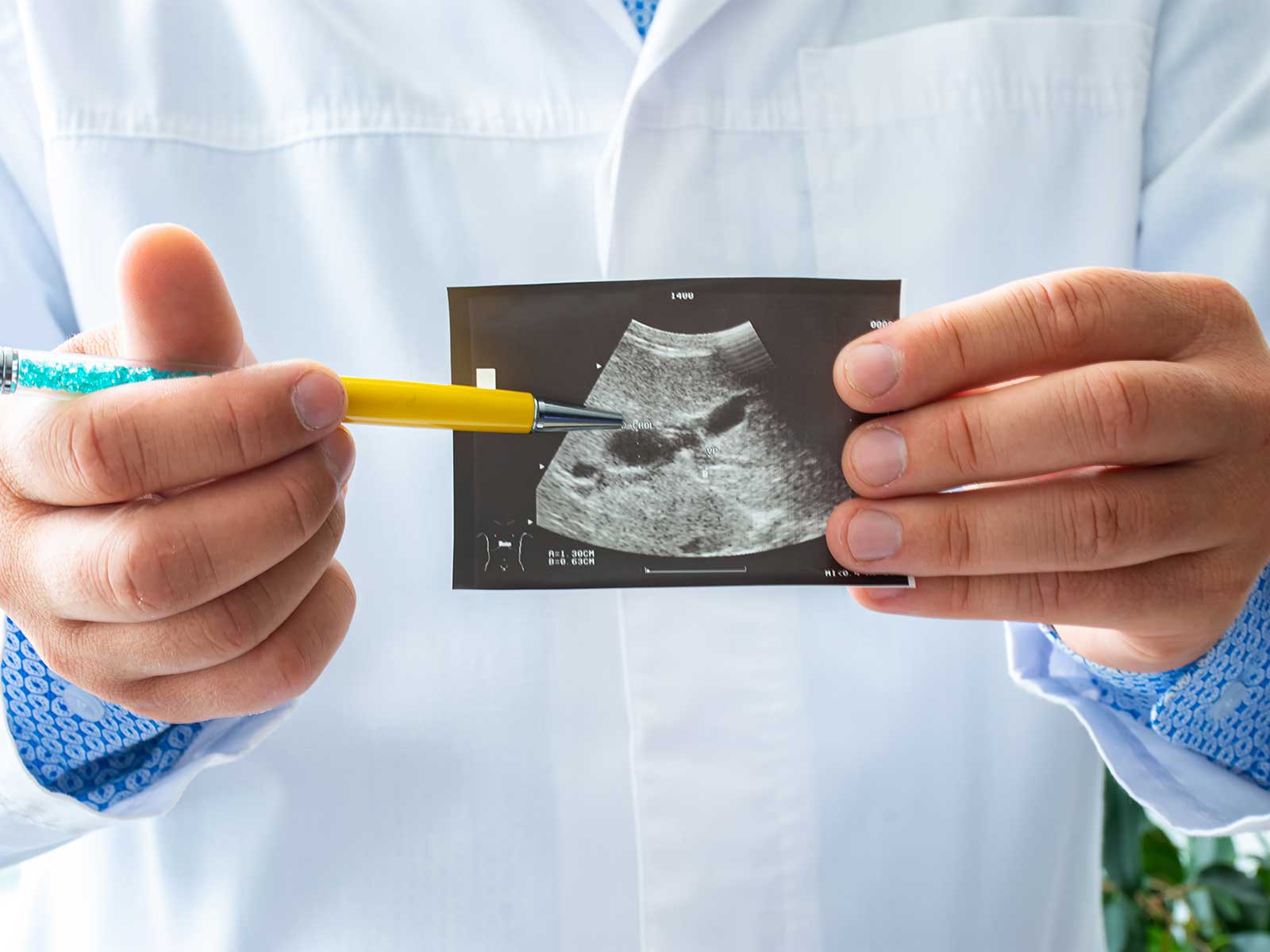
An abdominal ultrasound to examine the enlargement of the bile duct, stones, and the gallbladder changes.
To assess the biliary tree in more detail and noninvasively MRCP (Magnetic Resonance Cholangiopancreatography).
Endoscopic Evaluation (if needed)
In cases of non-conclusive imaging or when intervention must be performed, he performs endoscopic ultrasound or ERP with the aim of endoscopically visualizing the ducts, stones and stents insertion in a single session.
Treatment
Our Team offers a full range of care for choledocholithiasis (bile duct stones).
1. Lifestyle and Diet Modifications
Reduced and smaller meals with reduced fat.
Increased intake of fruits, vegetables and whole grains.
Adequate daily consumption of water to help in bile.
Shunning of rapid weight loss or crash diets.
2. Medications
Ursodiol to dissolve small bile duct stones that are cholesterol based.
To treat the symptoms, painkillers and anti-nausea drugs.
Close follow-ups as there are still a number of stones that may require procedures to be removed.
3. Minimally Invasive or Advanced Procedures
Endoscopic Retrograde cholangiopancreatography (ERCP) to remove stones or to insert stents.
Laparoscopic cholecystectomy to excisions of the gallbladder as well as to prevent the recurrence.
Complicated cases Advanced imaging-guided drainage or lithotripsy.
Dr. Scott Liu, MD, is a board-certified gastroenterologist with over six years of experience and a background in military medicine. He earned his medical degree from the University of Maryland, Baltimore, completed his Internal Medicine residency at Naval Medical Center Portsmouth, and finished his Gastroenterology fellowship through the National Capital Consortium. Dr. Liu provides comprehensive care for a broad range of digestive conditions, including abdominal pain, acid reflux, liver disease, chronic diarrhea, and colon cancer screening. He is a member of the American College of Gastroenterology and is known for his disciplined, patient-focused approach and clear communication.
Frequently Asked Questions
What is the choledocholithiasis code of ICD-10-CM?
The insurance billing and medical records code of choledocholithiasis was ICD-10 K80.5 K80.5.
Pancreatitis and bile duct stones– Are they correlated?
Yes. When it becomes obstructed in the bile duct with a stone, it might inflame the pancreas leading to pancreatitis that would need to be treated urgently.
Who is most at risk to this condition?
The people who are at risk are adults who are older than 40 years and females and those who have a history of gallstones before, have rapid weight loss, obesity, liver problems or certain blood-related issues.
But what then, in case of pain and jaundice?
Consult a hospital. The complications such as infection or pancreatitis may be avoided due to diagnosing and treatment in time.
Is ERCP a safe procedure?
ERCP is a rather safe procedure provided the practitioner like Dr. Scott is an experienced one and most patients recover quickly with minimal pain.
Will I need to get my gall bladder removed?
Gallbladder surgery (cholecystectomy) can be beneficial to most patients to prevent future stones but this is dependent on the case.
Is this treatment insured?
Most insurance plans can cover the diagnostic tests and treatment of choledocholithiasis with the use of the correct ICD-10 code (K80.5) by experts.
Related Blogs
The Worst Ways to Manage Constipation (and What to Do Instead)