Patients With Prior Polyps
Patients with prior polyps need interval planning based on pathology and procedure details.
- Prior polyp history
- Unknown surveillance interval

 Medically Reviewed by
Dr. Bharat Pothuri, MD, FACG
| Updated 07-10-2026
Colon polyps are often silent, but some can become colorectal cancer over time. GastroDoxs helps patients plan colonoscopy, polyp removal, pathology review, and follow-up surveillance.The GastroDoxs GutDefense Pathway™ explains what is proven, what is misunderstood, and when evaluation matters.
Colon polyp treatment should focus on safe removal, accurate pathology, and the right follow-up interval. GastroDoxs GutRescue Mission™ helps patients connect colonoscopy findings, polyp type, number, size, removal method, family history, and surveillance planning into one prevention-focused care pathway.
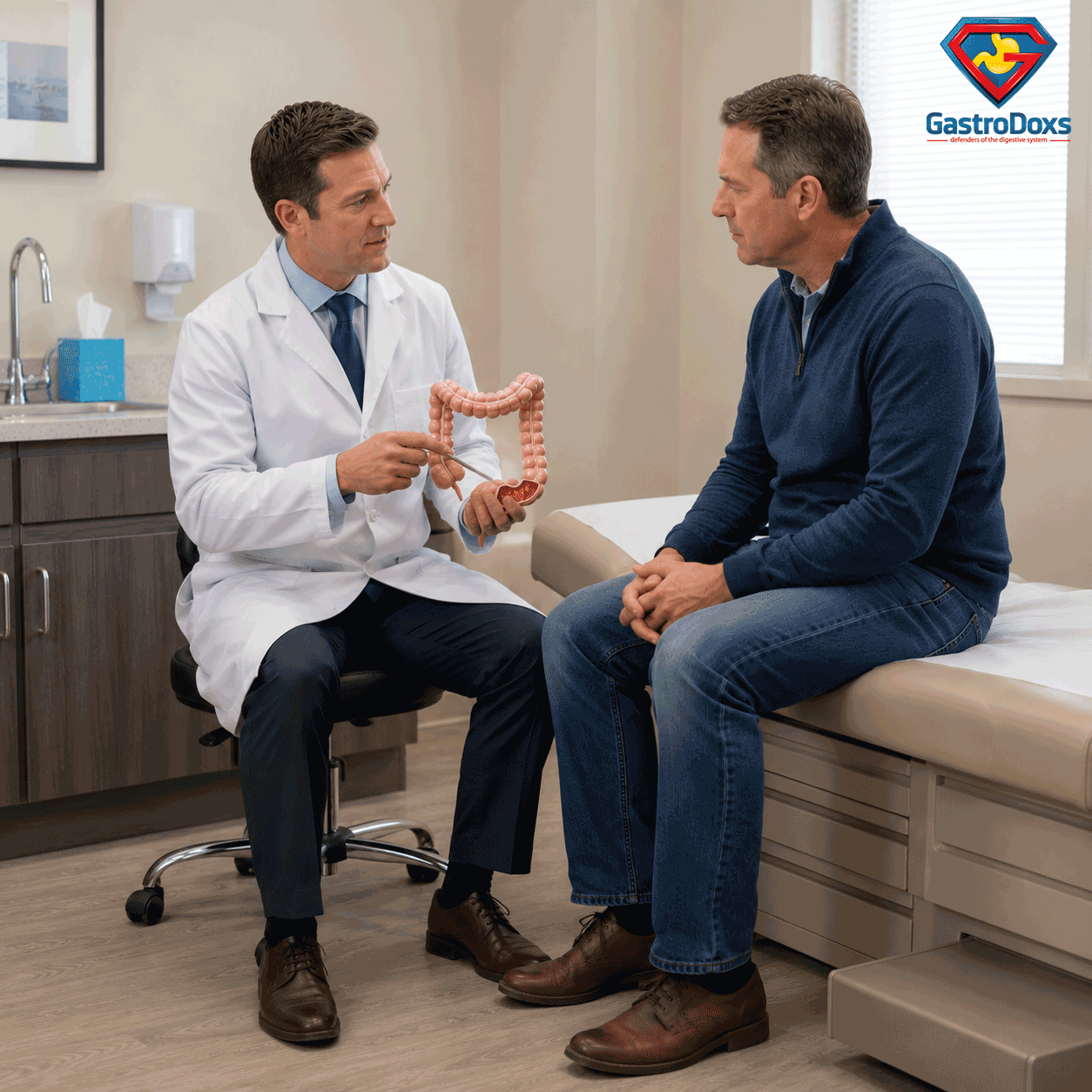
Specialist-focused digestive care with clear testing, treatment, follow-up, and referral planning.
GastroDoxs helps patients understand when colonoscopy can detect and remove polyps during the same procedure.
The most important next step after polyp removal is understanding the pathology report and recommended surveillance interval.
Large, flat, difficult, or high-risk polyps may need advanced removal planning or referral.
A strong plan looks beyond one procedure and considers family history, prior polyps, bowel prep quality, lifestyle, and recurrence risk.
This treatment page is designed for patients ready to take the next step after symptoms, diagnosis, prior testing, or incomplete relief.
A clear care path from appointment request to treatment planning.
Book when a polyp was found, a positive stool test needs follow-up, screening is due, or prior reports need review.
Your provider reviews family history, stool test results, bleeding, anemia, bowel changes, and prior polyps.
If colonoscopy is needed, the care team reviews preparation, sedation, medication questions, and removal expectations.
After removal, pathology and procedure details guide the next colonoscopy interval.
Your guardians. GastroDoxs GutGuardians™ is our team of gastroenterologists board-certified by the American Board of Internal Medicine (ABIM) - a physician-led defense force of specialists, systems, and solution pathways working together to protect, detect, solve, and defend your digestive health through expert GI evaluation, advanced diagnostic screening, and endoscopic evaluation - commanded from your first concern to your last follow-up, and every critical stage in between.
Your rescue plan. When your diagnosis is confirmed, GastroDoxs GutRescue Mission™ deploys at full force - a gastroenterologist-led intervention plan delivering advanced colonoscopy, upper endoscopy, capsule endoscopy, and precision biologic and medication management across the full range of digestive conditions and complex GI emergencies - fighting for you with everything we have.
Common patient situations where a GI evaluation may help clarify treatment and follow-up.
Patients with prior polyps need interval planning based on pathology and procedure details.
A positive stool test may indicate bleeding from a polyp, cancer, or another GI cause.
Rectal bleeding or iron deficiency can require colon evaluation rather than assuming a benign cause.
Large, flat, sessile, serrated, or incompletely removed polyps may need special review.
GastroDoxs provides colon polyp evaluation, colonoscopy planning, pathology review, polyp removal guidance, surveillance timing, and colorectal cancer prevention support.






GastroDoxs helps patients prepare for colon polyp treatment conversations, testing decisions, procedure planning, and follow-up care.
A gastroenterologist treats colon polyps by finding them during colonoscopy, removing appropriate polyps, sending tissue to pathology, and setting a follow-up surveillance plan.
Colonoscopy is the main test because it can detect and remove many polyps. Stool tests, CT colonography, and prior pathology may also guide evaluation.
Many polyps are removed during colonoscopy using minimally invasive techniques such as forceps, snare polypectomy, or advanced endoscopic removal when appropriate.
Diet and lifestyle may lower risk but cannot guarantee prevention. Colonoscopy screening and follow-up remain essential when polyps are possible or previously found.
Routine polyp removal is often completed during colonoscopy. Recovery is usually short, but follow-up depends on pathology, removal method, and complication risk.
Yes. Large, flat, difficult, or high-risk polyps may require advanced endoscopic removal, staged procedures, or surgical referral depending on the case.
Yes. The plan depends on polyp size, number, type, location, pathology, completeness of removal, family history, and prior colonoscopy results.
Doctors use colonoscopy appearance and pathology results. The lab report identifies polyp type, dysplasia, and whether features suggest higher future risk.
Use the GastroDoxs appointment request link or call to schedule a non-emergency evaluation. Bring prior colonoscopy and pathology reports if available.
Yes, many patients need surveillance colonoscopy after polyp removal. Timing depends on pathology, number, size, bowel prep quality, and completeness of removal.
Some colon polyps can grow and develop into colorectal cancer over time. Removing precancerous polyps helps reduce future cancer risk.
Most polyps are managed with colonoscopic removal rather than surgery. Surgery is reserved for selected complex, unresectable, or cancer-suspicious lesions.
The tissue is sent to pathology. Your provider reviews the result and recommends the next screening or surveillance interval.
New polyps can develop later, which is why surveillance colonoscopy may be recommended based on your risk and prior findings.
Follow-up timing is based on polyp type, number, size, dysplasia, quality of bowel prep, family history, and whether removal was complete.
If you need colonoscopy, polyp removal, pathology review, or surveillance planning, GastroDoxs can help turn a polyp finding into a clear prevention plan.