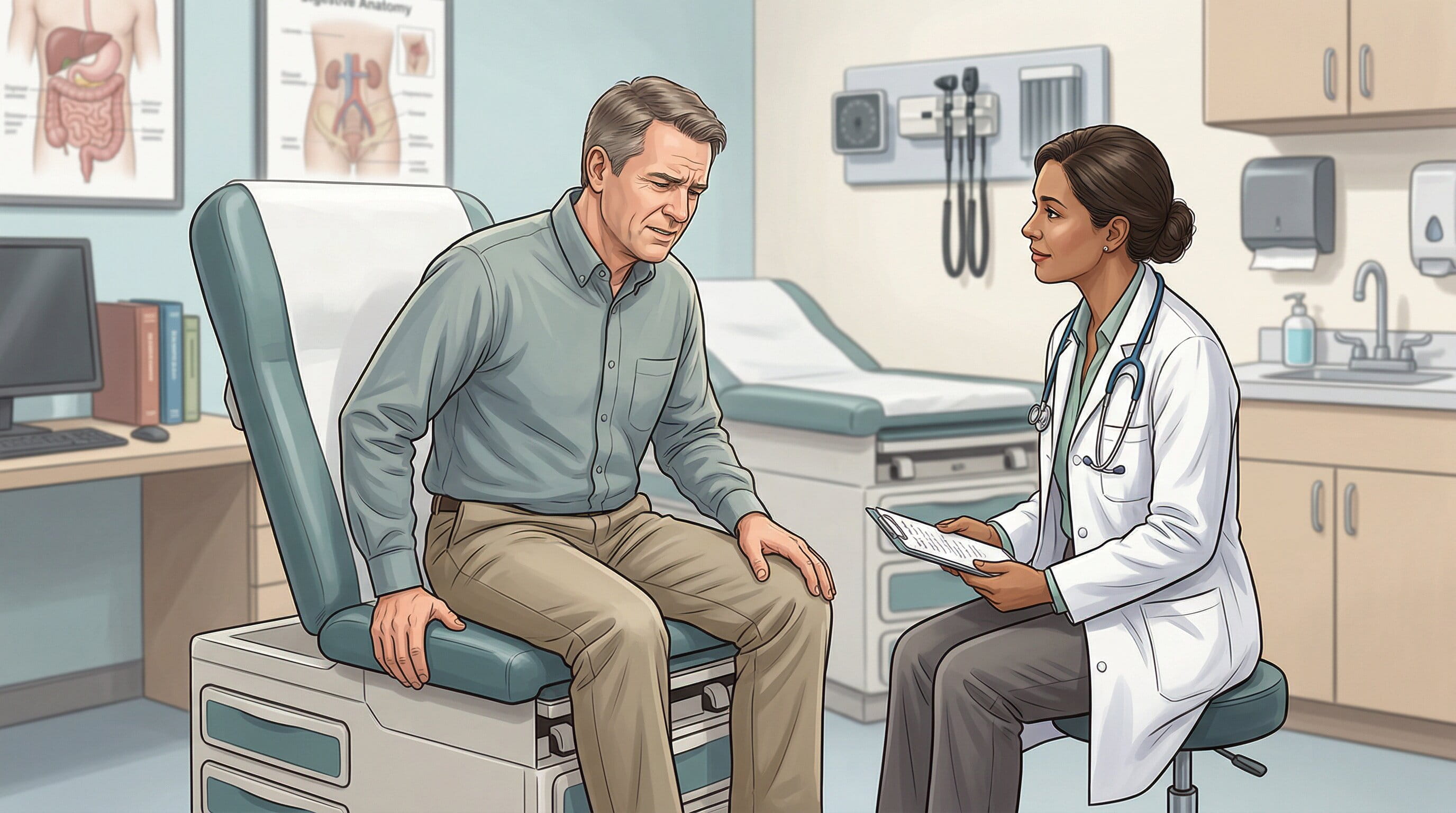








If you’ve ever experienced symptoms like:
You’ve probably had this thought:
Here’s the honest answer:
But because people don’t openly talk about them, it often feels like you’re the only one dealing with it.
Many people believe:
Hemorrhoids can affect almost anyone—depending on lifestyle and habits.
While exact numbers vary, studies and clinical experience show:
A large percentage of adults will experience hemorrhoids at some point in their life.
So while it may feel rare—it’s actually very widespread.
Let’s break this down clearly.

If your daily routine involves:
Your risk increases.
Sitting puts continuous pressure on the lower body, especially the rectal veins.
Skipping meals, eating low-fiber food, or relying on processed food can:
Which is one of the biggest triggers for hemorrhoids.
This includes those who:
Straining increases pressure in rectal veins.
During pregnancy:
This makes hemorrhoids quite common during this phase.
Stress doesn’t directly cause hemorrhoids—but it affects:
Which can indirectly increase risk.
Ignoring the urge to go may seem harmless—but over time:
Leading to strain and pressure.
Hydration plays a bigger role than most people realize.
Without enough water:
Increasing the chances of hemorrhoids.
Let’s connect this with modern lifestyle.
All of these contribute to higher risk.
Not really.
Often affected due to lifestyle habits
Combination of lifestyle + long-term patterns
Natural weakening of tissues
So yes, risk increases with age—but it’s not limited to it.
Not necessarily.
They are often a lifestyle-related condition, not a disease caused by something “serious.”
They can signal that your digestive habits need attention.
This is important to understand.
But silence leads to lack of awareness—and delayed action.
Just because hemorrhoids are common doesn’t mean they should be ignored.
Awareness should lead to action—not neglect.
Many people miss early symptoms like:
These are often dismissed—but they’re early indicators.
Here’s the positive side:

You don’t need extreme changes—just consistency.
Because symptoms don’t appear immediately, many people assume:
“I’m fine for now.”
But hemorrhoids often develop slowly.
By the time symptoms appear, the cause has been building for a while.
That’s your signal to act.
Hemorrhoids might be common—but that doesn’t mean you have to live with them.
Understanding how and why they happen puts you in control.
And sometimes, awareness alone is enough to prevent the problem from getting worse.
Dr. Bharat Pothuri is a Board-Certified Gastroenterologist and Hepatologist. With extensive experience in digestive health, he specializes in advanced endoscopic procedures, chronic GI disorder management, and preventive care. Dr. Pothuri is dedicated to providing expert, patient-focused insights to help improve gut health and overall well-being.
Yes, a large number of people experience them at some point.
Yes, especially due to lifestyle factors.
Not always-many cases improve with proper care.
Not necessarily-depends on severity.
Not immediately-but don’t ignore persistent symptoms.