Let’s Talk About Something Most People Avoid…
Let’s be honest—hemorrhoids aren’t exactly dinner table conversation.
Most people ignore the topic until something feels… off. Maybe it starts with a little discomfort while sitting. Or a slight itch you can’t quite explain. Sometimes, it’s seeing a bit of blood after a bowel movement—and that’s when panic sets in.
Here’s the truth:
- Hemorrhoids are extremely common. More common than most people think.
- But because people hesitate to talk about them, they often:
- Misunderstand the symptoms
- Delay treatment
- Or assume the worst
This guide is here to change that. No awkward medical jargon. No unnecessary fear. Just clear, simple information you can actually use.
What Exactly Are Hemorrhoids?
Hemorrhoids, also known as piles, are swollen or enlarged veins in the lower rectum and around the anus.
If that sounds serious, think of it this way:
They’re quite similar to varicose veins—but located in a more sensitive area of the body.
These veins naturally exist in your body. They help control bowel movements.
The problem starts when they become swollen due to pressure.
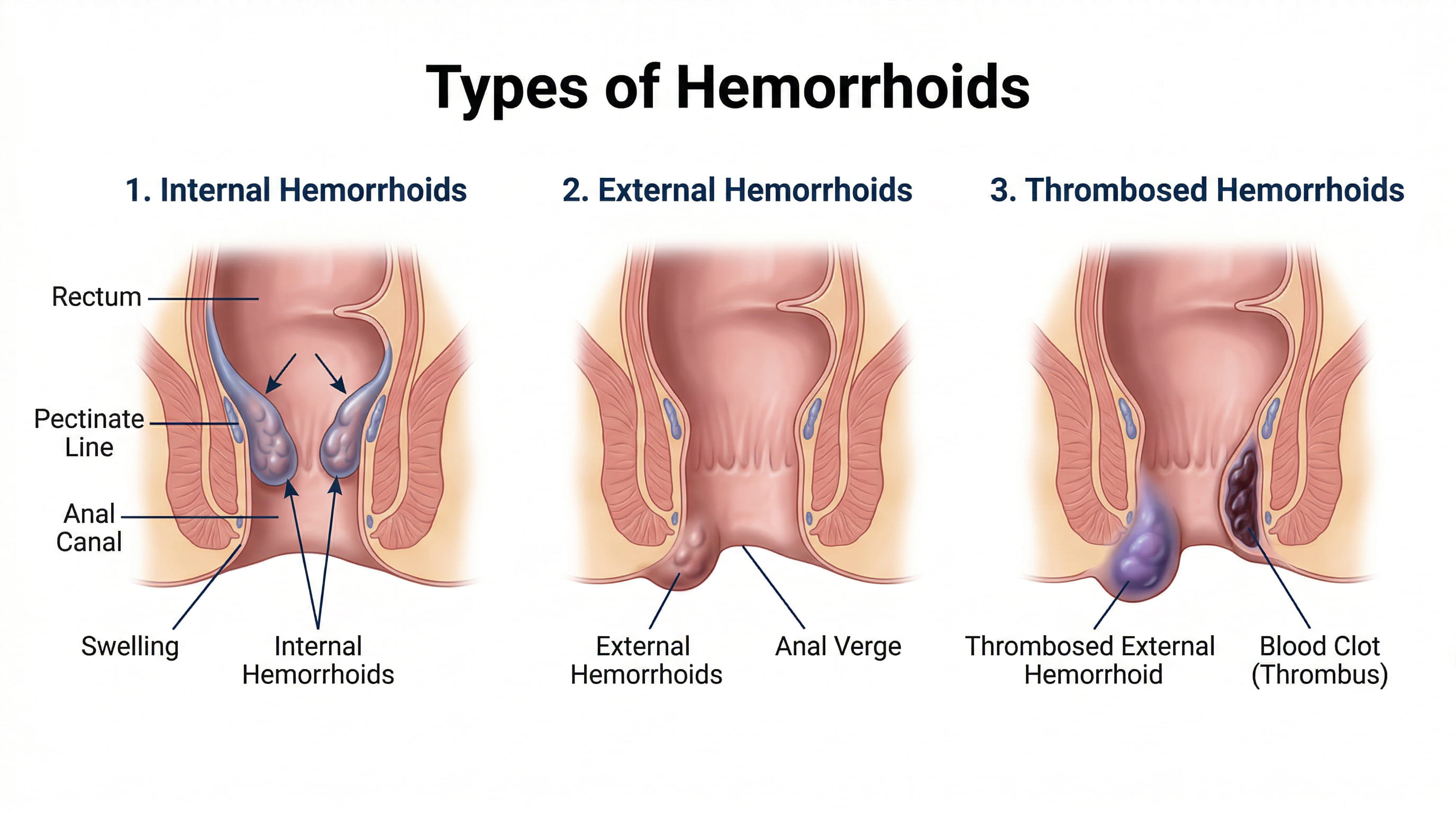
Types of Hemorrhoids (And Why They Feel Different)
Not all hemorrhoids feel the same—and that’s because there are different types.
Internal Hemorrhoids
- These develop inside the rectum.
- Usually painless
- Often go unnoticed at first
- May cause bleeding during bowel movements
You might not even realize you have them—until you notice blood.
External Hemorrhoids
- These form under the skin around the anus.
- Can be painful
- May itch or feel irritated
- Sometimes form a visible lump
These are the ones people usually feel right away.
Thrombosed Hemorrhoids
- This is when a blood clot forms inside an external hemorrhoid.
- Causes intense pain
- Leads to swelling and inflammation
- May feel like a hard lump
This type often requires medical attention.
Common Symptoms of Hemorrhoids
Symptoms can vary depending on the type and severity, but here are the most common ones people experience:
Bleeding During Bowel Movements
- Bright red blood on toilet paper
- Or in the toilet bowl
This is often the first noticeable sign.
Itching or Irritation
- Persistent discomfort around the anal area
- Can worsen with sweating or prolonged sitting
Pain or Discomfort
- Especially while sitting
- More common with external hemorrhoids
Swelling or Lump
- A small bump near the anus
- May feel tender or sensitive
Feeling of Incomplete Bowel Movement
- A constant urge to go
- Even after you’ve already gone
Why Do Hemorrhoids Happen? (The Real Causes)
Hemorrhoids don’t just “appear out of nowhere.”
They’re usually caused by increased pressure in the lower rectum, which leads to swelling of veins. Let’s break down the most common triggers:
1. Straining During Bowel Movements
This is the biggest cause.
When you strain:
- Pressure builds in the rectal veins
- Over time, they swell and become hemorrhoids
Straining is often linked to constipation.
2. Chronic Constipation
Hard stools make it difficult to pass bowel movements, which leads to:
- Straining
- Increased pressure
- Irritation of the rectal area
3. Frequent Diarrhea
This might surprise you.
Constant bowel movements can:
- Irritate the anal region
- Cause inflammation
- Lead to hemorrhoid formation
4. Sitting for Long Periods
Especially on the toilet.
Scrolling on your phone while sitting might seem harmless… but staying in that position too long increases pressure in the rectal area.
5. Low-Fiber Diet
A diet lacking fiber leads to:
- Hard stools
- Irregular bowel movements
Which ultimately increases the risk of hemorrhoids.
6. Pregnancy
During pregnancy:
- The growing uterus puts pressure on veins
- Hormonal changes slow digestion
This makes hemorrhoids very common in pregnant women.
7. Obesity
Excess weight increases pressure on:
- The abdomen
- The pelvic region
Which contributes to hemorrhoid formation.
8. Heavy Lifting
Regularly lifting heavy objects (incorrectly) can:
- Increase abdominal pressure
- Trigger hemorrhoids over time
Are Hemorrhoids Dangerous?
This is one of the most common concerns. The answer is reassuring:
- Most hemorrhoids are not dangerous.
- Many cases improve with simple lifestyle changes.
But that doesn’t mean they should be ignored.
When Should You Actually Worry?
There are situations where you should take symptoms seriously.
Watch out for:
- Bleeding that continues for several days
- Severe or worsening pain
- A lump that doesn’t shrink
- Difficulty sitting or walking
- Symptoms lasting more than a week
Why this matters:
Not all rectal bleeding is caused by hemorrhoids. In some cases, it could indicate:
- Other digestive conditions
- Or something more serious
That’s why it’s important not to self-diagnose if symptoms persist.
Simple Ways to Manage Hemorrhoids at Home
If your symptoms are mild, small changes can make a big difference.
Increase Your Fiber Intake
Fiber helps soften stool and makes bowel movements easier. Include:
- Fruits (papaya, apples)
- Vegetables (spinach, carrots)
- Whole grains
Drink Plenty of Water
Hydration helps:
- Prevent constipation
- Keep digestion smooth
Avoid Straining
Don’t force bowel movements. If it doesn’t happen naturally, give it time.
Limit Toilet Time
Avoid sitting for long periods. Try not to turn it into scrolling time.
Use Warm Sitz Baths
Sitting in warm water for 10–15 minutes can:
- Reduce pain
- Improve blood flow
- Help healing
Stay Active
Regular movement improves digestion and reduces pressure on veins.

Medical Treatment Options
If home remedies don’t help, medical treatment may be needed.
Medications
- Creams and ointments
- Reduce swelling and discomfort
Non-Surgical Procedures
- Rubber band ligation
- Sclerotherapy
- These are quick and minimally invasive.
Surgical Options
Used in severe cases:
- Hemorrhoidectomy
- Stapled procedures
These are usually recommended only when other treatments fail.
The Most Common Mistake People Make
Ignoring the problem. Many people delay treatment because they:
- Feel embarrassed
- Assume it’s not serious
- Try random home remedies without guidance
By the time they seek help, symptoms are often worse.
Let’s Normalize This Conversation
Hemorrhoids are not rare. They’re not something to feel ashamed about.
They’re simply a health condition—one that can be managed and treated effectively.
The sooner you understand what’s happening, the easier it becomes to deal with it.
Final Thought
If you’re dealing with symptoms, don’t ignore them—and don’t panic either.
Most hemorrhoids are manageable with the right approach. And when needed, treatment options are simple and effective.
Sometimes, the biggest step is just acknowledging the problem and taking action early.
If you’ve been experiencing ongoing symptoms and aren’t sure what to do next, it might be time to speak with a specialist. Getting clarity early can save you from unnecessary discomfort later.