Most People Treat Symptoms… But Ignore What’s Causing Them
When dealing with hemorrhoids, most people focus on:
- Creams
- Quick fixes
- Temporary relief
But here’s the truth:
- Your diet plays a much bigger role than you think.
In many cases, what you eat daily is:
- Either helping your recovery
- Or quietly making things worse
If you’ve been dealing with recurring symptoms, this is where you should start.
Why Diet Matters So Much in Hemorrhoids
Hemorrhoids are closely linked to how your digestive system functions.
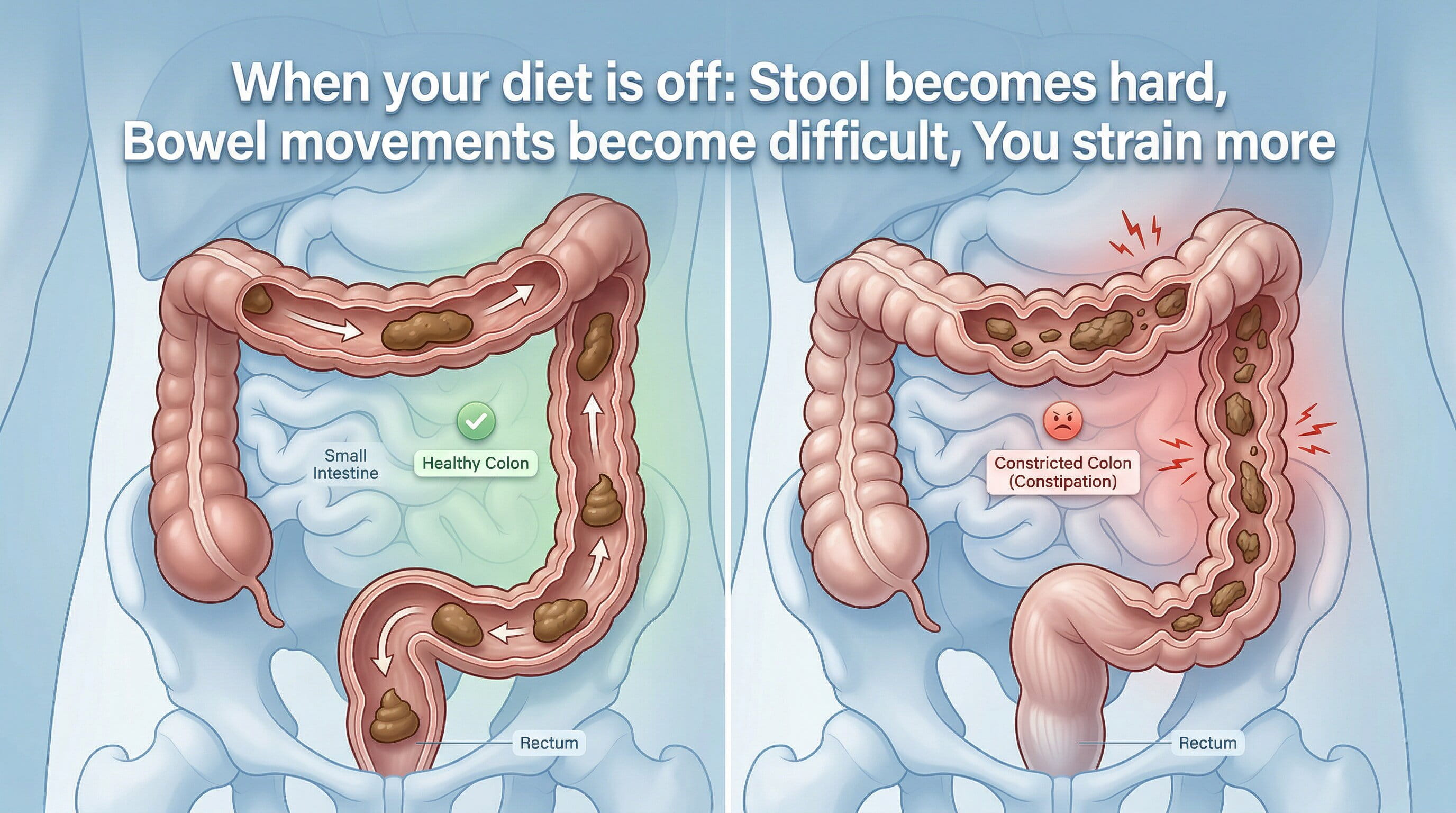
When your diet is off:
- Stool becomes hard
- Bowel movements become difficult
- You strain more
And that leads to:
- Increased pressure in rectal veins → hemorrhoids
The Goal of a Hemorrhoids-Friendly Diet
A good diet should:
- Soften stool
- Improve bowel movement
- Reduce strain
- Support healing
Everything else is secondary.
Foods You SHOULD Eat (Your Recovery Diet)
1. High-Fiber Foods (Your #1 Priority)
Fiber is the backbone of this diet.
Why it works:
- Adds bulk to stool
- Makes it easier to pass
- Reduces straining
Best fiber-rich foods:
Fruits:
- Papaya
- Apples
- Bananas
Vegetables:
- Spinach
- Carrots
- Broccoli
Whole grains:
- Oats
- Brown rice
- Whole wheat
Aim for consistency—not occasional intake.
2. Hydrating Foods
These help keep digestion smooth.
Examples:
- Cucumbers
- Watermelon
- Oranges
These support hydration along with water intake.
3. Probiotic Foods (Gut-Friendly)
They improve digestion and bowel regularity.
Examples:
- Curd / Yogurt
- Buttermilk
A healthy gut = smoother bowel movements.
4. Light, Easy-to-Digest Meals
Heavy meals can slow digestion.
Better options:
- Khichdi
- Soups
- Steamed vegetables
Especially helpful during flare-ups.
Foods You Should AVOID (Very Important)
1. Low-Fiber Processed Foods
- White bread
- Fast food
- Packaged snacks
These worsen constipation.
2. Spicy Foods (In Excess)
They can:
- Irritate the digestive tract
- Worsen symptoms
Moderate intake is key.
3. Caffeinated Drinks
- Coffee
- Excess tea
Can lead to dehydration.
4. Alcohol
- Dehydrates the body
- Affects digestion
5. Red Meat (Heavy & Slow to Digest)
Can contribute to constipation.
Sample Daily Diet Plan (Practical)
Sample Meal Plan
Morning:
- Warm water
- Fruit (papaya/apple)
Breakfast:
- Oats / whole grain meal
Lunch:
- Brown rice + vegetables + curd
Evening:
- Light snack (fruit or buttermilk)
Dinner:
- Light meal (soup/khichdi)
Keep meals simple and consistent.
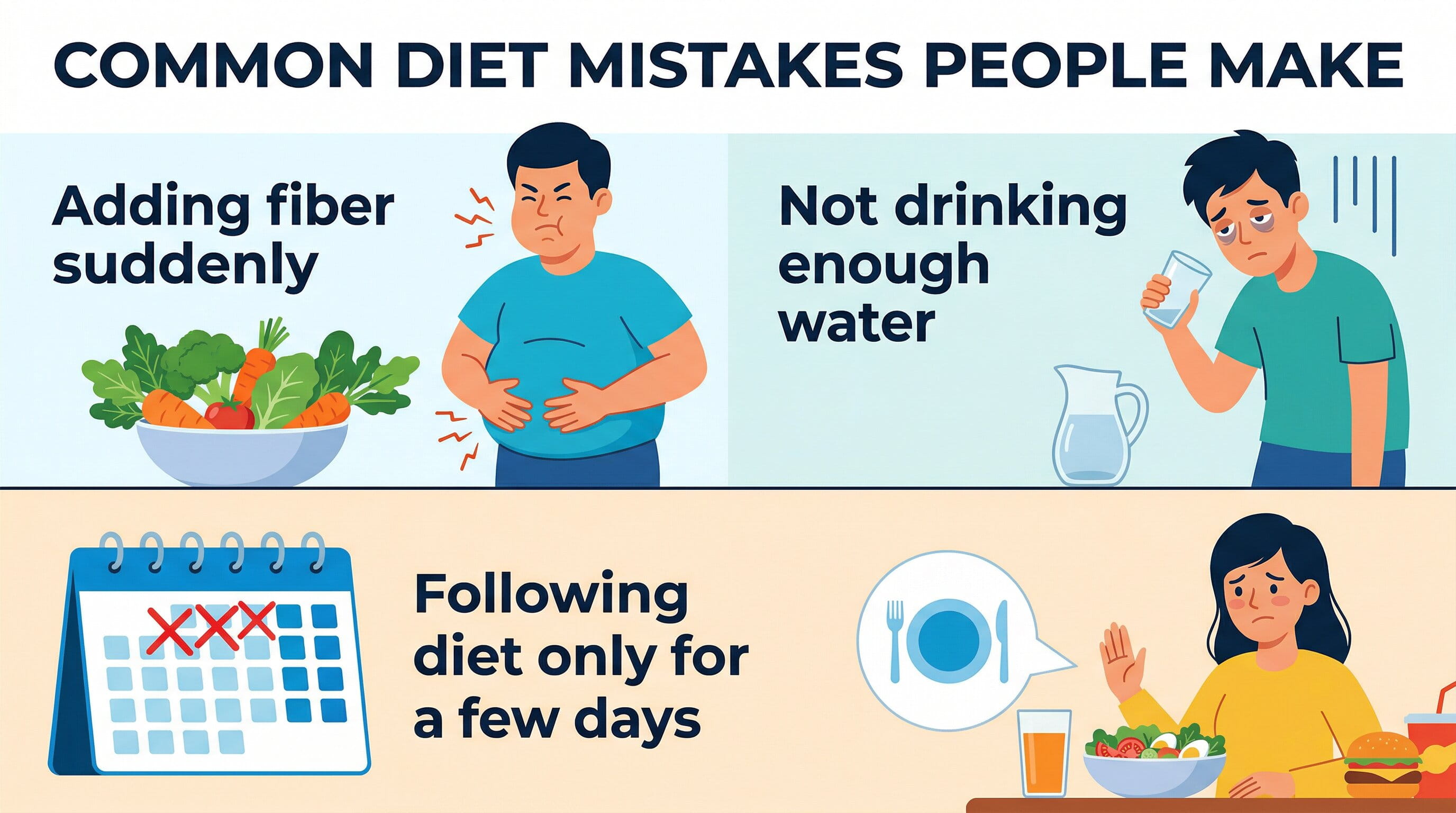
Common Diet Mistakes People Make
- Adding fiber suddenly
Causes bloating - Not drinking enough water
Fiber won’t work without it - Following diet only for a few days
Results need consistency
How Long Does Diet Take to Work?
Initial relief: 3–5 days
Noticeable improvement: 1–2 weeks
Long-term habit = long-term prevention
When Diet Alone Is Not Enough
Even a perfect diet may not be enough if:
- Symptoms are severe
- Bleeding continues
- There is significant pain
That’s when medical evaluation is needed.
Final Thought
If you’re only treating symptoms, you’ll keep dealing with the problem.
But when you fix your diet—you’re addressing the root cause.
That’s where real, lasting relief comes from.
If you’ve already made diet changes but symptoms still persist, it may be time to understand what’s happening beyond lifestyle—and explore the right treatment approach.