







A swollen belly can mean different things. Sometimes it is simple bloating from gas or digestion. Other times, it may be ascites, which is a buildup of fluid in the abdomen. The difference matters because bloating is usually a digestive symptom, while ascites is often linked to an underlying medical problem such as cirrhosis, heart failure, kidney failure, infection, or cancer.
For people in Jersey Village, TX, one of the biggest questions is whether a tight, enlarged stomach is just temporary bloating or something more serious. This guide explains how the two conditions feel, what warning signs to watch for, and when persistent abdominal swelling deserves medical evaluation.
Bloating is usually a digestive feeling of fullness, pressure, or tightness, often caused by gas or gut-related issues. Ascites is fluid buildup in the abdomen. Bloating may come and go, but ascites is more likely to cause persistent swelling, increasing abdominal size, reduced appetite, and sometimes shortness of breath.
Bloating is the feeling that your stomach is full, tight, or stretched. Cleveland Clinic notes that bloating is usually a digestive issue and may happen even if you do not have a visibly enlarged abdomen. Gas, constipation, IBS, food intolerance, stress, and other digestive triggers can all contribute.
Bloating often changes through the day. It may get worse after meals, improve after passing gas or having a bowel movement, and come and go depending on what you eat or how your digestive system is functioning.
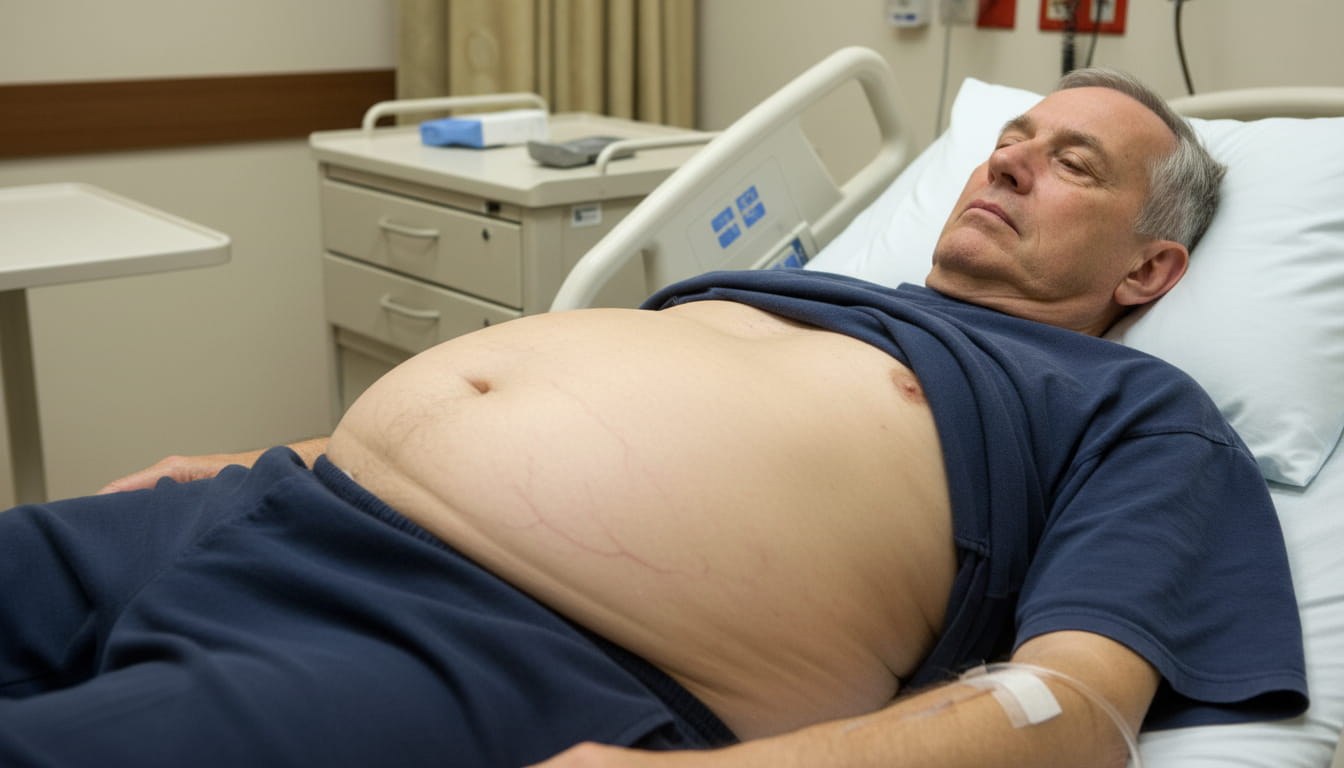
Ascites is free fluid in the peritoneal cavity, which means fluid collects inside the abdomen rather than gas building up in the intestines. MSD Manual states that the most common cause is portal hypertension, usually related to cirrhosis. NIDDK also identifies ascites as a major complication of cirrhosis and portal hypertension.
Unlike ordinary bloating, ascites usually reflects an underlying disease process. It may develop gradually, increase waist size, add weight from retained fluid, and create pressure that affects appetite, movement, and breathing.
The simplest difference is this: bloating is usually a digestive sensation, while ascites is fluid buildup. Cleveland Clinic explains that abdominal distension can happen from gas, fluid, tissue, or digestive contents. That is why a swollen abdomen is not always “just bloating.”
Bloating often feels uncomfortable but may improve with time, gas release, or a bowel movement. Ascites is more likely to cause a belly that keeps getting larger, feels heavy or taut, and does not behave like a typical digestive flare-up.
People with bloating commonly describe:
Gas-related bloating may improve after burping or passing gas. IBS-related bloating may come with constipation, diarrhea, or abdominal discomfort.
People with ascites often describe:
MSD Manual notes that moderate amounts of ascitic fluid may increase waist size, while large amounts can cause abdominal distention, trouble eating, and breathing difficulty because of pressure on the stomach and lungs.
Your symptoms may be more consistent with bloating if:
This does not rule out a medical issue, but it does make a digestive cause more likely than fluid accumulation.
Ascites becomes more likely when:
NIDDK and NHS sources also note that ascites may occur with leg swelling, fatigue, and jaundice when related to liver disease.
Bloating is often tied to digestive causes such as gas, constipation, IBS, food intolerance, or functional dyspepsia. Cleveland Clinic describes bloating as usually digestive in origin, and IBS is a common cause of bloating and abdominal discomfort.
Because bloating has many possible triggers, a short-lived episode is often less concerning than a stomach that stays swollen and keeps enlarging.
Ascites is most often caused by cirrhosis and portal hypertension. Other possible causes include heart failure, kidney failure, some infections, and cancers.
That is why ascites should never be assumed to be ordinary bloating. The symptom may be the visible result of an important liver or systemic condition that needs proper evaluation.
Yes. A person with ascites can also feel bloated. Fluid in the abdomen can create pressure and fullness, while digestive symptoms may still occur at the same time. The key point is that persistent abdominal swelling is not explained by gas alone if fluid is present.
Abdominal swelling is more concerning when it is persistent, progressive, or paired with other warning signs. Those warning signs can include:
NIDDK also warns that ascites can lead to peritonitis, a serious infection. Infection becomes more concerning if swelling is paired with fever, worsening pain, vomiting, or reduced urination.

Doctors usually start with a symptom history and physical exam. If ascites is suspected, abdominal imaging such as ultrasound is commonly used to confirm whether fluid is present. MSD Manual states that diagnosis is based on physical examination and often abdominal ultrasound or CT scan.
This distinction matters because a gas-related bloated stomach, IBS flare, and fluid-filled abdomen may feel similar at first, but they do not have the same cause.
Bloating is usually a digestive feeling of fullness or pressure. Ascites is fluid buildup in the abdomen. Bloating often comes and goes, while ascites is more likely to cause ongoing swelling, increasing abdominal size, reduced appetite, and sometimes breathing difficulty. Persistent belly enlargement, especially with jaundice, fatigue, or leg swelling, should be medically evaluated.
Dr. Bharat Pothuri is a Board-Certified Gastroenterologist and Hepatologist. With extensive experience in digestive health, he specializes in advanced endoscopic procedures, chronic GI disorder management, and preventive care. Dr. Pothuri is dedicated to providing expert, patient-focused insights to help improve gut health and overall well-being.
Bloating is usually a digestive sensation that may improve after passing gas or having a bowel movement. Ascites is fluid buildup and is more likely to cause persistent abdominal enlargement, reduced appetite, and a heavy or taut belly.
People often describe it as tight, swollen, heavy, or stretched. It may also cause nausea, poor appetite, trouble eating, or shortness of breath as the swelling increases.
Not exactly. Cleveland Clinic notes that bloating is a feeling of fullness or tightness, while distension means the abdomen is visibly enlarged. You can feel bloated without obvious distension.
The most common cause is portal hypertension, usually due to cirrhosis.
Yes. Ascites can put pressure on the stomach and cause early satiety, reduced appetite, and nausea.
Often, yes. Digestive bloating commonly varies with meals, gas, bowel habits, stress, or IBS-type symptoms.
Yes. Small or moderate amounts of ascitic fluid may cause swelling and fullness without severe pain. Pain becomes more concerning if infection or another complication develops.
Doctors often use a physical exam and abdominal imaging such as ultrasound. CT may also be used in some cases.
It is more urgent when swelling comes with fever, worsening abdominal pain, vomiting, confusion, or reduced urination because ascites can become infected or reflect serious disease.
Anyone in Jersey Village with persistent abdominal swelling, a belly that keeps enlarging, early fullness, shortness of breath, jaundice, or leg swelling should consider medical evaluation.