1.9K Reviews | 4.7 Star Rating | 20+ years of experience | 72k+ Patients Treated
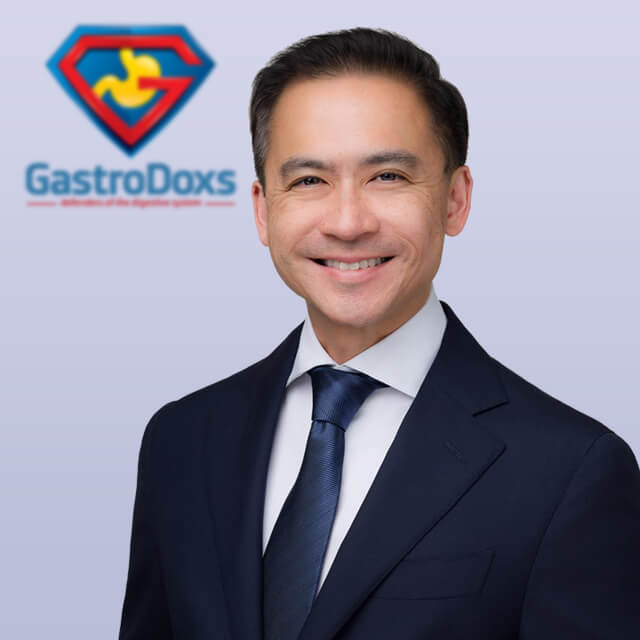
Top Dysphagia Doctor - Dr. Scott Liu
Difficulties of swallowing may interfere with life and be dangerous to health. Dr. Scott is a specialist in the diagnosis and management of dysphagia and provides a personalized treatment plan, advanced testing, and novel treatment options to asymptomatically re-establish secure and comfortable swallowing, as well as enhance well-being, in GastroDoxs of Houston.
Dr. Scott Liu, MD, is a board-certified gastroenterologist with over six years of experience and a background in military medicine. He earned his medical degree from the University of Maryland, Baltimore, completed his Internal Medicine residency at Naval Medical Center Portsmouth, and finished his Gastroenterology fellowship through the National Capital Consortium. Dr. Liu provides comprehensive care for a broad range of digestive conditions, including abdominal pain, acid reflux, liver disease, chronic diarrhea, and colon cancer screening. He is a member of the American College of Gastroenterology and is known for his disciplined, patient-focused approach and clear communication.
Common Causes and Risk Factors
Stroke or other nerve damage
Parkinson's disease, multiple sclerosis, or other neurodegenerative disorders
Muscle weakness or connective‐tissue diseases (e.g., scleroderma)
Acid reflux (GERD) or tumors/growths in the esophagus
Age-related muscle atrophy and slower swallow reflex
Certain medications that cause dry mouth or relax muscles
Heavy smoking or alcohol use
Prior neck or chest surgery or radiation
Signs and Symptoms
Coughing or choking during or after eating
Pain or discomfort when swallowing
Regurgitation of food or liquids
Unintentional weight loss or poor nutrition
Frequent chest or lung infections (aspiration pneumonia)
How Dr. Scott Diagnoses Dysphagia
Dr. Scott uses several tools to find the cause:
Medical History and Physical Exam
He begins by talking about your symptoms and eating habits and your medical history, and then a physical examination.
Barium Swallow X-ray
You then swallow a special liquid as X-rays are now used to monitor its progress along your esophagus to find out whether there are any obstructions or constrictions.
Endoscopy
A thin, flexible tube fitted with a camera is applied by Dr. Scott to peep inside of your esophagus to find any inflammation, ulcers, or other abnormalities.
Esophageal Manometry
This is a test of the strength and co-ordination of your esophagus muscles during swallowing.
ICD-10 Code
The diagnosis code R13.10 is used for accurate documentation and insurance processing.
Treatment
Our Team offers a full range of care for dysphagia.
1. Lifestyle and Diet Tips
Eat in bits and chew slowly.
Sit on bed during and after meals.
Select soft food or mixture liquid as required.
Quarantine tobacco, alcohol, and food triggers reflux.
Dr. Scott Liu, MD, is a board-certified gastroenterologist with over six years of experience and a background in military medicine. He earned his medical degree from the University of Maryland, Baltimore, completed his Internal Medicine residency at Naval Medical Center Portsmouth, and finished his Gastroenterology fellowship through the National Capital Consortium. Dr. Liu provides comprehensive care for a broad range of digestive conditions, including abdominal pain, acid reflux, liver disease, chronic diarrhea, and colon cancer screening. He is a member of the American College of Gastroenterology and is known for his disciplined, patient-focused approach and clear communication.
Frequently Asked Questions
Which is the code of dysphagia?
The ICD-10 code of general swallowing difficulty is R13.10, which is used to provide accurate diagnosis records and also insurance.
Is dysphagia a critical condition?
It can be. Difficulties in swallowing could cause choking, aspiration pneumonia, malnutrition or dehydration left unattended.
Are swallowing problems of different stages?
Yes. Dysphagia may be experienced during chewing, advancing food in the mouth, coding stage of the throat or when food flows into the esophagus.
Is dysphagia remedied by diet and lifestyle alterations?
In some cases, mild cases are treated by small bites, extensive chewing, change in the sitting position, and altered food/liquid texture. Even worse occurrences may need supplementary treatment or intervention.
How long does recovery take?
Recovery varies. The patients also see improvement in weeks of the treatment, some patients even require months of therapy and treatment.
Are you willing to take Houston insurance plans?
Yes. GastroDoxs collaborates with the vast majority of insurance providers in the Houston-area to make sure that the services provided are covered.
Am I going to have surgery on dysphagia?
Not always. A large number of patients respond to diet change, exercises, and drugs. Strictures or severe motility disorders are only subjected to minimally invasive procedures.
Related Blogs
Feel Like You Always Have Food Stuck in Your Throat? You May Have Dysphagia