1.9K Reviews | 4.7 Star Rating | 20+ years of experience | 72k+ Patients Treated
Top Abnormal CT of the GI Tract Specialist
Dr. Scott offers the recent and specialized analysis and committed treatment to abnormal CT outcomes in the digestive system at GastroDoxs, the GI center in Houston. He aids in the diagnosis of causal issues, plan of care and in the healing of the digestive tract with the use of complex imaging, endoscopy methods and invasive procedures.
Dr. Scott Liu, MD, is a board-certified gastroenterologist with over six years of experience and a background in military medicine. He earned his medical degree from the University of Maryland, Baltimore, completed his Internal Medicine residency at Naval Medical Center Portsmouth, and finished his Gastroenterology fellowship through the National Capital Consortium. Dr. Liu provides comprehensive care for a broad range of digestive conditions, including abdominal pain, acid reflux, liver disease, chronic diarrhea, and colon cancer screening. He is a member of the American College of Gastroenterology and is known for his disciplined, patient-focused approach and clear communication.
Common Causes and Risk Factors
Infection or inflammation (e.g., Crohn, diverticulitis)
Intestinal or stominal tumor or polyps.
Obstructions or hernias of bowels.
Abdominal organs Fluid accumulations or abscesses.
Abdominal previous surgery/trauma.
The family history of gastrointestinal cancer or inflammatory bowel disease.
Smoking, alcoholism or drugs.
Signs and Symptoms
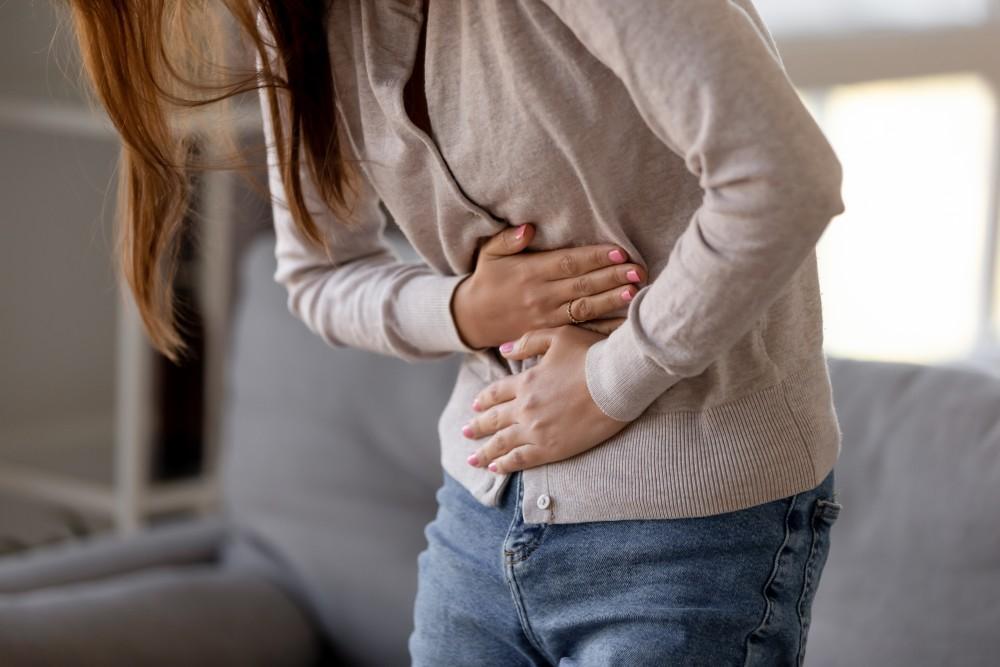
Continuous belly pains or cramping.
Unexplained weight loss
Alteration in bowel habits (constipation or diarrhea).
Black, tarry, bloody stool.
The fullness or bloated stomach.
When the individual has an infection, fever or night sweats.
Patients may also develop no symptoms and the CT scan being the first manifestation.
How Dr. Scott Diagnoses This Condition?
Dr. Scott uses a step-by-step approach:
Medical History and Physical Exam
He looks at your history of pain in the abdomen, bloating or loss of weight or bowel changes, a history of surgery, or the use of medication or history of any known digestive or systemic disease.
Laboratory Tests
Depending on the CT findings, he is also able to order blood tests like complete blood count (CBC), liver and pancreatic enzymes, kidney function tests and inflammatory markers (CRP/ESR) to complement the diagnosis.
Review of CT Images
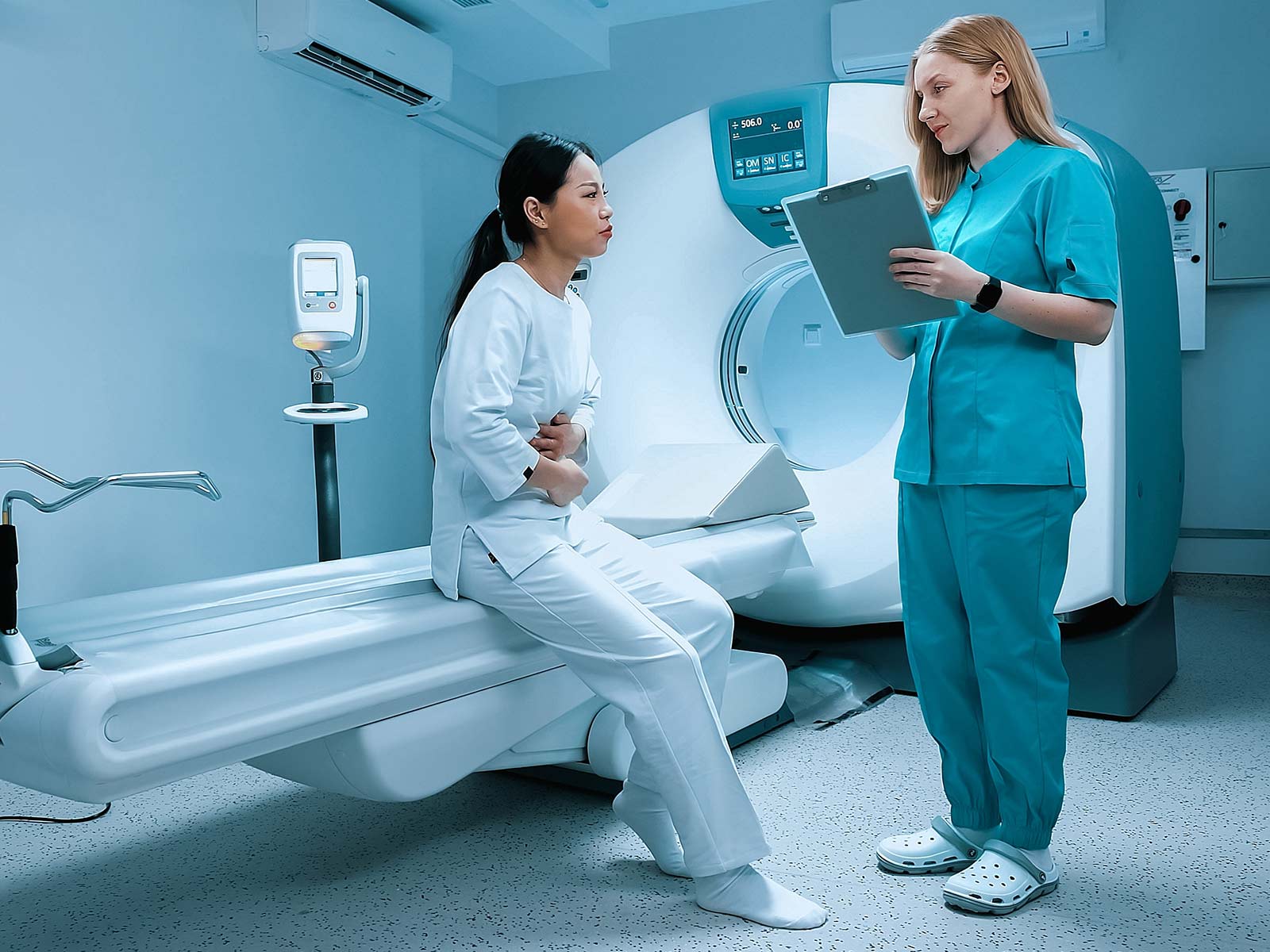
The CT scan you have been undertaken with a contrast medium is closely scrutinized by Dr. Scott under which he studies the abnormalities that touch upon thickening of the bowel walls, lymphadenopathy, ascites, fluid accumulation, strictures or suspicious mass.
He makes this comparison through a current imaging and past studies to determine whether any progression, stability or solution of the results has been achieved.
Endoscopic Assessment
To obtain the direct view of the GI mucosa, biopsy, or determine the cause of bleeding or obstruction, Dr. Scott could order upper endoscopy or colonoscopy in case of alarming results in CT.
Advanced Testing (if needed)
He may apply endoscopic ultrasound (EUS) in larger or less specific lesions to examine the pancreas, small bow, or submucosal masses. Histological verification is achieved through the establishment of biopsies.
Treatment
Our Team offers a full range of care for abnormal CT findings of the GI tract.
1. Clinical Evaluation and Interpretation
In-depth analysis of the discovery of your CT examination, and comparative analysis with previous images.
Account of the malfunctions such as the thickening of the walls or the formation of lymph nodes, the presence of fluid or masses.
Development of symptom association with physical examination and medical history in order to obtain suitable clinical context.
2. Targeted Diagnostic Testing
Blood tests to establish infection, inflammation, liver or pancreatic issues.
Direct observation, biopsy or other examination Endoscopy or colonoscopy.
Additional imaging (MRI enterography or endoscopic ultrasound) to study complicated lesions further.
3. Personalized Treatment and Monitoring
Dependent treatment plans- containing drugs to dietary assistance.
Minimal invasive surgery of biopsy or drainage as necessary.
Follow up through continuous follow up and imaging and follow up to teach to tolerance or stability.
Dr. Scott Liu, MD, is a board-certified gastroenterologist with over six years of experience and a background in military medicine. He earned his medical degree from the University of Maryland, Baltimore, completed his Internal Medicine residency at Naval Medical Center Portsmouth, and finished his Gastroenterology fellowship through the National Capital Consortium. Dr. Liu provides comprehensive care for a broad range of digestive conditions, including abdominal pain, acid reflux, liver disease, chronic diarrhea, and colon cancer screening. He is a member of the American College of Gastroenterology and is known for his disciplined, patient-focused approach and clear communication.
Frequently Asked Questions
What is an ICD-10 code of an abnormal GI CT?
The code is R93.3 of abnormal findings of abdominal imaging.
Am I to be referred to a CT scan?
Usually, yes. The required referral can be obtained either by the help of your primary doctor or our team.
I am not informed when my CT results will arrive.
The scan is normally looked into by Dr. Scott and a call made within 24-48 hours of scan completion.
Are CT scans safe?
In CT scans, low-dose radiation is used only when requested and that too when it is medically necessary to minimize the risk.
Does diet have a role in correcting abnormal CT finding?
Diets can be applied in the treatment of inflammation and digestion, but tumors, abscesses or strictures could require alternative treatment.
Would you take action against children with GI CTs?
GastroDoxs is practice dealing with adult GI care. We will provide referral in case of need of a childhood expert.
Does my insurance reimburse the CT and follow up?
GI CT scans and related treatments would be primarily insured. With the help of our team, your benefits will be examined and pre-authorised.
Related Blogs
The Worst Ways to Manage Constipation (and What to Do Instead)