Unintentional Weight or Muscle Loss
Schedule when weight falls without trying, clothing becomes loose, strength declines, or edema may be hiding tissue loss.

 Medically Reviewed by
Dr. Bharat Pothuri, MD, FACG
| Updated 07-29-2026
Get coordinated treatment for unintentional weight loss, muscle loss, poor intake, malabsorption, digestive disease, and nutrition-support decisions.
Protein-calorie malnutrition treatment must restore energy, protein, fluids, micronutrients, and function while addressing the disease that reduced intake or absorption. GastroDoxs GutRescue Mission™ helps connect severity, oral tolerance, digestive causes, dietitian goals, enteral or parenteral support, and refeeding-risk monitoring.
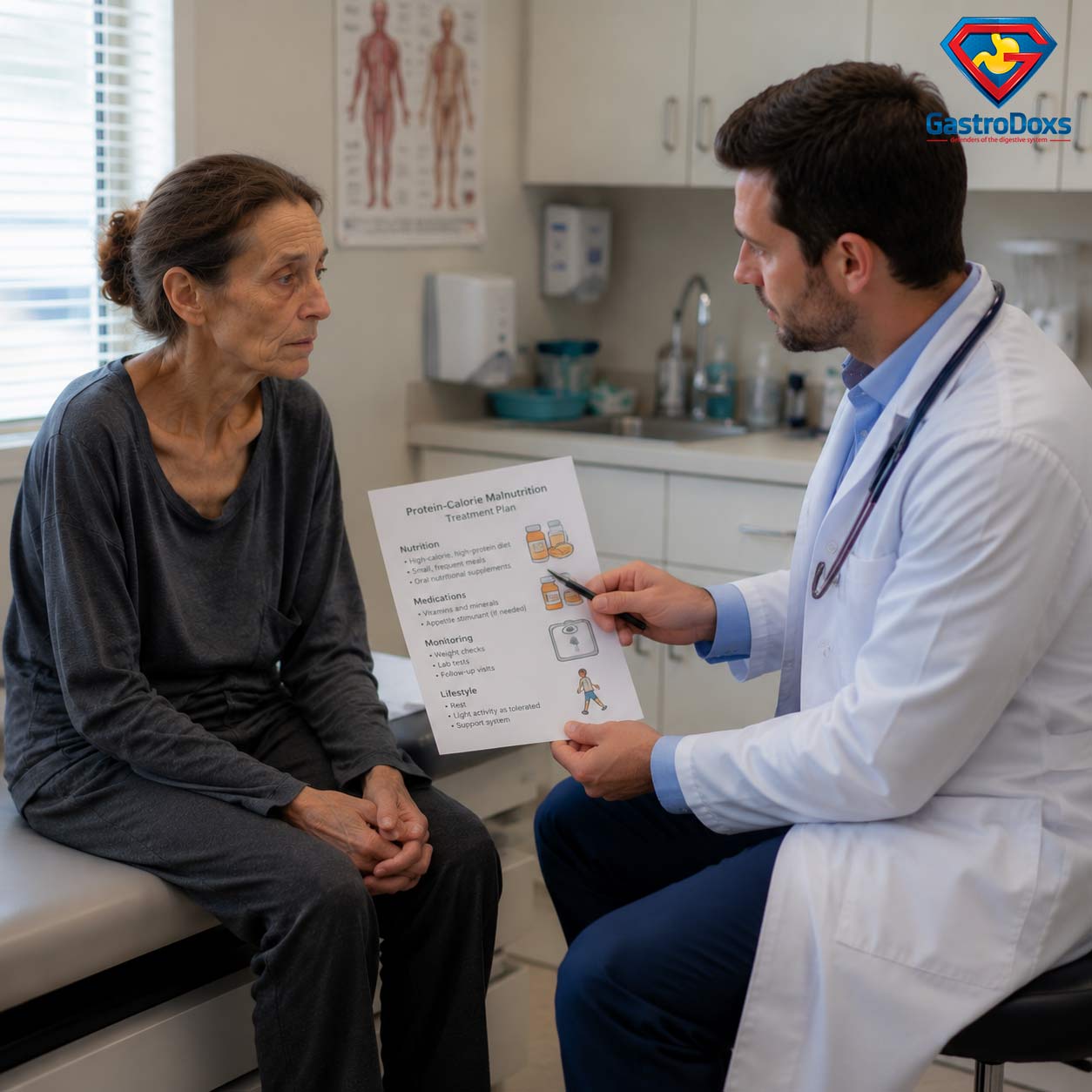
Treatment is matched to the diagnosis, symptom burden, prior care, risks, and the least invasive option likely to help —a distinction used in the nutrition-support and refeeding pathway.
The team evaluates vomiting, diarrhea, pancreatic insufficiency, inflammatory bowel disease, celiac disease, gastroparesis, liver disease, swallowing problems, and altered anatomy.
Energy, protein, fluids, texture, meal timing, formula, vitamins, minerals, and realistic home routines are matched to medical needs and tolerance.
The plan determines whether meals, oral supplements, gastric or jejunal feeding, or parenteral nutrition can safely meet needs.
High-risk patients receive a controlled starting pace, thiamine when indicated, electrolyte correction, and close metabolic and fluid monitoring.
A structured path from records and symptoms to treatment, monitoring, or referral.
Bring usual and recent weights, food and supplement intake, vomiting, diarrhea, swallowing, appetite, early fullness, and hydration details.
Provide laboratory results, endoscopy, imaging, surgery, hospital records, dietitian notes, feeding-tube history, and medication or supplement lists.
The evaluation determines whether low intake, malabsorption, inflammation, obstruction, organ disease, or a combination is driving tissue loss.
The plan defines calorie and protein goals, route, refeeding precautions, laboratory checks, and measurable recovery targets.
Your guardians. GastroDoxs GutGuardians™ is our team of gastroenterologists board-certified by the American Board of Internal Medicine (ABIM) - a physician-led defense force of specialists, systems, and solution pathways working together to protect, detect, solve, and defend your digestive health through expert GI evaluation, advanced diagnostic screening, and endoscopic evaluation - commanded from your first concern to your last follow-up, and every critical stage in between.
Your rescue plan. When your diagnosis is confirmed, GastroDoxs GutRescue Mission™ deploys at full force - a gastroenterologist-led intervention plan delivering advanced colonoscopy, upper endoscopy, capsule endoscopy, and precision biologic and medication management across the full range of digestive conditions and complex GI emergencies - fighting for you with everything we have.
Schedule when symptoms are recurring, affecting daily life, or remain unresolved after initial care.
Schedule when weight falls without trying, clothing becomes loose, strength declines, or edema may be hiding tissue loss.
Persistent vomiting, diarrhea, early satiety, pain, swallowing difficulty, or malabsorption can prevent recovery without cause-specific treatment.
A structured review can determine whether formula changes, enteral feeding, or parenteral support is appropriate.
High refeeding risk requires a controlled pace and electrolyte, fluid, glucose, and thiamine monitoring.
GastroDoxs evaluates digestive causes of protein-calorie malnutrition and coordinates medical treatment, dietitian care, laboratory monitoring, oral supplements, enteral feeding, parenteral nutrition, and specialist referrals.






GastroDoxs coordinates digestive-disease treatment with dietitian-led nutrition care when poor intake, vomiting, diarrhea, malabsorption, altered anatomy, pancreatic disease, or liver disease contributes to tissue loss.
The most effective treatment combines treatment of the underlying disease with individualized energy, protein, fluids, micronutrients, and the safest nutrition route. Oral intake is preferred when sufficient, enteral feeding is used when the gastrointestinal tract works but oral intake is inadequate, and parenteral nutrition is reserved for selected situations.
The team reviews weight trajectory, muscle and fat loss, actual intake, swallowing, nausea, vomiting, diarrhea, malabsorption, inflammation, organ function, hydration, laboratory risks, home support, and refeeding risk. These findings determine calorie and protein goals, route, starting pace, and monitoring.
Mild or moderate malnutrition may be treated outside the hospital when the person can eat or use enteral nutrition safely, hydration and electrolytes are stable, and reliable follow-up is available. Hospital care may be needed for severe weakness, inability to eat, uncontrolled losses, major electrolyte abnormalities, or high refeeding risk.
Therapy may include fortified meals, small frequent meals, oral nutrition supplements, texture modification, pancreatic enzymes, treatment of diarrhea or inflammation, vitamin and mineral replacement, enteral feeding, or parenteral nutrition. A registered dietitian helps translate medical goals into a practical plan.
Oral supplements are used when normal meals do not meet energy or protein needs but swallowing and gastrointestinal tolerance remain adequate. Formula type, volume, timing, sugar content, fiber, and fat are adjusted to the underlying condition and symptoms.
A feeding tube may be necessary when oral intake stays inadequate or unsafe and the stomach or intestine can still absorb nutrients. The feeding site, formula, rate, and schedule depend on aspiration risk, gastric emptying, intestinal anatomy, diarrhea, and treatment goals.
Malnutrition treatment should combine cause-specific medical care, registered-dietitian planning, route selection, and monitoring for hydration, electrolyte, glucose, and refeeding complications.
Expect an assessment of the cause, severity, intake, muscle, function, hydration, and laboratory safety. Nutrition may start gradually, especially when refeeding risk is present. Follow-up tracks intake, weight or dry weight, strength, symptoms, electrolytes, and response of the underlying disease.
Recovery often takes weeks to months. The first goals are to stop further loss, restore hydration, increase intake safely, and improve function. Muscle recovery may take longer than scale-weight improvement, especially during active inflammation or chronic organ disease.
Useful changes may include energy- and protein-dense foods, small frequent meals, liquid nutrition, texture modification, appropriate fiber or fat adjustment, and treatment-specific supplements. The plan should match swallowing, gastric emptying, bowel anatomy, liver or kidney function, and malabsorption.
Oral nutrition has the lowest treatment burden but may not meet needs. Enteral feeding supports the gut but can cause aspiration, diarrhea, blockage, or intolerance. Parenteral nutrition can bypass a nonfunctional gut but carries line-infection, thrombosis, liver, glucose, and electrolyte risks.
Coverage differs for physician visits, dietitian services, laboratory work, oral supplements, tube placement, feeding formula, pumps, supplies, home nursing, and parenteral nutrition. Documentation of diagnosis, medical necessity, route, and expected duration is often required.
Care may involve a gastroenterologist, registered dietitian, primary clinician, nutrition-support team, surgeon, speech-language pathologist, or home-infusion service. GastroDoxs evaluates digestive causes and coordinates nutrition support when gastrointestinal disease is involved.
Seek urgent care for confusion, fainting, irregular heartbeat, chest pain, severe weakness, inability to eat or drink, persistent vomiting, severe diarrhea, very low urine output, breathing difficulty, rapidly worsening swelling, or neurologic symptoms after nutrition restarts.
Use the online appointment link or call GastroDoxs. Bring recent and usual weights, a food and symptom log, laboratory results, medication and supplement lists, surgery and endoscopy records, and information about prior feeding tubes or intravenous nutrition.
Get a cause-based plan for weight and muscle loss, digestive symptoms, dietitian care, nutrition route selection, and refeeding monitoring. Severe weakness, inability to eat or drink, heart symptoms, or confusion require urgent care.



