Patients With Persistent Heartburn
Heartburn that keeps returning may indicate reflux esophagitis or another esophageal condition.
- Ongoing heartburn
- Nighttime reflux

 Medically Reviewed by
Dr. Bharat Pothuri, MD, FACG
| Updated 07-10-2026
Esophagitis means inflammation of the esophagus and can cause heartburn, chest discomfort, swallowing pain, food sticking, nausea, or bleeding signs. GastroDoxs helps identify the cause and treatment path.
Esophagitis treatment should identify the cause of inflammation, not just suppress symptoms. GastroDoxs GutRescue Mission™ helps patients connect reflux, medication irritation, infection risk, allergy-related inflammation, swallowing symptoms, endoscopy findings, and follow-up into one practical care plan.
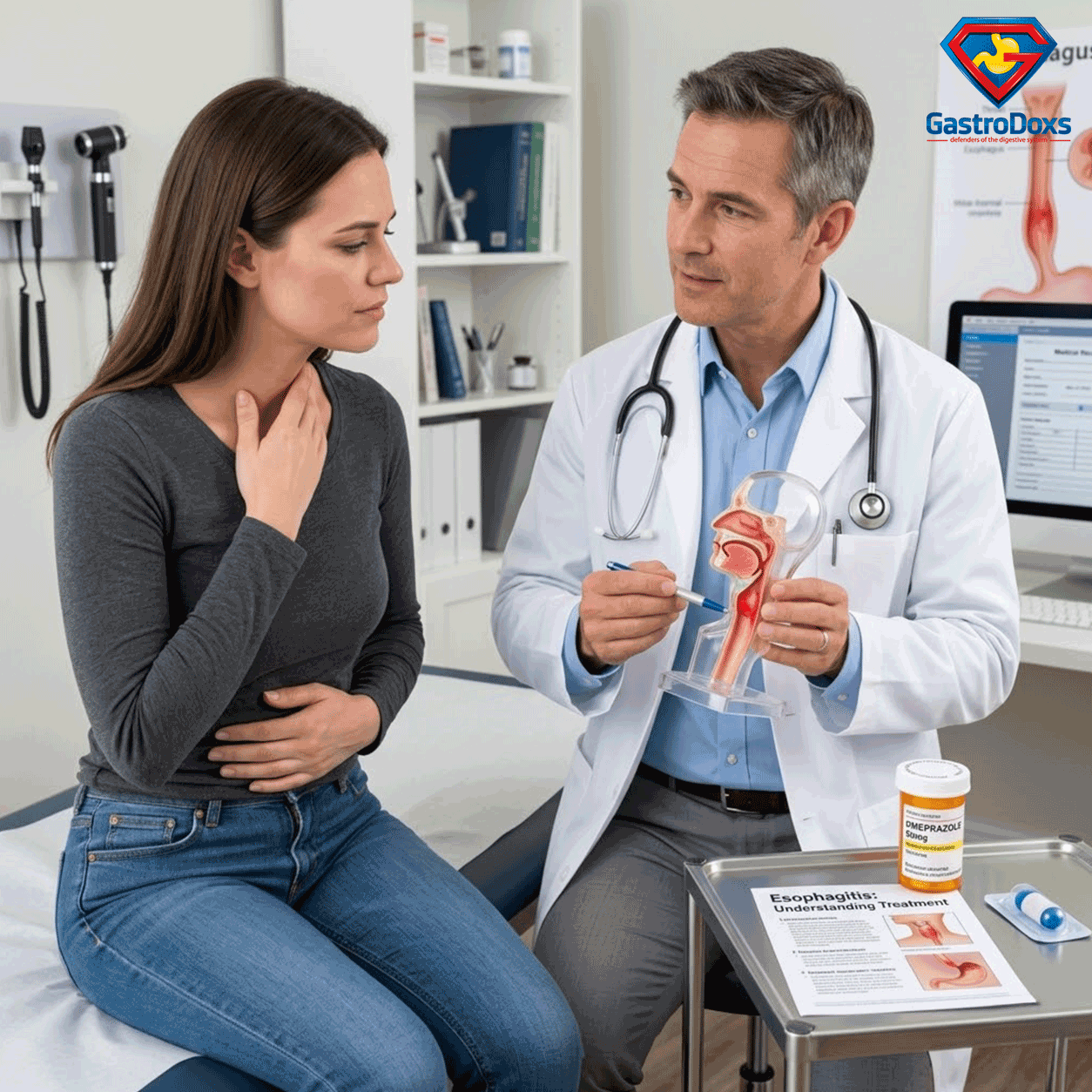
Specialist-focused digestive care with clear testing, treatment, follow-up, and referral planning.
GastroDoxs reviews whether inflammation may be reflux-related, medication-related, infectious, eosinophilic, or due to another cause.
Painful swallowing, trouble swallowing, and food sticking may need upper endoscopy and biopsy.
Endoscopy can identify inflammation, ulcers, narrowing, Barrett's changes, infection patterns, or biopsy needs.
Untreated esophagitis can lead to ulcers, bleeding, strictures, scarring, and persistent swallowing problems.
This treatment page is designed for patients ready to take the next step after symptoms, diagnosis, prior testing, or incomplete relief.
A clear care path from appointment request to treatment planning.
Book when heartburn, swallowing pain, food sticking, chest discomfort with swallowing, or persistent reflux symptoms continue.
Your provider reviews reflux pattern, pills, immune risk, allergy history, vomiting, infection risk, and warning signs.
Treatment may include acid suppression, medication changes, infection treatment, EoE treatment, biopsy, or dilation planning.
Follow-up reviews symptom response, swallowing, healing, need for repeat endoscopy, and recurrence prevention.
Your guardians. GastroDoxs GutGuardians™ is our team of gastroenterologists board-certified by the American Board of Internal Medicine (ABIM) - a physician-led defense force of specialists, systems, and solution pathways working together to protect, detect, solve, and defend your digestive health through expert GI evaluation, advanced diagnostic screening, and endoscopic evaluation - commanded from your first concern to your last follow-up, and every critical stage in between.
Your rescue plan. When your diagnosis is confirmed, GastroDoxs GutRescue Mission™ deploys at full force - a gastroenterologist-led intervention plan delivering advanced colonoscopy, upper endoscopy, capsule endoscopy, and precision biologic and medication management across the full range of digestive conditions and complex GI emergencies - fighting for you with everything we have.
Common patient situations where a GI evaluation may help clarify treatment and follow-up.
Heartburn that keeps returning may indicate reflux esophagitis or another esophageal condition.
Pain with swallowing can reflect ulcers, infection, pill injury, or severe inflammation.
Food sticking can suggest narrowing, EoE, stricture, or other esophageal problems.
Some pills can injure the esophagus if they lodge or are taken without enough water.
GastroDoxs provides GI-focused esophagitis evaluation with symptom review, medication review, upper endoscopy planning, biopsy review, treatment planning, and follow-up.






GastroDoxs helps patients prepare for esophagitis treatment conversations, testing decisions, procedure planning, and follow-up care.
A gastroenterologist treats esophagitis by identifying the cause, reviewing symptoms and medications, using endoscopy when needed, and choosing cause-based treatment.
Testing may include upper endoscopy, biopsy, reflux evaluation, medication review, infection testing, and assessment for eosinophilic esophagitis or narrowing.
Often, yes. Treatment may include acid suppression, medication changes, antifungal or antiviral therapy when infection is confirmed, or anti-inflammatory therapy for EoE.
Diet changes may reduce reflux or irritation for some patients, but persistent or severe esophagitis often needs diagnosis-based medical treatment.
Mild symptoms may improve within days to weeks, but healing time depends on cause, severity, complications, and whether the trigger is controlled.
Upper endoscopy is a minimally invasive procedure used to evaluate esophagitis. Dilation may be considered if narrowing or strictures cause swallowing problems.
Yes. Treatment is personalized based on reflux pattern, medication injury risk, infection risk, allergy-related inflammation, endoscopy findings, and swallowing symptoms.
Severity is determined by symptoms, endoscopy findings, ulcers, bleeding, narrowing, biopsy results, swallowing difficulty, and response to treatment.
Yes. Untreated esophagitis can lead to ulcers, bleeding, scarring, strictures, swallowing problems, and in reflux-related cases, Barrett's esophagus risk.
Monitoring depends on cause and severity. Severe, recurrent, complicated, or persistent symptoms may need follow-up visits or repeat endoscopy.
Yes. Treatment varies by cause, severity, medical history, medication use, infection risk, reflux burden, and endoscopy findings.
Yes. Esophagitis can recur if reflux, medication irritation, infection risk, allergic inflammation, or other triggers continue.
Doctors review symptoms, swallowing problems, medications, reflux triggers, immune status, allergy history, endoscopy findings, and biopsy results.
Prompt evaluation is needed for trouble swallowing, food sticking, vomiting blood, black stool, unexplained weight loss, persistent vomiting, or severe chest pain.
Yes. Upper endoscopy can show inflammation, ulcers, narrowing, bleeding, Barrett's changes, infection patterns, and whether biopsies are needed.
If heartburn, swallowing pain, food sticking, chest discomfort, or persistent reflux keeps returning, GastroDoxs can help identify the cause and care plan.



