Patients With New Abdominal Fluid
New ascites should be evaluated to confirm the cause and check for urgent risks.
- Abdominal swelling
- Rapid weight gain

 Medically Reviewed by
Dr. Bharat Pothuri, MD, FACG
| Updated 07-10-2026
Ascites can cause abdominal swelling, pressure, weight gain, shortness of breath, appetite changes, and liver-related concern. GastroDoxs helps evaluate stable ascites patterns, review prior testing, and plan follow-up care.
Ascites is fluid buildup inside the abdomen, often linked with cirrhosis, portal hypertension, liver disease, heart or kidney disease, infection, inflammation, or cancer-related causes. GastroDoxs GutRescue Mission™ helps patients understand why the fluid is present, what testing may be needed, and how ongoing management can reduce complications.
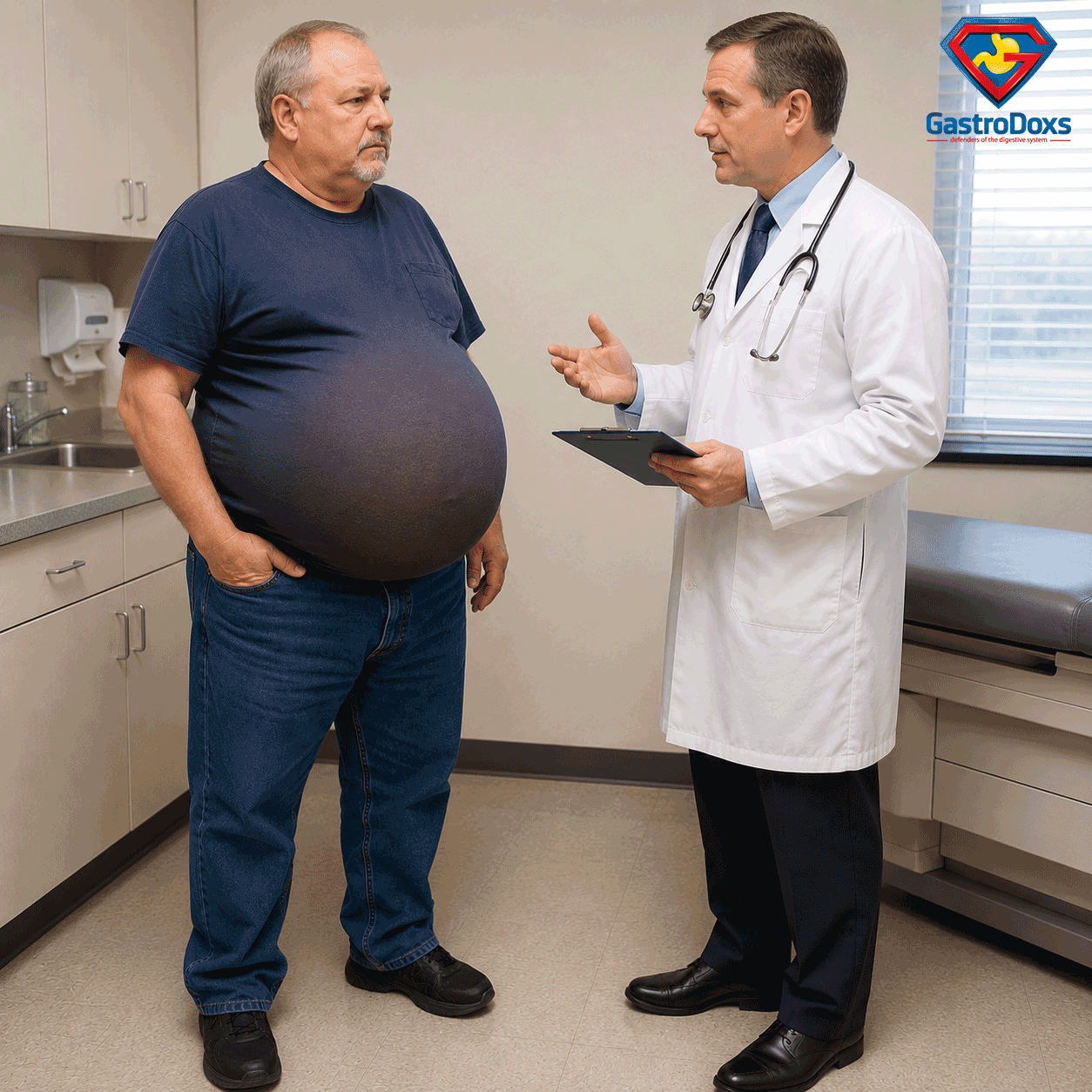
Specialist-focused digestive and liver care with clear testing, treatment, follow-up, and referral planning.
GastroDoxs reviews whether fluid buildup may be related to liver disease, portal hypertension, infection risk, heart or kidney strain, or another cause.
Patients with ascites often need to understand when fluid drainage, fluid testing, or repeat monitoring may be appropriate.
Ascites can signal advanced liver disease and may require screening for infection, varices, kidney strain, and nutrition risk.
This treatment page is designed for patients ready to take the next step after symptoms, diagnosis, urgent care, or prior testing.
A clear care path from appointment request to treatment planning.
Book when abdominal swelling is persistent, recurrent, or previously diagnosed and you need follow-up planning.
Your provider reviews liver disease history, kidney function, sodium intake, diuretic response, fluid drainage history, and warning signs.
Follow-up may track labs, weight, symptoms, medication response, repeat fluid buildup, and complication risk.
Your guardians. GastroDoxs GutGuardians™ is our team of gastroenterologists board-certified by the American Board of Internal Medicine (ABIM) - a physician-led defense force of specialists, systems, and solution pathways working together to protect, detect, solve, and defend your digestive health through expert GI evaluation, advanced diagnostic screening, and endoscopic evaluation - commanded from your first concern to your last follow-up, and every critical stage in between.
Your rescue plan. When your diagnosis is confirmed, GastroDoxs GutRescue Mission™ deploys at full force - a gastroenterologist-led intervention plan delivering advanced colonoscopy, upper endoscopy, capsule endoscopy, and precision biologic and medication management across the full range of digestive conditions and complex GI emergencies - fighting for you with everything we have.
Common patient situations where a GI evaluation may help clarify treatment and follow-up.
New ascites should be evaluated to confirm the cause and check for urgent risks.
Recurring swelling may require medication review, sodium guidance, repeat paracentesis planning, and liver-focused monitoring.
Known liver disease with fluid retention needs monitoring for infection, kidney problems, bleeding risk, and nutrition status.
GastroDoxs provides patient-facing education about ascites treatment options, warning signs, testing, follow-up, and specialist care planning.






GastroDoxs provides non-emergency digestive and liver care evaluation, records review, treatment planning, and follow-up guidance.
Ascites care often includes a lower-sodium diet. Fluid restriction is not needed for every patient and is usually considered when sodium levels are low or fluid balance is difficult. Diet and fluid decisions should be individualized with medical guidance.
Improvement depends on the cause, sodium intake, diuretic response, kidney function, liver function, and whether paracentesis is needed. Some patients notice relief quickly after drainage, while medication response may take days to weeks.
Yes. Paracentesis is a minimally invasive procedure that can remove and test abdominal fluid. Complex or recurrent ascites may need additional liver-focused evaluation and, in selected cases, advanced procedures or referral.
Yes. A gastroenterologist can review the likely cause, prior imaging, liver and kidney tests, medication response, sodium intake, paracentesis history, and warning signs to create a tailored follow-up plan.
You can schedule a non-emergency ascites evaluation with GastroDoxs online or by phone. Severe pain, fever, confusion, vomiting blood, black stool, or major shortness of breath should be handled urgently.
GastroDoxs helps evaluate chronic ascites, review liver disease risk, coordinate testing, discuss paracentesis findings, and guide follow-up care. Advanced or transplant-level concerns may require coordinated specialty referral.
Yes. Ascites can recur and may signal advanced liver disease or another medical condition. Follow-up helps monitor kidney function, sodium levels, medication response, infection risk, and repeat fluid buildup.
Yes. Untreated or worsening ascites can lead to infection, kidney strain, breathing difficulty, hernias, poor appetite, poor nutrition, and complications related to liver disease.
Many patients are managed without surgery using sodium restriction, diuretics, paracentesis when needed, treatment of the underlying cause, and close monitoring. The safest plan depends on test results and severity.
Doctors review symptoms, medical history, liver and kidney tests, imaging, medication use, and sometimes ascitic fluid testing. Fluid analysis can help separate portal hypertension from infection, inflammation, cancer-related, or other causes.
Urgent signs include fever, abdominal pain, confusion, vomiting blood, black stool, severe shortness of breath, fainting, very low urine output, or rapid painful swelling.
Yes. Paracentesis can relieve fluid buildup, but ascites may return if the underlying cause remains active. Ongoing treatment and monitoring are important.
Testing may include blood work, liver function tests, kidney tests, sodium level, ultrasound, CT or MRI, and paracentesis fluid analysis when needed.
Yes. Cirrhosis and portal hypertension are common causes of ascites. Evaluation helps determine severity and whether screening for varices, liver cancer, infection, or kidney strain is needed.
Bring prior imaging, liver tests, kidney tests, medication lists, paracentesis reports, discharge summaries, weight trends, and notes about sodium intake, swelling, breathing, pain, fever, or confusion.
GastroDoxs can help review stable ascites symptoms, prior testing, liver risk, paracentesis findings, medication questions, and follow-up planning. Urgent warning signs should be evaluated immediately.



