
Why Does Hemorrhoids Bleeding Happen?
The question behind a spot of red blood is often practical: what made this happen now? Internal hemorrhoids can bleed when their delicate surface is affected during a bowel movement, and pressure and bowel habits may contribute. Yet the fact that a hemorrhoid could bleed does not show that it caused this episode. Start with the possible mechanism, then verify the source.
Key Takeaways
- Internal hemorrhoids can produce bright red bleeding during or after a bowel movement, often without pain.
- Straining, long periods on the toilet, chronic constipation or diarrhea, low dietary fiber, pregnancy, frequent heavy lifting, and age-related tissue changes are recognized contributors to hemorrhoid symptoms.
- Repeated irritation or bleeding does not prove that hemorrhoids are the only cause of rectal blood.
- Soft, easier-to-pass stool and less straining are central to first-line care; fiber can improve hemorrhoid bleeding in clinical studies.
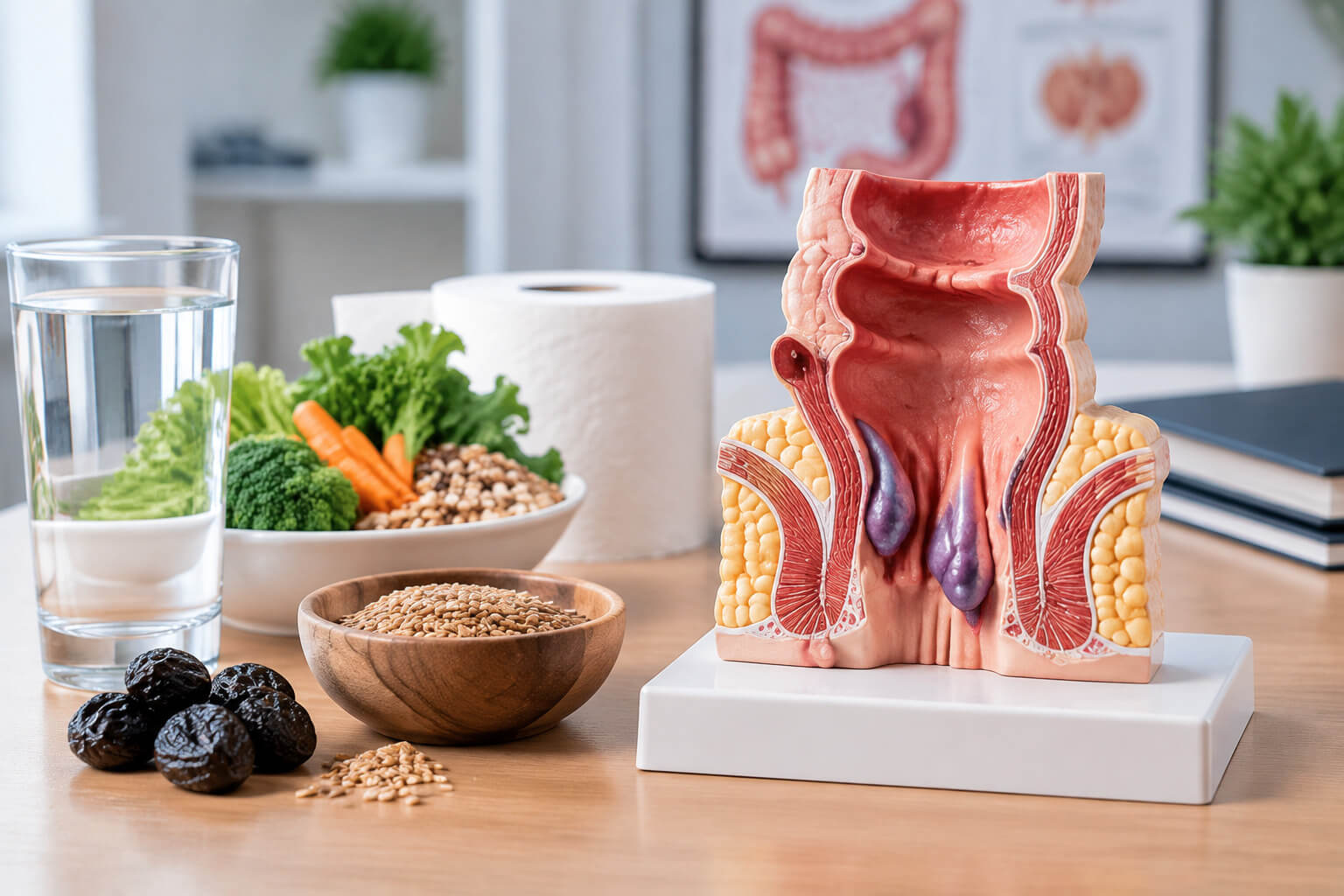

How an Internal Hemorrhoid Can Bleed
The tissue inside the anal canal contains normal blood vessels and supporting tissue. With symptomatic internal hemorrhoids, that tissue can enlarge and become prone to bleeding, commonly around a bowel movement. The National Institute of Diabetes and Digestive and Kidney Diseases (NIDDK) describes bright red blood on the stool, paper, or in the bowl after passing stool as a possible symptom. The timing fits the process: stool passes through the area and a vulnerable surface may bleed.
Internal hemorrhoids usually do not hurt when they stay inside the anal canal, so a painless spot of red blood can seem out of proportion to how normal you otherwise feel. Sometimes an internal hemorrhoid protrudes through the opening, called prolapse, and may cause discomfort. The amount of bleeding and the presence of a lump or itch do not establish the source. If you want a closer look at possible patterns, see the hemorrhoid bleeding overview page.
An external hemorrhoid forms under the skin around the anus and is more likely to cause tenderness, itching, or a lump. Painful bleeding might involve a fissure, an irritated hemorrhoid, or something else; guessing from one sensation is unreliable. The useful clinical question is whether examination actually finds a source that explains this episode, and whether the rest of the history fits.
Everyday Contributors to Hemorrhoid Symptoms
Straining
Pushing hard to pass stool raises pressure around the anal area. Recurrent strain can worsen hemorrhoid symptoms. The focus is to make bowel movements easier, not to blame a single difficult day for every episode of rectal bleeding.
Constipation and Low Fiber
Hard, difficult-to-pass stool may lead to straining. A low-fiber eating pattern can contribute to constipation and hemorrhoid symptoms. Increasing fiber with an appropriate fluid plan may help make stool softer and easier to pass.
Frequent Diarrhea
Repeated loose stools can also accompany hemorrhoid symptoms. A person with diarrhea and bleeding needs the diarrhea assessed on its own; assuming that a hemorrhoid explains everything can miss another bowel condition.
Time on the Toilet
Sitting for long stretches on the toilet is a recognized contributor. A practical change is to avoid waiting and straining for a bowel movement that is not coming, while seeking advice for recurring difficulty passing stool.
Pregnancy and Aging
Pregnancy is associated with hemorrhoids, and supporting tissues in the anus and rectum can weaken with age. These factors provide context for a clinician, but neither one is a diagnosis or a reason to dismiss bleeding.
Why Bowel Habits Matter More Than a Single Trigger
A person may notice blood after one unusually hard stool and understandably point to that event. It is a useful observation, but it is only part of the story. Ask what the preceding weeks looked like: infrequent stools, repeated straining, long bathroom visits, or swings between hard stool and diarrhea. NIDDK lists constipation, diarrhea, low fiber, and prolonged toilet sitting among hemorrhoid contributors. Those patterns help shape an initial management plan.
Fiber-rich foods can make stool softer and easier to pass. Depending on your needs, a clinician may also suggest a fiber supplement or stool softener. Drinking water or other suitable nonalcoholic liquids helps dietary fiber work as intended; the right fluid intake depends on your health. A Cochrane review of randomized trials found that fiber improved overall symptoms and bleeding in people with symptomatic hemorrhoids, while acknowledging the limited quality of some studies.
The hemorrhoids overview page gives a broader view of hemorrhoid symptoms and management. If bowel habits remain difficult despite practical changes, discuss that too. Treating a recurring constipation or diarrhea pattern may matter as much as addressing the irritated tissue, and ongoing diarrhea in particular may require its own evaluation rather than a hemorrhoid label. GastroDoxs GutDefense Pathway™ can frame a discussion of the pattern without substituting for an examination.
Possible Trigger Versus Confirmed Cause
The same red blood can follow more than one process. An anal fissure may bleed after a difficult stool and often causes pain during a bowel movement. Inflammation, polyps, or other lower gastrointestinal problems can also produce visible blood. The American College of Gastroenterology (ACG) includes hemorrhoids among several causes of lower GI bleeding, so the possible presence of hemorrhoids should not close the investigation prematurely.
At an appointment, the hemorrhoid bleeding diagnostic evaluation process often starts with questions about stool, toilet habits, symptom timing, medications, and previous conditions. A clinician can then look for a fissure or external hemorrhoid and decide whether a digital rectal exam, anoscopy, or a more extensive test is warranted. The 2024 ASCRS guideline recommends complete colon evaluation for select patients with hemorrhoid symptoms and rectal bleeding, not automatically for everyone.
The Trigger You Noticed
A hard bowel movement, a long bathroom visit, or several days of diarrhea can be part of the history. It suggests why a hemorrhoid might have become symptomatic but cannot show where the blood originated.
What the Clinician May Find
Inspection may reveal an external hemorrhoid or fissure. A digital rectal exam and sometimes anoscopy help assess internal hemorrhoids and other findings in the anal canal and lower rectum.
What Changes the Evaluation
Recurrent or unexplained bleeding, bowel changes, abdominal symptoms, or an examination that does not identify a convincing source may call for additional assessment of the colon in selected patients.
Other Factors Worth Telling Your Clinician
NIDDK also identifies frequent heavy lifting, pregnancy, and age-related changes in supporting tissues as contributors. They may make hemorrhoids more likely to become symptomatic, but they do not determine the cause of a particular bleed. Mention them in context instead of looking for a single culprit. Someone may have several contributors at the same time, and someone with textbook bowel habits can still develop hemorrhoids.
Bring a list of every medicine you take, including nonprescription anti-inflammatory drugs, aspirin, and prescribed blood thinners. These medicines matter to bleeding assessment, but their use does not mean a hemorrhoid has been proven. Never stop a prescribed blood thinner or aspirin on your own in response to a bleeding episode; call the prescribing clinician for advice. ACG’s lower GI bleeding guidance includes a medication review as part of the broader clinical picture.
If bleeding occurs with a new bowel habit change, fatigue, or abdominal discomfort, report the combination rather than trying to separate the symptoms yourself. An additional condition can coexist with hemorrhoids. A clinician can explain whether the blood in stool evaluation pathway calls for tests beyond an anorectal examination.
Steps That May Lower Strain and Recurrence
Once the bleeding source has been checked, improving bowel habits often forms the foundation of care. Increase fiber through foods you can eat regularly, and ask how much fluid is appropriate for you. If food changes are not enough, ask about a supplement rather than choosing a dose without considering other health needs. The goal is comfortable passage of soft, formed stool, not an abrupt switch to an extreme diet.
Avoid prolonged toilet sitting and straining. If frequent diarrhea is part of the picture, discuss its cause and management; adding fiber alone may not solve every pattern. NIDDK lists these habits among at-home steps but also advises seeking medical help for rectal bleeding. Self-care and diagnostic evaluation can happen alongside each other.
- Keep a short record of bowel consistency, straining, time on the toilet, and episodes of blood; bring it to the visit.
- Add fiber-rich foods in ways that fit your usual meals; ask a clinician or dietitian for guidance if you are unsure how to increase fiber comfortably.
- Use water and other nonalcoholic fluids as advised for your health, since fluid needs vary.
- Ask about office treatment if a confirmed internal hemorrhoid continues to bleed despite an appropriate conservative plan.
What If the Bleeding Keeps Coming Back?
- Follow up even if a previous examination found hemorrhoids. Recurrence may call for a fresh look at the source, the bowel pattern, and whether treatment is working.
- Ask what additional evaluation is appropriate if the bleeding persists after hemorrhoid treatment, especially if other symptoms have developed.
- For confirmed bleeding internal hemorrhoids, rubber band ligation may be one office procedure to discuss; the decision depends on the examination and individual circumstances.
- Seek immediate attention for heavy bleeding with faintness or severe illness, and prompt attention for severe anal pain with bleeding, fever, abdominal pain, or diarrhea.
Frequently Asked Questions
Why would an internal hemorrhoid bleed after a bowel movement?
Internal hemorrhoids are swollen tissue in the anal canal and lower rectum. Passing stool and straining can coincide with bleeding from this tissue, often visible as bright red blood after a bowel movement. That mechanism is plausible, but only clinical assessment can determine whether a particular episode came from a hemorrhoid.
Can diarrhea contribute as well as constipation?
Yes. NIDDK lists both chronic diarrhea and constipation among contributors to hemorrhoids. Diarrhea with rectal bleeding deserves its own explanation; inflammation or another bowel problem may be relevant. Describe the stool pattern rather than assuming the hemorrhoid is the whole diagnosis.
Does lifting something heavy cause hemorrhoids to bleed?
Frequent heavy lifting is one factor NIDDK associates with hemorrhoids, but a single lifting event cannot prove the cause of visible blood. Tell the clinician about the episode and any repeated strain, along with your bowel symptoms, so the bleeding source can be evaluated.
Are pregnancy-related hemorrhoids automatically the cause of rectal bleeding?
No. Pregnancy can be associated with hemorrhoids, but any new bleeding still deserves medical discussion. If you are pregnant, tell your obstetric clinician about rectal bleeding and ask which evaluation and symptom measures fit your pregnancy. Do not assume every bleeding episode has the same cause.
Will adding fiber stop all hemorrhoid bleeding?
Fiber can improve symptoms and bleeding in symptomatic hemorrhoids and may make stool easier to pass. It is not a substitute for confirming why you are bleeding, and some cases require further treatment. If bleeding continues, or you develop new symptoms, ask your clinician to reassess.
When should I consider an office procedure?
When an internal hemorrhoid is confirmed and bleeding or prolapse remains troublesome despite initial care, a clinician may discuss options such as rubber band ligation. That choice depends on the type of hemorrhoid, your examination, symptoms, and medical history. Never try to band a hemorrhoid yourself.
Medical References
- NIDDK - Symptoms & Causes of Hemorrhoids
- NIDDK - Diagnosis of Hemorrhoids
- NIDDK - Treatment of Hemorrhoids
- NIDDK - Eating, Diet, & Nutrition for Hemorrhoids
- Cochrane Review - Fiber for Symptomatic Hemorrhoids (PubMed)
- American College of Gastroenterology - Lower Gastrointestinal Bleeding
- American Society of Colon and Rectal Surgeons - 2024 Hemorrhoids Clinical Practice Guideline
This article is for general educational purposes and does not replace a diagnosis or treatment plan from a qualified healthcare professional. Rectal bleeding should be discussed with a clinician even when you have had hemorrhoids before. Do not delay emergency care for heavy bleeding, fainting, or other severe symptoms. In the United States, call 911 for a medical emergency.

Find Out Why the Bleeding Happens
A bowel habit can contribute without fully explaining the blood. GastroDoxs can evaluate the bleeding and discuss symptom care, tests, and treatment based on the findings.