
At-Home & Lifestyle Management for Hemorrhoids Bleeding: 5 Physician-Backed Tips
A few changes at home can make bowel movements easier and ease hemorrhoid symptoms. When blood is involved, those measures belong alongside a conversation with a clinician about its source. These five tips focus on reducing strain and discomfort while keeping clear limits on what self-care can establish.
Key Takeaways
- Fiber-rich foods and, when appropriate, fiber supplements can help make stool easier to pass and may improve symptomatic hemorrhoid bleeding.
- Water and other suitable nonalcoholic fluids can help fiber work; the right fluid intake depends on your health.
- Avoiding prolonged toilet sitting and straining addresses two recognized contributors to hemorrhoid symptoms.
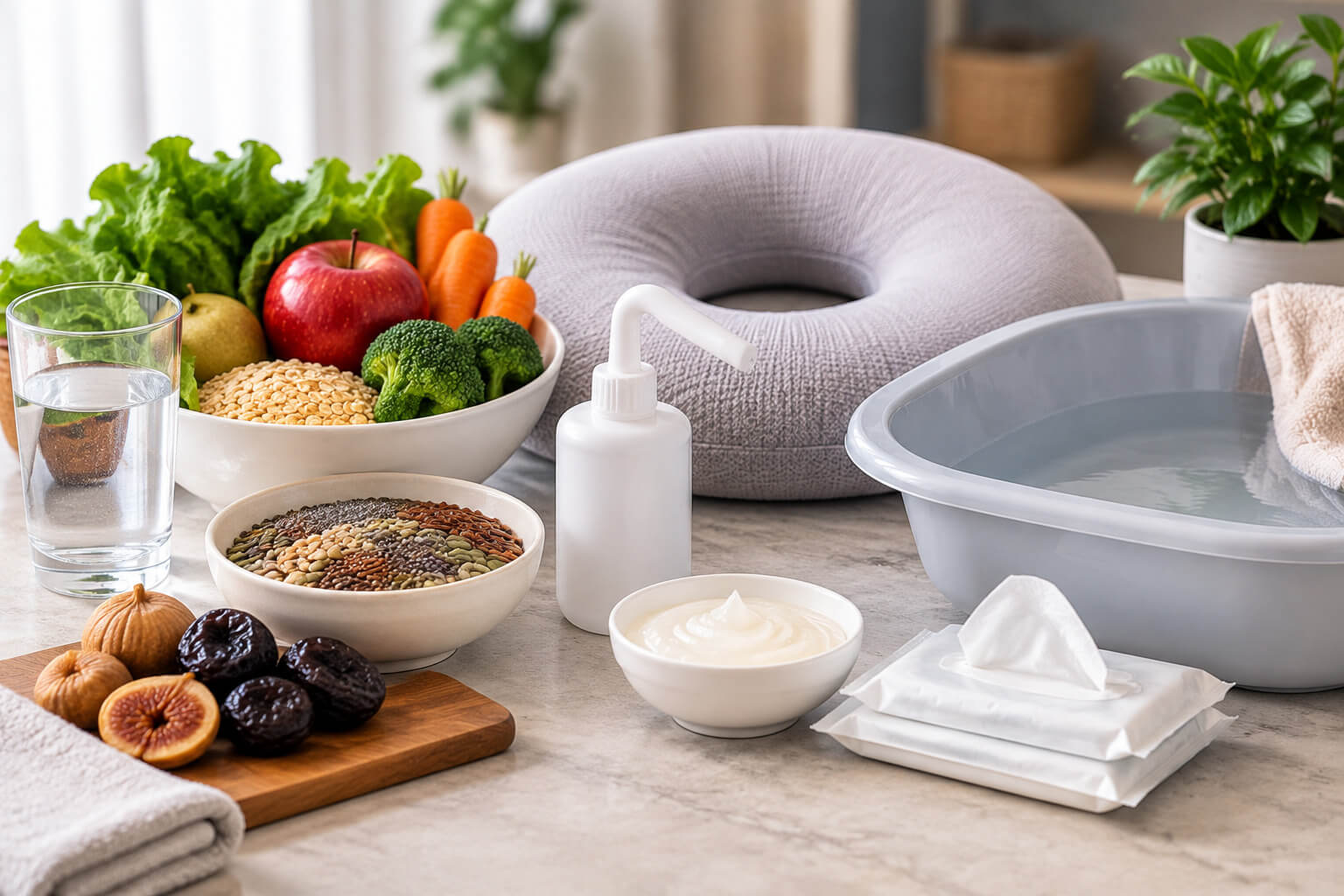

Where Home Care Fits When You See Blood
Seeing bright red blood after a bowel movement can fit a bleeding internal hemorrhoid, but it can also come from a fissure or another lower digestive tract problem. At-home measures can improve stool consistency and hemorrhoid symptoms; they cannot determine the source of blood. The National Institute of Diabetes and Digestive and Kidney Diseases (NIDDK) advises seeking a clinician’s help for rectal bleeding, even while describing common home treatments for hemorrhoids.
Start by noting what you saw: blood on paper, on the stool, or in the bowl; whether it happened once or several times; and whether pain, a lump, constipation, diarrhea, or a change in bowel habits was present. The hemorrhoid bleeding overview page can help you organize these observations before a visit. Avoid deciding that the amount is “too small to mention.” What matters is the pattern in your clinical context.
If hemorrhoids have been confirmed before, the same basic care may still be useful, but a past diagnosis does not prove the cause of a new episode. If the bleeding is heavy, you feel faint, or severe pain or illness accompanies it, seek prompt or emergency care as described in the safety alert. A GastroDoxs GutFortify HQ™ discussion can place practical habits within a broader evaluation plan.
Five At-Home Steps to Discuss With Your Clinician
Tip 1: Make Room for Fiber
Choose more fruit with skin, beans, vegetables, and whole grains across your usual meals. A clinician may recommend a fiber supplement if food alone is not enough. The aim is easier-to-pass stool, not a rigid list of forbidden foods.
Tip 2: Pair Fiber With Suitable Fluids
Water and other nonalcoholic fluids can help fiber work. Your fluid needs may differ if you have another medical condition or a fluid restriction. Ask for individualized guidance rather than adopting an arbitrary number of glasses.
Tip 3: Reduce Straining and Toilet Time
Avoid pushing hard or sitting for a long time hoping for a bowel movement. These habits can contribute to hemorrhoid symptoms. If hard stools continue, ask about constipation management rather than repeatedly forcing a bowel movement.
Tip 4: Soothe Discomfort Without Masking a Warning Sign
A warm sitz bath may ease anal pain. A suitable over-the-counter product may briefly ease mild external itching or swelling. Neither measure is a test for the cause of blood, and worsening symptoms need medical attention.
Tip 5: Make a Follow-Up Plan
Track whether blood returns and whether bowel changes improve. Tell the clinician what you tried, ask when to follow up, and discuss an office treatment if a confirmed internal hemorrhoid continues to bleed.
Fiber Supports Bowel Habits, With Some Evidence for Bleeding
NIDDK explains that foods high in fiber can make stool softer and easier to pass. Its examples include berries, pears and apples with skin, beans, peas, and higher-fiber grains. When constipation and straining accompany hemorrhoids, adding these foods can address a contributing pattern. Check nutrition labels on packaged foods and consider the balance of a whole day rather than seeking a single “hemorrhoid superfood.”
Research supports fiber as part of treatment for symptomatic hemorrhoids. A Cochrane review found less persistent bleeding and improvement in overall symptoms among people assigned fiber rather than a control intervention. The review also noted limitations in study quality. That evidence supports a reasonable first step; it does not promise that a specific food will stop blood immediately or that diet alone will suit every patient.
If increasing fiber causes discomfort or you have recurring loose stools rather than hard stool, ask how to adapt the approach. The goal is a comfortable, formed stool, not simply more fiber at any cost. A clinician or dietitian can help when other conditions affect what you can eat. The treatment options for bleeding hemorrhoids article offers examples of foods that add fiber without implying that one meal directly causes a hemorrhoid to bleed.
Improvement should be recorded but interpreted cautiously. If the blood stops after a dietary change, describe that to your clinician; it does not prove the blood came from a hemorrhoid. If bleeding continues or bowel habits change, ask whether more evaluation is needed.
Comfort Measures and Their Limits
Warm baths and brief use of appropriate nonprescription products are common comfort measures. Read the product directions and tell a clinician what you used, especially if you are pregnant or have other medical concerns. Do not apply an unapproved home technique to a painful lump or attempt to band a hemorrhoid yourself. NIDDK specifically states that rubber band ligation is performed by a doctor.
Persistent, returning, or changing blood needs reassessment even when itching improves. The bleeding hemorrhoid evaluation pathway explains why a clinician may inspect the anus, perform a digital rectal exam, or recommend anoscopy or a wider test based on the whole story. Relief of one symptom is useful feedback, not a substitute for identifying the cause of another.
Warm Sitz Bath
Sitting in warm water can soothe anal discomfort. It does not diagnose internal hemorrhoids or treat every cause of rectal bleeding.
Short-Term Topical Product
A cream, ointment, or suppository may relieve mild itching, swelling, or pain. NIDDK advises follow-up when a nonprescription product has not helped after about a week or causes side effects.
Medical Assessment
Inspection, a digital rectal exam, and sometimes anoscopy can help identify local findings; selected people need evaluation farther into the colon. The examination answers a different question from whether a bath feels soothing.
Shorter Toilet Visits Can Help Reduce Strain
NIDDK lists straining during bowel movements and sitting on the toilet for long periods among factors that contribute to hemorrhoids. One practical step is to avoid forcing a bowel movement when it is not happening. Another is to address recurring constipation rather than allowing each trip to become a prolonged effort. If diarrhea is the issue, tell your clinician; chronic diarrhea also appears on NIDDK’s list of contributors and may need its own assessment.
Notice what leads to difficulty. Hard stools may mean your fiber and fluid plan needs adjustment. Frequent loose stools may call for a different question about underlying bowel problems. Pain can make people tense during a bowel movement, and a fissure can be mistaken for a hemorrhoid; a clinician can examine the area if the pattern is sharp or severe. The hemorrhoids overview overview describes the different internal and external hemorrhoid presentations.
Do not blame yourself for an occasional long bathroom visit. The useful target is a repeatable habit and a plan to address persistent symptoms. If blood is present, tell the clinician about both the bowel pattern and the bleeding instead of waiting to see whether better habits alone will settle every concern.
Decide What Improvement Should Look Like
For mild discomfort from a known hemorrhoid, you may notice whether stool passes more comfortably and whether pain or itching eases. NIDDK advises asking for medical help if hemorrhoid symptoms persist after about a week of home care. Its advice to seek help for rectal bleeding is separate: you should discuss the blood rather than waiting for a home trial to prove a diagnosis.
At a visit, ask what would count as a meaningful response and what to do if bleeding persists. For a confirmed bleeding or prolapsing internal hemorrhoid, the clinician may consider office treatment, including rubber band ligation. That procedure is not appropriate for every symptom or every hemorrhoid type, and the hemorrhoid banding page is a starting point for a discussion, not a self-treatment instruction.
- Record when bleeding occurs and whether its amount or frequency changes.
- Note whether bowel movements are hard, soft, or loose and whether you strain.
- Write down the foods, fluids, supplements, baths, or products you tried and how symptoms changed.
- Ask when to call if blood recurs or another symptom develops.
When to Move Beyond At-Home Care
- Contact a clinician about rectal bleeding even if a previous visit identified hemorrhoids; the new episode still needs context.
- Arrange reassessment if symptoms continue after a week of appropriate home measures, the bleeding returns, or the diagnosis remains uncertain.
- Seek urgent evaluation for severe anal pain with bleeding, especially alongside abdominal pain, diarrhea, or fever.
- Seek emergency care for heavy bleeding, faintness, or other signs of a serious illness; do not wait for fiber or a cream to work.
Frequently Asked Questions
Can I manage a bleeding hemorrhoid entirely at home?
Self-care can help symptoms and stool passage, but visible rectal blood deserves a discussion with a clinician. Only a medical assessment can determine whether this episode fits a hemorrhoid or another cause. Seek urgent care if bleeding is heavy or occurs with faintness or severe accompanying symptoms.
What is the most useful first diet change?
Adding fiber-rich foods to meals you already eat is a practical starting point when constipation and straining are present. Fruit with skin, beans, vegetables, and whole grains are examples. Pair fiber with a suitable fluid plan and ask for individualized help if you have other dietary or medical restrictions.
Do warm baths stop the bleeding?
A sitz bath may soothe discomfort, but it does not identify the bleeding source and should not be relied on to stop ongoing rectal blood. Tell a clinician about bleeding, especially if it continues or returns, even if you feel less sore after a bath.
How long should I use an over-the-counter hemorrhoid cream?
Follow the product directions and ask a pharmacist or clinician if you are uncertain. NIDDK notes that doctors commonly recommend short-term use and follow-up if symptoms have not improved after about one week or if side effects occur. A cream is not a diagnostic test for bleeding.
Should I avoid all lifting or exercise?
Frequent heavy lifting is listed among contributors to hemorrhoid symptoms, but a person’s activity advice depends on their situation. Discuss lifting, exercise, and pain with your clinician rather than imposing a permanent ban. Bowel habits and symptom assessment remain important.
When would I need hemorrhoid banding?
A clinician may discuss rubber band ligation for a confirmed bleeding or prolapsing internal hemorrhoid when initial measures are insufficient. It is performed by a trained clinician, not at home, and does not treat every cause of bleeding. Ask whether the diagnosis and your symptoms support it.
Medical References
- NIDDK - Symptoms & Causes of Hemorrhoids
- NIDDK - Treatment of Hemorrhoids
- NIDDK - Diagnosis of Hemorrhoids
- NIDDK - Eating, Diet, & Nutrition for Hemorrhoids
- Cochrane Review - Fiber for Symptomatic Hemorrhoids (PubMed)
- American College of Gastroenterology - Lower Gastrointestinal Bleeding
- American Society of Colon and Rectal Surgeons - Hemorrhoids Expanded Information
This article is for general educational purposes and does not replace a diagnosis or treatment plan from a qualified healthcare professional. Rectal bleeding should be discussed with a clinician even when you have had hemorrhoids before. Do not delay emergency care for heavy bleeding, fainting, or other severe symptoms. In the United States, call 911 for a medical emergency.

Pair Home Care With an Accurate Diagnosis
Practical habits may improve stool passage and comfort. A GI evaluation can clarify the cause of bleeding and whether additional care is appropriate.