
Foods That Trigger Hemorrhoids Bleeding (and What to Eat Instead)
It is tempting to connect a spot of blood to yesterday’s meal. Food rarely provides that kind of one-step explanation. The more useful connection is through stool and bowel habits: a low-fiber pattern may contribute to constipation and straining, which can worsen hemorrhoid symptoms. Here is how to build meals around easier bowel movements while getting rectal bleeding checked.
Key Takeaways
- There is no reliable universal list of foods that directly makes a hemorrhoid bleed; food choices matter mainly through bowel habits and stool consistency.
- For hemorrhoids associated with constipation, routinely replacing fiber-rich foods with low-fiber options may make stools harder to pass.
- Fruit with skin, beans, vegetables, and whole grains are examples of fiber sources that may make stool softer and easier to pass.
- Suitable fluids help fiber work; ask your clinician about intake if you have a condition that limits fluids or changes your dietary needs.
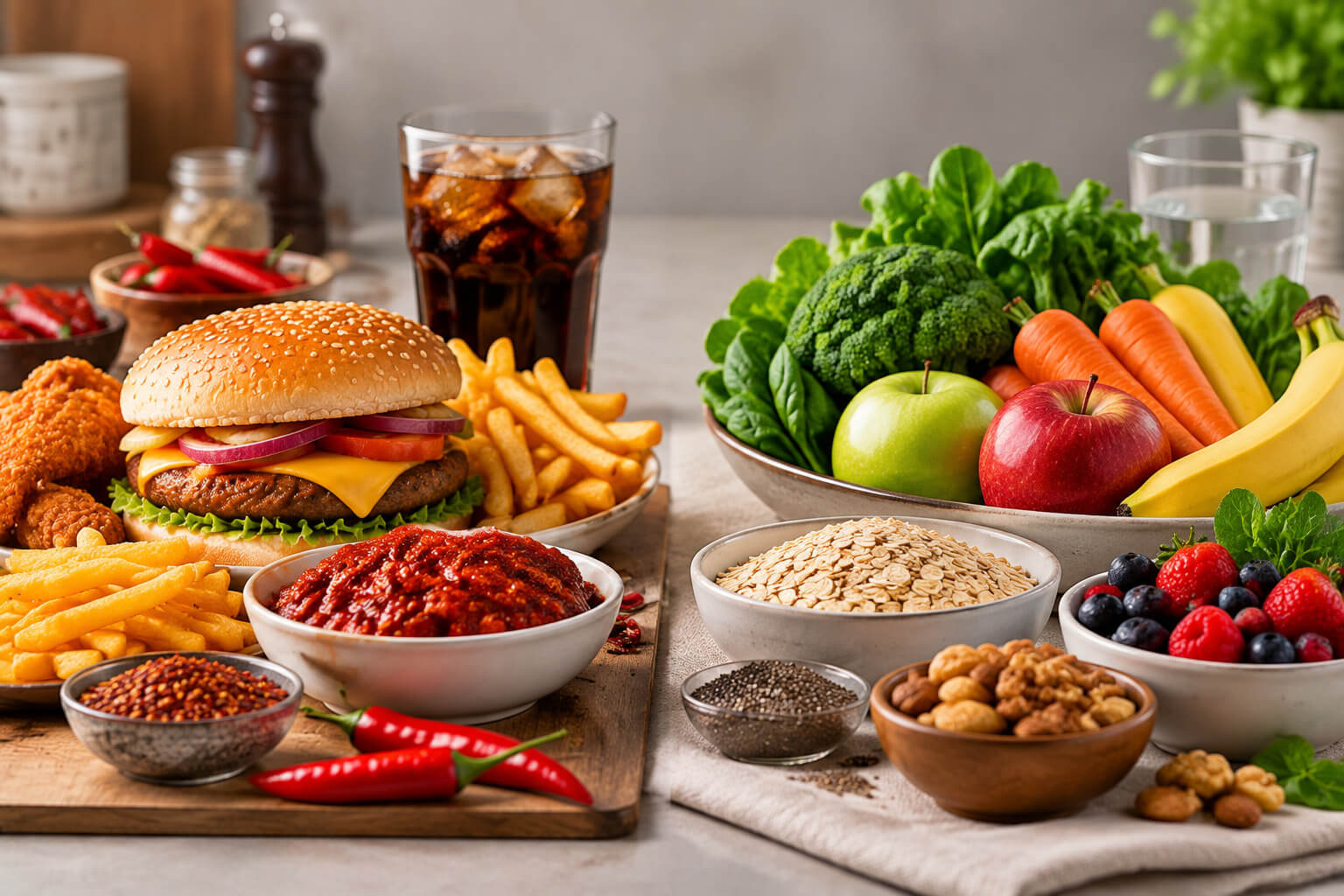

Do Specific Foods Directly Cause Hemorrhoid Bleeding?
There is no sound basis for telling everyone with suspected hemorrhoid bleeding to avoid the same spice, ingredient, or meal. The evidence-based diet advice is aimed mainly at how stool passes. The National Institute of Diabetes and Digestive and Kidney Diseases (NIDDK) explains that fiber-rich foods can make stool softer and easier to pass, helping treat or prevent hemorrhoid symptoms. A low-fiber eating pattern is one contributor to hemorrhoids, especially when constipation and straining follow.
Consider the pattern across several days rather than blaming the last item you ate. Were stools hard or difficult to pass? Did you sit and strain? Have loose stools been recurring instead? NIDDK lists both chronic constipation and diarrhea among contributors to hemorrhoid symptoms. If a food consistently changes your bowel habits, the observation is worth sharing with a clinician, but it does not show where rectal blood originated.
An internal hemorrhoid can cause bright red blood after a bowel movement. An anal fissure and other lower GI conditions can do so as well. Even a very clear connection between a hard stool and visible red blood cannot confirm a hemorrhoid diagnosis. The hemorrhoid bleeding overview page explains why the bleeding source should be checked separately from food changes.
Food Swaps That Add Fiber Without a Restrictive Diet
Breakfast: Add a Fiber Source
If breakfast is usually a low-fiber packaged snack, consider oats, shredded wheat, a higher-fiber cereal, or fruit with skin. Check labels when choosing packaged foods, and select options you will actually eat regularly rather than changing everything at once.
Lunch: Make Room for Vegetables or Beans
Beans, peas, vegetables, and whole grains can add fiber to meals that otherwise rely heavily on low-fiber prepared foods. A side of beans or vegetables is a practical addition even when the rest of the meal stays familiar.
Snacks: Compare the Pattern
Chips, many snack foods, and ice cream provide little or no fiber. If they routinely replace fruit, vegetables, or whole grains, the overall eating pattern can make it harder to reach a helpful fiber intake.
Drinks: Support the Fiber You Eat
Water and other appropriate nonalcoholic fluids help fiber work better. Ask a clinician how much is right for you if your medical conditions affect fluid needs; drinking more than advised is not a hemorrhoid treatment.
If Food Alone Is Not Enough
A clinician may recommend a fiber supplement or stool softener for some people. Ask how it fits your bowel pattern and other medications, and continue to report visible blood rather than using the supplement as a diagnostic test.
Why a Low-Fiber Pattern Can Matter
NIDDK advises people whose hemorrhoids are associated with chronic constipation not to rely heavily on foods with little or no fiber, such as cheese, chips, fast food, ice cream, meat, and many prepared or processed foods. That advice is about the overall pattern; it does not mean one serving of cheese directly opens a hemorrhoid or that everyone must avoid meat. What matters is whether low-fiber choices crowd out sources of fiber and hard stool leads to repeated straining.
The alternatives can be ordinary foods. NIDDK lists fruits such as pears and apples with skin, berries, green peas, potatoes with skin, and beans among fiber-rich choices. A bowl with beans, vegetables, and a whole grain, or fruit added to breakfast, can change the mix without creating a special hemorrhoid menu. The amount of fiber in packaged food is shown on its nutrition label; a dietitian can help translate that information into choices that fit your needs.
A Cochrane review of trials in symptomatic hemorrhoids found that fiber improved bleeding and overall symptoms. The research has limitations, and the benefit is not an argument to skip diagnostic evaluation. If a confirmed hemorrhoid continues to bleed despite sensible changes, ask about the hemorrhoid bleeding treatment options options rather than assuming you simply have not found the right food.
For people whose main problem is diarrhea, the plan may differ. Repeated loose stools can coexist with anal symptoms, but diarrhea and rectal blood may also point to another condition. Tell a clinician about both before eliminating broad groups of foods or increasing fiber aggressively on your own. The hemorrhoids overview guide explains how dietary and non-dietary approaches fit together.
What a Food Change Can and Cannot Tell You
The key distinction is between a supportive habit and a diagnostic conclusion. Fiber and suitable fluids may reduce difficult stool passage. They cannot tell a person whether a visible spot of blood arose from an internal hemorrhoid, fissure, or bowel condition. NIDDK specifically advises seeking a clinician’s help for rectal bleeding. GastroDoxs GutFortify HQ™ can help keep the food conversation focused on manageable habits alongside that medical evaluation.
The bleeding evaluation process uses history and examination to assess the cause. Clinicians may inspect the area, perform a digital rectal exam, use anoscopy for internal hemorrhoids, or consider a broader examination when appropriate. You can improve your diet while arranging the evaluation; the two steps answer different questions.
Food Identifies a Cause
Claim: “I bled after this food, so the food caused my hemorrhoid to bleed.” Better interpretation: Note any change in stool or straining, but a meal alone does not establish the bleeding source.
Food Swap Supports Bowel Habits
Claim: “Adding fiber can help.” Evidence: Fiber-rich foods can make stool softer and easier to pass, and fiber supplementation has improved symptomatic hemorrhoid bleeding in trials.
Improvement Ends the Investigation
Claim: “The bleeding stopped after I changed meals, so no evaluation is needed.” Limit: Symptom improvement does not confirm that the source was a hemorrhoid or exclude another condition.
Build Meals Around Easier Stool Passage
Start with a meal you already eat. Adding a piece of fruit with skin to breakfast or replacing a low-fiber snack with berries can be easier to maintain than an entire new menu. A serving of beans or vegetables can add fiber to lunch or dinner. If you are checking a cereal or packaged grain, read the fiber line on the label instead of relying on phrases such as “made with whole grains” alone.
Increase fiber in a way you can tolerate and pair it with fluid intake that fits your health. If you have dietary restrictions, a history of bowel problems, or uncertainty about supplements, ask a doctor or dietitian to help tailor the plan. The goal is a comfortable stool pattern, not an exact food list for every patient. Avoid pushing or sitting for a long time on the toilet when a bowel movement is difficult.
Food is one element of care. NIDDK also recommends addressing straining and toilet time; confirmed bleeding or prolapsing internal hemorrhoids that do not settle may be candidates for office treatment. If you have persistent bleeding, the hemorrhoid banding page describes one procedure that may be discussed after an appropriate examination.
Track the Pattern Without Blaming Every Meal
A brief record over several bowel movements can help you notice what is changing: stool consistency, time spent straining, visible blood, and any foods that reliably seem to affect bowel habits. You do not need to assign a cause to each episode. Bring the observations to an appointment and ask whether constipation, diarrhea, or another issue needs treatment.
Be cautious about eliminating a food group solely because blood appeared once after a meal. An unnecessarily narrow diet may crowd out fiber-rich choices, and it cannot replace an examination. If a clinician confirms hemorrhoids, you can use the record to find sustainable adjustments and assess whether symptoms improve. If the source remains uncertain, ask what next test or follow-up is appropriate.
- Record whether stool was hard, soft, or loose and whether passing it involved straining.
- Note whether blood appeared on paper, on stool, or in the bowl and whether it recurs.
- Look at the fiber content of the overall day rather than a single supposedly forbidden food.
- Bring questions about hydration or supplements to a clinician if you have other health conditions.
When Diet Is Not the Whole Answer
- Discuss any rectal bleeding with a clinician, even if it followed constipation or improved after adding fiber.
- Ask for reassessment if blood continues, recurs, or is accompanied by a change in bowel habits, fatigue, or abdominal symptoms.
- Seek urgent care for heavy bleeding, fainting, severe anal pain with bleeding, or bleeding with fever or significant abdominal symptoms.
- Ask whether the source was confirmed before assuming a long list of foods must be avoided.
Frequently Asked Questions
Does spicy food cause hemorrhoids to bleed?
There is no general evidence-based rule that spicy food directly causes hemorrhoid bleeding in everyone. If a food consistently changes your stool or worsens symptoms, describe the pattern to your clinician. Do not rely on avoiding one ingredient as a substitute for evaluating visible blood.
Do I have to give up cheese, meat, or ice cream?
NIDDK lists these as examples of foods with little or no fiber in advice for constipation-associated hemorrhoids. It does not say every person must eliminate them. Consider whether low-fiber foods routinely crowd out fruit, vegetables, beans, and whole grains; discuss any dietary restrictions with your clinician.
What foods add fiber without a special diet?
Examples include pears or apples with skin, berries, beans, peas, vegetables, and higher-fiber whole grains. Check packaged-food labels for fiber content. Choose additions that suit your usual meals and any medical dietary needs, and ask for individualized guidance when needed.
Can fiber stop hemorrhoid bleeding?
Fiber has evidence of benefit for bleeding and overall symptoms in people with symptomatic hemorrhoids. It does not work identically for everyone or establish that a hemorrhoid caused your episode. Continuing or recurrent blood should lead to a medical discussion about the source and next steps.
How much water should I drink with more fiber?
NIDDK advises drinking water and other liquids to help fiber work and asking your clinician how much fluid fits your health, activity, and circumstances. There is no single fluid prescription for everyone, especially if a medical condition requires fluid limits.
What if diarrhea, rather than constipation, comes with bleeding?
Chronic diarrhea can be associated with hemorrhoid symptoms, but diarrhea and bleeding can also signal another bowel problem. Tell a clinician about both. Avoid assuming a low-fiber diet or a hemorrhoid cream is the right answer without assessing the stool pattern and source of blood.
Medical References
- NIDDK - Eating, Diet, & Nutrition for Hemorrhoids
- NIDDK - Symptoms & Causes of Hemorrhoids
- NIDDK - Treatment of Hemorrhoids
- NIDDK - Diagnosis of Hemorrhoids
- Cochrane Review - Fiber for Symptomatic Hemorrhoids (PubMed)
- American College of Gastroenterology - Lower Gastrointestinal Bleeding
This article is for general educational purposes and does not replace a diagnosis or treatment plan from a qualified healthcare professional. Rectal bleeding should be discussed with a clinician even when you have had hemorrhoids before. Do not delay emergency care for heavy bleeding, fainting, or other severe symptoms. In the United States, call 911 for a medical emergency.

Get a Plan That Fits the Cause
A more fiber-rich eating pattern may make stool easier to pass. If you are seeing blood, pair those changes with an assessment of where the bleeding is coming from.