
Is This Hemorrhoids Bleeding? Signs to Watch For
Seeing blood on the paper or in the bowl can make you wonder whether a hemorrhoid is bleeding. The pattern may offer clues, but it cannot make the diagnosis on its own. Notice what changed, what else you feel, and whether the bleeding repeats; then discuss the finding with a clinician rather than assuming its source.
Key Takeaways
- Internal hemorrhoids may cause bright red blood on stool, toilet paper, or in the bowl after a bowel movement; they are often painless when they do not prolapse.
- An external hemorrhoid is more likely to cause itching, tenderness, or a lump. A painful episode of bleeding can also have another cause, including a fissure.
- Blood color and location are clues, not proof. Rectal bleeding deserves medical discussion even if hemorrhoids were diagnosed previously.

What Bleeding From an Internal Hemorrhoid Can Look Like
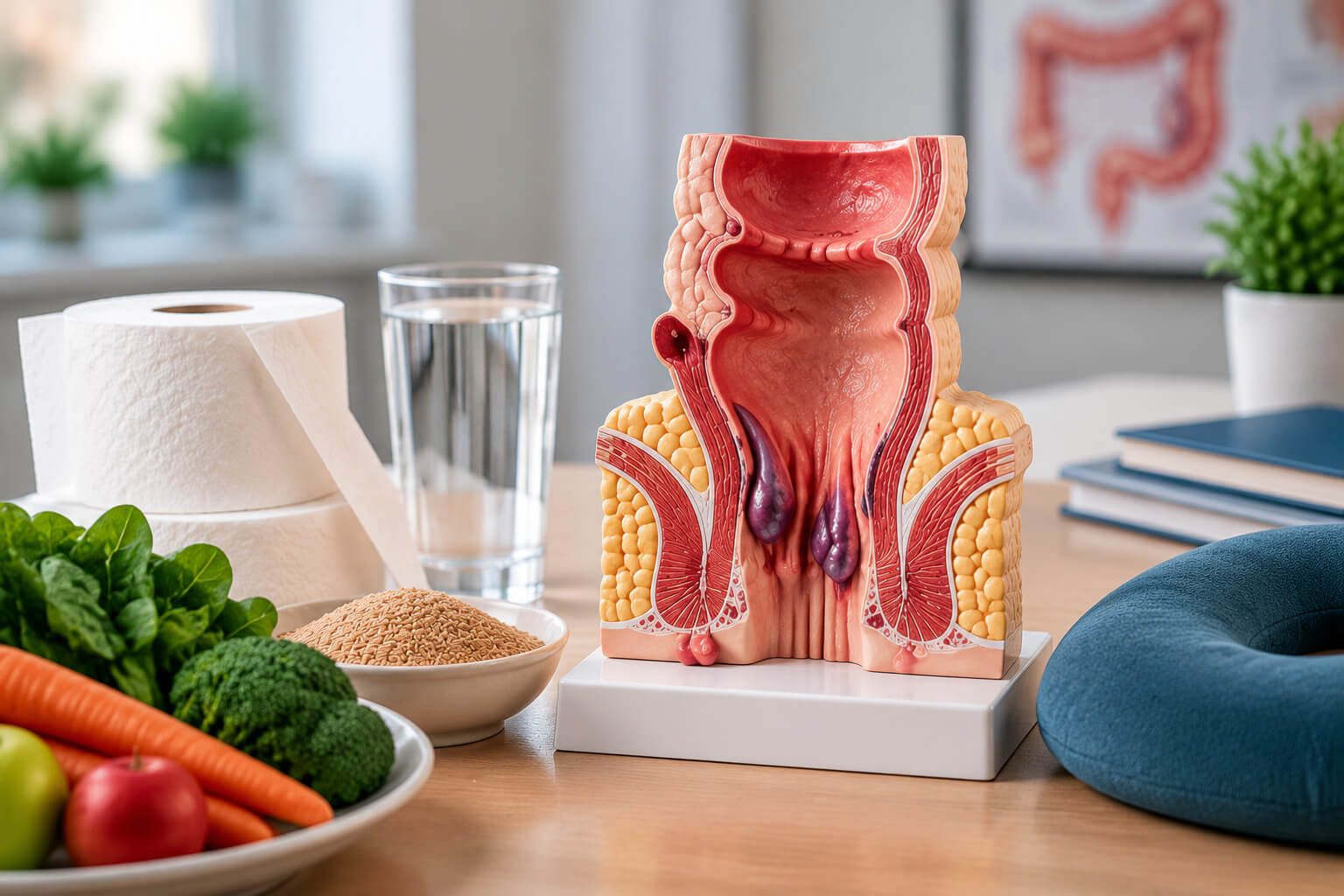
You wipe after a bowel movement and see bright red blood. It might appear as a streak on the paper, on the surface of stool, or in the toilet bowl. That pattern is compatible with a bleeding internal hemorrhoid, according to the National Institute of Diabetes and Digestive and Kidney Diseases (NIDDK). Internal hemorrhoids sit within the anus and lower rectum; when they do not prolapse, they are usually not painful. The absence of pain does not settle the question of where the blood came from.
Think of the location, color, timing, and whether bleeding recurs as information to share, not as a home diagnostic test. Describe whether the blood appeared only while wiping, after passing stool, or at other times. A small amount that stops still warrants a discussion with a clinician, particularly when it is new. The hemorrhoid bleeding overview page explains why a familiar-looking episode may still need a closer look.
Bleeding may coexist with a hemorrhoid that protrudes through the anal opening. You might notice tissue during a bowel movement or a feeling of fullness, yet those observations cannot establish that the visible blood came from that tissue. A doctor can check for hemorrhoids and other anorectal findings. If symptoms or risk factors suggest another source, evaluation may extend beyond the anal canal. The GastroDoxs GutDefense Pathway™ can be used to organize those observations before a visit.
Clues to Describe at Your Appointment
Bright Red Blood
Tell your clinician whether blood appeared on paper, stool, or in the bowl and whether it followed a bowel movement. Bright red bleeding can fit an internal hemorrhoid, but an anal fissure and other conditions can also cause visible red blood.
Pain or No Pain
Painless bleeding may occur with an internal hemorrhoid. Marked pain, a tender lump, or pain when passing stool changes the picture and may prompt evaluation for a thrombosed external hemorrhoid or a fissure.
A Lump or Protruding Tissue
A tender lump near the anus can occur with an external hemorrhoid. Internal hemorrhoids can prolapse. Describe what you noticed and when; an examination is the way to determine what the finding represents.
Changes Outside the Anal Area
New bowel habit changes, abdominal symptoms, unusual fatigue, or recurring blood may broaden the evaluation. They do not diagnose a serious disease by themselves, but they should be mentioned even when hemorrhoids seem likely.
When the Story Does Not Fit Simple Hemorrhoids
Hemorrhoids are common, but they are only one explanation for visible blood. The American College of Gastroenterology (ACG) also lists anal fissures, inflammation, polyps, and other bowel conditions among causes of lower digestive tract bleeding. A fissure is a small tear in the anus and can cause pain with a bowel movement and bright red blood. The resemblance is one reason an examination matters.
Blood that is dark maroon or black is a different warning pattern and should not be labeled a hemorrhoid symptom from appearance alone. ACG notes that lower gastrointestinal bleeding can be accompanied by tiredness from anemia or, when bleeding is heavy, dizziness and fainting. Tell a clinician about blood mixed with stool, persistent or repeated bleeding, changes in bowel habits, abdominal pain, or fatigue. These details help determine how promptly you need care and what to evaluate.
You can learn more about the broader differential on GastroDoxs’s blood in stool overview page. The purpose of the comparison is not to guess which diagnosis is most frightening. It is to make sure a treatable anorectal problem is identified correctly and that an additional problem is not missed because the first explanation sounded plausible.
A Clue Is Different From a Diagnosis
Diagnosis begins by asking about symptoms, medical conditions, medicines, and bowel habits. A doctor may see an external hemorrhoid on inspection. For a suspected internal hemorrhoid, a digital rectal exam and, when appropriate, anoscopy can help assess the lower rectum and anal canal. The hemorrhoid bleeding diagnosis page outlines those possible steps without suggesting that everyone needs every test.
Sometimes the clinician recommends flexible sigmoidoscopy or colonoscopy to look farther inside. That decision depends on the whole picture; visible bright red blood alone cannot identify its source. The American Society of Colon and Rectal Surgeons recommends complete colon evaluation in select patients who have hemorrhoid symptoms and rectal bleeding, which is different from saying that every episode requires a colonoscopy.
What You Can Observe
Color, amount, when bleeding appears, discomfort, a lump, and whether bowel habits have changed. Record observations in ordinary words; pictures are optional if you are comfortable sharing them privately with your clinician.
What the Exam Can Clarify
A clinician can inspect the anal area, assess tenderness or a fissure, and perform a digital rectal exam. Anoscopy may be used to examine the anal canal and lower rectum when an internal hemorrhoid is suspected.
When the Colon May Need Evaluation
A finding near the anus does not explain every symptom. In selected people, the history, examination, persistent bleeding, accompanying symptoms, or screening needs may lead to an examination of more of the colon.
When to Call a Clinician-and When Not to Wait
NIDDK advises getting a doctor’s help when you have rectal bleeding, and when hemorrhoid symptoms persist after about one week of at-home treatment. Do not wait a week before reporting new bleeding merely because you are trying fiber, a cream, or a warm bath. Tell the care team if bleeding comes back, becomes more frequent, or occurs alongside a bowel change.
Heavy bleeding or bleeding with fainting, pronounced lightheadedness, or a rapid pulse calls for immediate care. NIDDK also advises prompt care for severe anal pain with rectal bleeding, particularly if abdominal pain, diarrhea, or fever is present. Those situations need a timely assessment of what is happening, whether or not you have had hemorrhoids before.
If you already have a colorectal screening plan, mention it at the appointment, but do not treat a screening schedule as an answer to a new symptom. A symptomatic bleeding episode deserves a clinical assessment of its own. If the source is confirmed as an internal hemorrhoid, your clinician can explain the available treatment options that fits your case.
What to Bring to the Visit
You do not need a precise measurement to describe a bleeding episode. An approximate account helps: how many times you saw blood, whether it was on paper or in the water, what the stool looked like, and whether you felt pain. Include constipation, diarrhea, prolonged toilet sitting, or straining if they apply. If you have used a nonprescription product, say what it was and whether the symptoms changed.
Bring a medication list, including aspirin, anti-inflammatory pain medicines, and any blood thinners, and mention any prior colon examinations. Some medicines can affect bleeding risk or alter the evaluation, but do not stop a prescribed medicine without guidance from its prescriber. Ask what the examination showed and what finding would change the next step.
- Describe exactly when you saw blood and whether bleeding has stopped or recurred.
- Mention pain, itching, a lump, prolapse, abdominal symptoms, and changes in stool or bowel habits.
- Share your medications, past bleeding episodes, prior diagnoses, and any colorectal screening or colonoscopy history.
- Ask whether the source was actually identified and what to do if the symptom returns.
What Happens After the Source Is Identified
- If an internal hemorrhoid is confirmed, treatment may begin with softer stool, more dietary fiber, appropriate fluids, and shorter toilet time, tailored to your circumstances.
- If symptoms continue, a clinician may discuss office procedures such as rubber band ligation for selected internal hemorrhoids; the hemorrhoid banding page describes this option.
- If a fissure, inflammation, or another source is found, the treatment plan changes to address that diagnosis rather than treating all rectal bleeding as hemorrhoids.
- If the source remains uncertain or bleeding persists after treatment, ask when additional evaluation or follow-up should occur.
Frequently Asked Questions
Is bright red blood always a bleeding hemorrhoid?
No. Bright red blood on paper or in the bowl can occur with an internal hemorrhoid, but an anal fissure and other lower digestive tract conditions can also cause red bleeding. Tell a clinician about any new bleeding, even if the appearance seems familiar. The next step depends on your history, an examination, and any symptoms that accompany the blood.
Can an internal hemorrhoid bleed without pain?
Yes. NIDDK describes bright red rectal bleeding with internal hemorrhoids and notes that internal hemorrhoids that have not prolapsed are most often painless. Pain is useful information, but neither its presence nor its absence proves a specific source of bleeding.
What if I already know I have hemorrhoids?
A prior diagnosis makes hemorrhoids a possible explanation, not an automatic explanation for every future episode. Tell your clinician if the amount, timing, or pattern has changed, or if bleeding keeps returning. An exam may confirm a hemorrhoid is responsible or identify another source.
Does a tender lump mean the blood came from that lump?
A tender anal lump can occur with an external hemorrhoid, including one with a clot, but other anorectal problems may also produce pain or a lump. It is especially important to seek care promptly if severe pain accompanies rectal bleeding. A clinician can inspect the area and decide what further evaluation is needed.
Do I need a colonoscopy for every episode?
Not everyone with bright red bleeding needs the same test. Clinicians often start with a history and examination, sometimes including anoscopy. More extensive colon evaluation may be appropriate for selected patients based on symptoms, examination, risk factors, persistent bleeding, and screening history.
Can I try an over-the-counter cream first?
A short course of an over-the-counter product may ease mild hemorrhoid discomfort, but a cream does not establish where rectal blood came from. NIDDK advises contacting a clinician for rectal bleeding. Severe or heavy bleeding and bleeding with faintness require more urgent care.
Medical References
- NIDDK - Symptoms & Causes of Hemorrhoids
- NIDDK - Diagnosis of Hemorrhoids
- NIDDK - Treatment of Hemorrhoids
- American College of Gastroenterology - Lower Gastrointestinal Bleeding
- American College of Gastroenterology - Rectal Problems
- American Society of Colon and Rectal Surgeons - 2024 Hemorrhoids Clinical Practice Guideline
This article is for general educational purposes and does not replace a diagnosis or treatment plan from a qualified healthcare professional. Rectal bleeding should be discussed with a clinician even when you have had hemorrhoids before. Do not delay emergency care for heavy bleeding, fainting, or other severe symptoms. In the United States, call 911 for a medical emergency.

Find the Source of Rectal Bleeding
Seeing bright red blood may point toward a hemorrhoid, but your symptoms and examination determine which evaluation is appropriate. Get guidance on the next step.