
Right Upper Quadrant Pain Treatment
 Medically Reviewed by
Dr. Bharat Pothuri, MD, FACG
| Updated July 29, 2026
Get a focused plan for pain under the right ribs by connecting meal timing, radiation, fever, jaundice, liver and pancreatic tests, ultrasound, and non-digestive mimics.
Right upper quadrant pain treatment depends on whether the source is the gallbladder, bile ducts, liver, stomach, pancreas, kidney, bowel, abdominal wall, lung, or heart. GastroDoxs GutRescue Mission™ connects the pain pattern, laboratory findings, ultrasound or advanced imaging, urgent warning signs, and the specialist or procedure needed next.
Why Choose GastroDoxs for Right Upper Quadrant Pain Care?
Gallbladder and Liver Expertise
The team interprets ultrasound, liver tests, bilirubin, lipase, medication exposure, alcohol history, and symptom timing together.
Imaging Matched to the Question
Ultrasound is commonly first for biliary disease, while MRCP, HIDA, endoscopic ultrasound, CT, or endoscopy is selected for specific unresolved findings.
Urgent Biliary Complications Recognized
Persistent pain, fever, jaundice, confusion, or pancreatic symptoms are directed to hospital-based treatment when needed.
Non-Biliary Mimics Considered
Peptic disease, kidney disorders, bowel disease, muscle pain, pneumonia, pulmonary embolism, and cardiac disease remain part of safe triage.
A broad RUQ differential prevents every episode from being labeled gallstones without supporting evidence.
GastroDoxs GutGuardians™
Your guardians. GastroDoxs GutGuardians™ is our team of gastroenterologists board-certified by the American Board of Internal Medicine (ABIM) - a physician-led defense force of specialists, systems, and solution pathways working together to protect, detect, solve, and defend your digestive health through expert GI evaluation, advanced diagnostic screening, and endoscopic evaluation - commanded from your first concern to your last follow-up, and every critical stage in between.
GastroDoxs GutRescue Mission™
Your rescue plan. When your diagnosis is confirmed, GastroDoxs GutRescue Mission™ deploys at full force - a gastroenterologist-led intervention plan delivering advanced colonoscopy, upper endoscopy, capsule endoscopy, and precision biologic and medication management across the full range of digestive conditions and complex GI emergencies - fighting for you with everything we have.
What Happens After You Book?
Record the Pain Pattern
Note meal timing, duration, radiation to the shoulder or back, vomiting, fever, jaundice, urine and stool color, urinary symptoms, and chest symptoms.
Bring Ultrasound and Laboratory Results
Share liver tests, bilirubin, lipase, CBC, CT, MRCP, HIDA, endoscopy, emergency records, and medication lists.
Identify the Organ System
The clinician separates gallbladder, bile-duct, liver, peptic, pancreatic, kidney, bowel, chest, and abdominal-wall patterns.
Receive Cause-Specific Treatment Planning
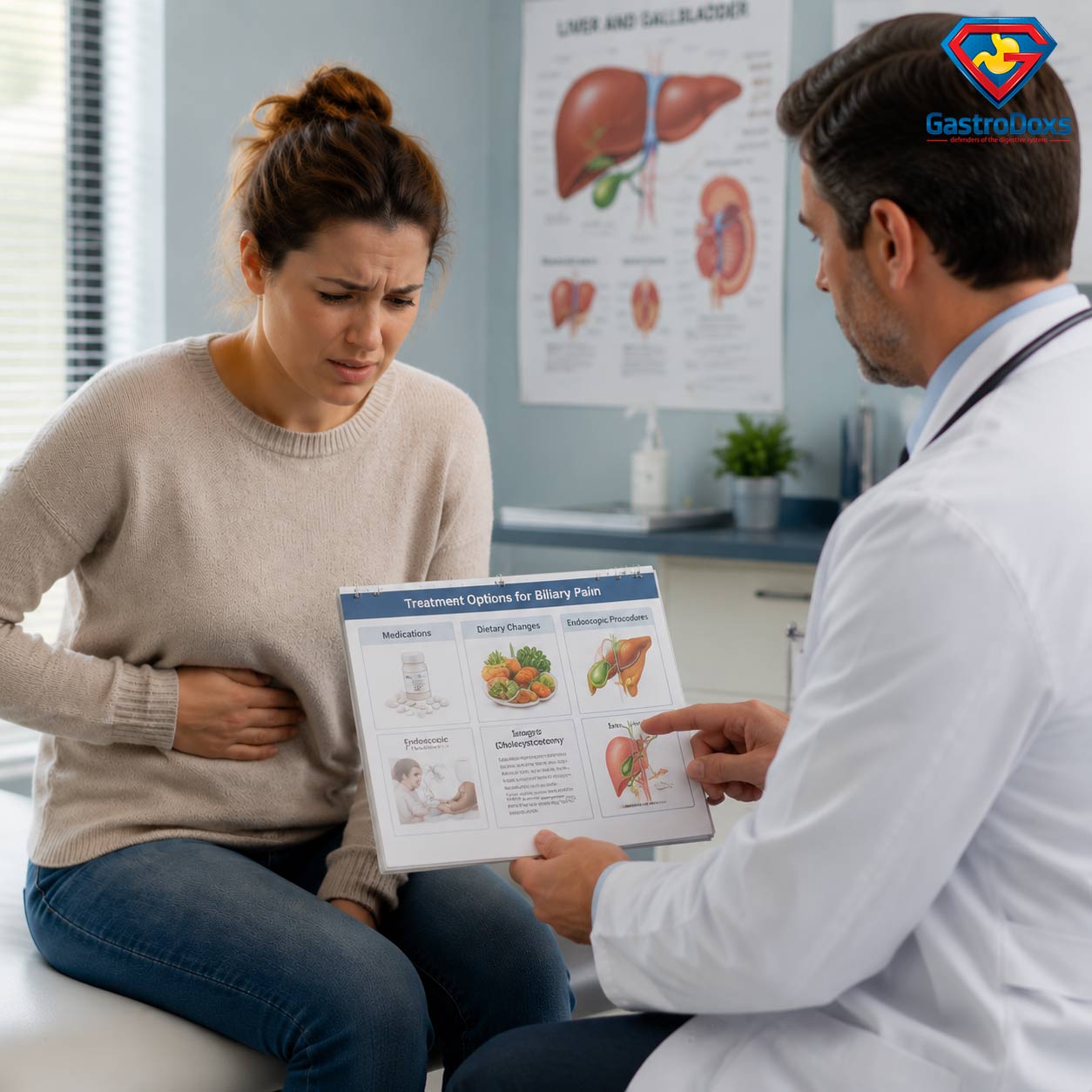
The plan may include medication, diet guidance, liver treatment, surgery referral, ERCP, endoscopy, additional imaging, or urgent care.
Who May Benefit From a Right Upper Quadrant Pain Appointment?
- Recurring RUQ Pain After Meals
- RUQ Pain With Abnormal Liver Tests
- Pain With Nausea or Back Radiation
- Pain With Jaundice or Dark Urine
- Normal Ultrasound but Symptoms Continue
- Persistent Pain After Emergency Care
Medical Review and Specialist Coordination
GastroDoxs evaluates recurring or unexplained right upper quadrant pain, reviews gallbladder and liver testing, and coordinates medication, endoscopy, ERCP, liver care, surgery, or urgent referral.









RUQ Pain Treatment and Next-Step Guidance
Non-emergency recurring RUQ pain may be evaluated in a GI setting. Fever with jaundice, severe persistent pain, confusion, chest pressure, breathing difficulty, fainting, or repeated vomiting requires urgent care.
Have Questions Before Booking Right Upper Quadrant Pain Care?
Right upper quadrant pain can come from the gallbladder, bile ducts, liver, duodenum, stomach, pancreas, right kidney, colon, abdominal wall, lung, pleura, or heart. Treatment depends on the diagnosed organ and severity.
No. Gallstones and gallbladder inflammation are common, but hepatitis, peptic disease, pancreatitis, kidney infection, kidney stones, bowel conditions, muscle strain, pneumonia, pulmonary embolism, and cardiac disease can also cause or refer pain there.
Liver-related causes include viral, alcohol-related, toxic, autoimmune, or metabolic hepatitis; congestion; abscess; cysts; and tumors. Treatment may involve stopping an offending medicine, antiviral or immune treatment, alcohol cessation, drainage, or specialty care.
Gallstone pain often begins suddenly under the right ribs or upper middle abdomen, becomes steady, may spread to the shoulder or back, and can follow a fatty meal. Ultrasound and laboratory testing are needed because symptoms overlap with other conditions.
Biliary colic may include steady upper abdominal pain, nausea, vomiting, sweating, and radiation to the right shoulder or back. Fever, jaundice, persistent pain, or confusion suggests a complication requiring urgent care.
Yes. Dietary fat triggers gallbladder contraction. If a stone or narrowing temporarily blocks bile flow, pressure can produce pain. Lower-fat meals may reduce triggers while awaiting evaluation but do not remove gallstones.
Testing may include CBC, liver tests, bilirubin, lipase, urinalysis, pregnancy testing when relevant, and ultrasound. CT, MRCP, HIDA scan, endoscopic ultrasound, ERCP, chest testing, or endoscopy may be selected for specific findings.
Seek emergency care for severe or persistent pain, fever, jaundice, confusion, fainting, repeated vomiting, black or bloody stool, chest pressure, shortness of breath, a rigid abdomen, or rapidly worsening symptoms.
Yes. Liver inflammation can stretch the liver capsule and cause a dull ache or fullness. Treatment depends on the cause of hepatitis and may require medication review, viral testing, immune treatment, alcohol avoidance, or urgent care for liver failure signs.
Gallbladder pain is often episodic, intense, meal-related, and may radiate to the shoulder or back. Liver discomfort is more often a dull ache or fullness. These patterns overlap, so treatment should follow examination, blood tests, and imaging.
Yes. Gallbladder and biliary pain may spread to the right shoulder blade, upper back, or upper middle abdomen. Kidney, lung, and cardiac pain can also radiate, so the entire symptom pattern matters.
Treatment may include pain and nausea control, temporary lower-fat meals, laparoscopic cholecystectomy for symptomatic gallstones, antibiotics for infection, ERCP for bile-duct stones, or another intervention based on the cause.
Yes. Peptic ulcer disease, reflux, pancreatitis, kidney disease, constipation, bowel obstruction, abdominal-wall strain, shingles, pneumonia, pulmonary embolism, and heart conditions can mimic biliary or liver pain.
Gradual weight management, regular meals, hydration, limiting alcohol, avoiding tobacco, and reducing personal high-fat triggers may help some causes. Lifestyle changes do not replace treatment for gallstones, infection, hepatitis, obstruction, or cardiac disease.
Schedule evaluation when pain persists, keeps returning, disrupts meals or sleep, or occurs with nausea, bowel changes, urinary symptoms, fever, jaundice, or weight loss. Severe or worsening symptoms need urgent care.
Gas or mild muscle pain may settle, and temporary biliary obstruction may release. Improvement does not identify the cause, and recurrent episodes deserve evaluation because the underlying condition may remain.
Book a Right Upper Quadrant Pain Evaluation
Get a cause-specific plan for gallbladder, bile-duct, liver, stomach, pancreatic, kidney, or referred pain. Seek urgent care for fever, jaundice, confusion, severe persistent pain, repeated vomiting, chest symptoms, or fainting.