
Muscle Wasting and Sarcopenia in Chronic GI Disease Treatment
 Medically Reviewed by
Dr. Bharat Pothuri, MD, FACG
| Updated August 17, 2026
Treat the digestive driver, rebuild strength safely, and measure progress beyond body weight alone.
Muscle loss during chronic digestive or liver disease rarely improves through a supplement alone. GastroDoxs GutRescue Mission™ links objective weakness and body-composition findings to the process driving them—poor intake, diarrhea, malabsorption, active inflammation, cirrhosis, pancreatic insufficiency, restrictive eating, medication effects, hospitalization, or inactivity. Treatment combines cause control, nutrition timed to tolerance and disease needs, safe progressive resistance activity, fall-risk support, and repeated strength or function measurements rather than judging recovery from scale weight alone.
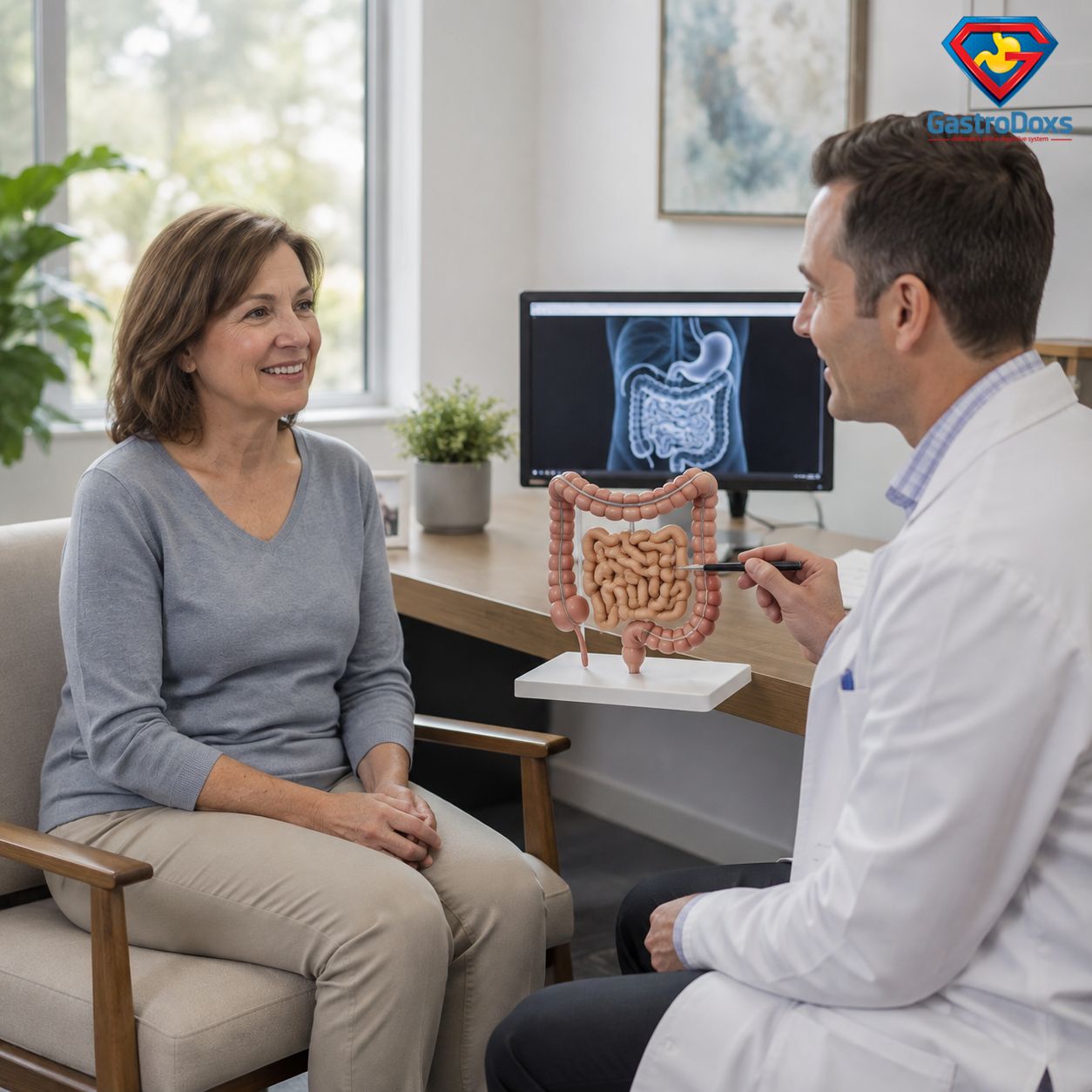
Why Choose GastroDoxs for GI-Related Sarcopenia Care?
GI-Driver Treatment
Celiac disease, inflammatory activity, chronic diarrhea, pancreatic insufficiency, liver disease, nausea, pain, swallowing difficulty, and bleeding are treated according to the cause.
Individual Protein and Energy Planning
Nutrition goals reflect kidney and liver status, intake tolerance, meal size, symptoms, weight trajectory, and whether fluid is masking tissue loss.
Progressive Function Recovery
Resistance activity, balance, walking, and rehabilitation are scaled to baseline strength, frailty, falls, pain, and medical stability rather than prescribed as a generic workout.
Objective Response Monitoring
Grip, chair rise, gait, intake, dry-weight trend, and selective DXA, BIA, or CT-based muscle measures show whether treatment is rebuilding capacity.
The care pathway integrates GI disease control with nutrition and functional rehabilitation so that the same symptoms limiting intake and activity are treated alongside the muscle loss.
GastroDoxs GutGuardians™
Your guardians. GastroDoxs GutGuardians™ is our team of gastroenterologists board-certified by the American Board of Internal Medicine (ABIM) - a physician-led defense force of specialists, systems, and solution pathways working together to protect, detect, solve, and defend your digestive health through expert GI evaluation, advanced diagnostic screening, and endoscopic evaluation - commanded from your first concern to your last follow-up, and every critical stage in between.
GastroDoxs GutRescue Mission™
Your rescue plan. When your diagnosis is confirmed, GastroDoxs GutRescue Mission™ deploys at full force - a gastroenterologist-led intervention plan delivering advanced colonoscopy, upper endoscopy, capsule endoscopy, and precision biologic and medication management across the full range of digestive conditions and complex GI emergencies - fighting for you with everything we have.
What Happens After You Book?
Request a GI Muscle-Loss Consultation
Book online or call and mention weakness, falls, weight or clothing change, swelling, chronic diarrhea, early fullness, restricted intake, liver disease, or inflammatory activity.
Share Nutrition, Imaging, and Disease Records
Provide GI diagnoses, endoscopy and stool tests, CT images, DXA or BIA results, laboratory trends, dietitian notes, medicines, and recent hospital history.
Identify the Treatable Drivers
The clinician evaluates intake barriers, malabsorption, inflammation, liver metabolism, pancreatic function, bleeding, medicines, and other systemic contributors.
Coordinate Nutrition and Functional Follow-Up
The plan defines disease treatment, food or supplement goals, safe rehabilitation, strength measurements, laboratory follow-up, and escalation for rapid decline.
Who May Benefit From a GI-Related Sarcopenia Appointment?
- Reduced grip, slower walking, or difficulty rising from a chair
- Unintentional weight loss or visible loss of limb muscle
- Stable scale weight despite edema or abdominal fluid
- Chronic diarrhea, greasy stool, anemia, or suspected malabsorption
- Inflammatory bowel disease with reduced strength or intake
- Cirrhosis with early fullness, long fasting periods, or frailty
- Pancreatic disease with poor digestion and weight loss
- Food restriction caused by pain, nausea, swallowing trouble, or fear
- Repeated hospitalization, falls, or loss of daily independence
- Need for coordinated GI, dietitian, rehabilitation, and medical follow-up
Muscle Wasting and Sarcopenia in Chronic GI Disease Care With GastroDoxs GI Specialists
GastroDoxs clinicians evaluate digestive and liver mechanisms contributing to sarcopenia and coordinate cause treatment with nutrition, strength recovery, and objective follow-up.







Choose Your Appointment Option
Select an appointment option and bring a weight and function timeline, food record, GI and liver records, CT or body-composition results, medicines, supplements, and recent laboratory data.
Questions Before Booking GI-Related Sarcopenia Treatment
Improvement is possible, especially when treatable GI drivers are controlled and nutrition plus progressive resistance activity are feasible. Recovery depends on disease severity, baseline function, and consistency.
A multimodal plan usually combines progressive resistance activity, adequate energy and protein, treatment of underlying disease, fall prevention, and repeated functional assessment.
Not always. Intake may be limited by symptoms, absorption may be impaired, inflammation may increase breakdown, and muscle needs a progressive activity stimulus. Medical conditions also affect the safe target.
The plan considers body size, usual intake, kidney and liver status, disease activity, meal tolerance, fluid retention, and rehabilitation goals rather than using one target for everyone.
Progressive resistance exercise is central when medically safe, often combined with balance and walking work. Baseline weakness, falls, pain, heart or lung disease, and frailty determine supervision and intensity.
Treatment targets the cause, such as celiac disease, pancreatic insufficiency, inflammation, infection, or altered anatomy, while correcting documented nutrient and energy deficits.
Care often addresses adequate protein and energy, smaller frequent meals, avoiding long fasting periods, safe activity, fluid-related weight distortion, and treatment of liver complications.
A supplement may help close a documented intake gap, but it does not replace disease treatment, adequate meals, resistance activity, or evaluation of swallowing and absorption.
Some functional gains may appear over weeks, while meaningful tissue recovery often takes months. Severe disease, repeated hospitalization, and ongoing inflammation can slow progress.
Follow-up may use grip strength, chair stands, gait speed, falls, activity, intake, dry-weight trend, laboratory markers, and selective DXA, BIA, or CT measures.
Not reliably by itself. Fat gain or fluid can raise weight without rebuilding muscle, while fluid removal can lower weight despite clinical improvement.
Testing follows the clues and may include celiac serology, stool inflammation or pancreatic tests, liver assessment, endoscopy, colonoscopy, imaging, or evaluation for bleeding and malabsorption.
Bring weight and function trends, falls, a food record, GI and liver diagnoses, CT or DXA data, dietitian notes, medicines, supplements, and recent laboratory results.
Coverage varies by plan, diagnosis, provider type, and referral rules. Staff can help coordinate supporting records, but benefits should be verified directly.
Sudden or one-sided weakness, new speech difficulty, breathing or swallowing trouble, confusion, fainting, severe dehydration, active bleeding, or rapid decline needs urgent assessment.
Book a GI-Related Muscle-Loss Treatment Consultation →
Treat the digestive or liver driver, rebuild nutrition and strength safely, and track recovery with functional measures that weight alone can miss.