


★★★★★
"GastroDoxs took my early fullness seriously and helped me understand why I felt full after only a few bites. The treatment plan was clear and easy to follow."

 Medically Reviewed by
Dr. Bharat Pothuri, MD, FACG
| Updated July 20, 2026
Medically Reviewed by
Dr. Bharat Pothuri, MD, FACG
| Updated July 20, 2026
Specialist evaluation and treatment when a few bites cause fullness, nausea, bloating, or nutritional decline
Early satiety means feeling physically full after eating much less than expected. It may be linked to gastroparesis, functional dyspepsia, gastritis, peptic ulcer disease, gastric outlet obstruction, medication-related slowing, constipation-related distension, or systemic disease. GastroDoxs GutRescue Mission™ connects the meal pattern with nutrition risk, targeted testing, and cause-specific treatment.
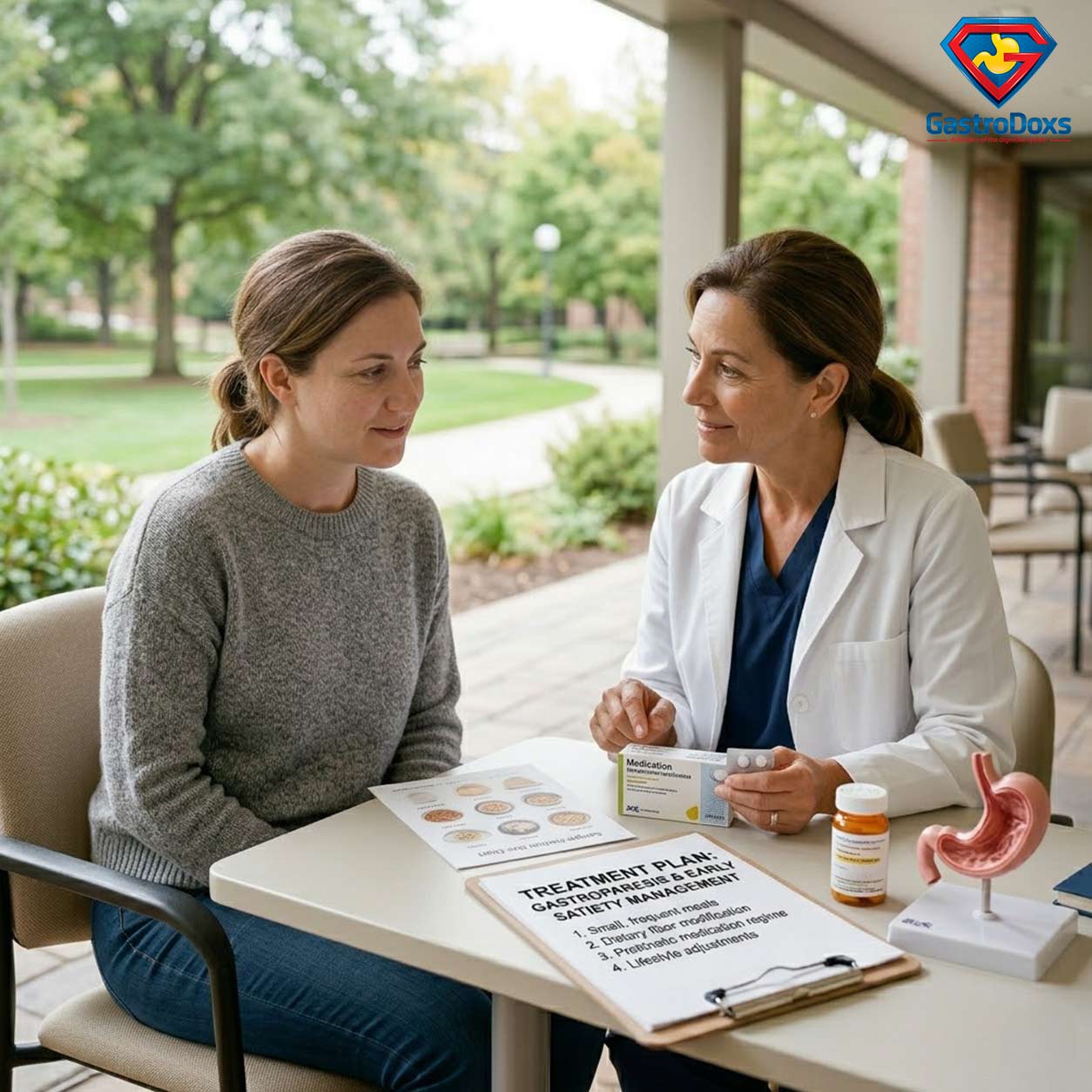
Specialist-led treatment based on the symptom mechanism, clinical risk, and patient goals
The visit clarifies whether the patient wants to eat but becomes full quickly, lacks hunger, has swallowing difficulty, or avoids food because eating causes pain or nausea.
Symptoms are assessed for delayed stomach emptying, functional dyspepsia, ulcer disease, reflux, obstruction, prior surgery, diabetes, and medication effects.
Weight, muscle, protein, calorie, fluid, and micronutrient risk are reviewed before the patient becomes severely depleted.
Care may include medication adjustment, H. pylori or ulcer treatment, acid control, prokinetic therapy, constipation treatment, gastroparesis nutrition, or procedure referral.
GastroDoxs separates true early satiety from low appetite and selects treatment based on stomach structure, emptying, medicines, nutrition, and associated symptoms.
Your guardians. GastroDoxs GutGuardians™ is an elite team of board-certified gastroenterologists - a physician-led defense force of specialists, systems, and solution pathways working together to protect, detect, solve, and defend your digestive health through expert GI evaluation, advanced diagnostic screening, and endoscopic evaluation - commanded from your first concern to your last follow-up, and every critical stage in between.
Your rescue plan. When your diagnosis is confirmed, GastroDoxs GutRescue Mission™ deploys at full force - a gastroenterologist-led intervention plan delivering advanced colonoscopy, upper endoscopy, capsule endoscopy, and precision biologic and medication management across the full range of digestive conditions and complex GI emergencies - fighting for you with everything we have.
A clear path from scheduling to testing, treatment, and follow-up
Book when small portions repeatedly cause fullness or when weight and strength are changing.
Track how many bites trigger fullness, how long it lasts, solid versus liquid tolerance, nausea, vomiting, pain, bloating, and weight.
The specialist reviews structural, inflammatory, motility, medication, bowel, and systemic causes.
The plan may include meal changes, medication treatment, endoscopy, gastric-emptying testing, constipation care, or referral.
Schedule when the symptom persists, recurs, limits nutrition or function, or remains unexplained
GastroDoxs providers support early satiety treatment through upper-endoscopy, motility, gastroparesis, functional-dyspepsia, medication, and nutrition expertise.







Schedule stable early satiety care through Cypress, Jersey Village, Katy, or Brookshire. Persistent vomiting, bleeding, severe dehydration, a rigid swollen abdomen, or rapid nutritional decline requires urgent care.
Treatment depends on the cause. A gastroenterologist may use meal modification, medication review, acid or ulcer treatment, H. pylori therapy, constipation care, gastroparesis nutrition, prokinetic treatment, or referral for structural disease.
Possible tests include laboratory work, upper endoscopy, H. pylori testing, ultrasound or CT, and a standardized four-hour gastric-emptying study when gastroparesis is suspected.
The first visit can often define the likely pathway, but final diagnosis may require records, endoscopy, imaging, a gastric-emptying study, biopsies, or response to treatment. Urgent red flags should be evaluated immediately.
Coverage depends on the insurance plan, referral requirements, and testing recommended. GastroDoxs accepts many major plans and can help verify benefits before scheduling.
Urgent warning signs include repeated vomiting with inability to drink, blood or coffee-ground vomit, black stool, severe or worsening pain, a rigid swollen abdomen, fainting, severe dehydration, and rapid nutritional decline.
Specialized gastric-emptying and motility testing is ordered when the clinical pattern supports it. GastroDoxs can perform the GI evaluation and coordinate the appropriate testing location and preparation.
The best gastroenterologist is one with board certification, experience in upper-GI and motility disorders, a clear testing pathway, and nutrition-focused follow-up. GastroDoxs provides specialist-led care rather than making unverifiable “best” claims.
Early satiety requires urgent care when it occurs with persistent vomiting, severe pain, bleeding, fainting, dehydration, or marked abdominal swelling. Stable persistent symptoms need timely specialist evaluation.
A general clinic can provide broad initial review. An early satiety specialist or gastroenterologist adds upper-endoscopy, gastroparesis, functional dyspepsia, motility, pancreatic-biliary, and nutrition expertise.
Insurance coverage for endoscopy, imaging, and gastric-emptying testing varies by plan and indication. Benefit verification can clarify referral, authorization, deductible, and facility requirements.
Severe early satiety may cause inability to finish small meals, unintentional weight loss, muscle loss, weakness, dehydration, electrolyte changes, dizziness, and micronutrient deficiency.
Gastroenterologists define whether fullness occurs after a few bites, review duration and associated symptoms, examine medication and diabetes history, assess nutrition, and select endoscopy, imaging, or motility testing.
A specialized clinic may provide nutrition treatment, medication adjustment, H. pylori or ulcer treatment, prokinetic therapy, anti-nausea care, constipation treatment, gastroparesis management, and procedure referral.
Board certification supports training in digestive diagnosis, endoscopy, and treatment. More important than the credential alone is whether the clinician explains testing, nutritional risk, treatment limits, and follow-up clearly.
No. The diagnosis depends on age, symptoms, medicines, diabetes, prior surgery, nutrition, weight change, examination findings, and test results. Two patients with the same quick-fullness symptom may require different treatment.
Book an early satiety evaluation if a few bites repeatedly cause fullness, meals are shrinking, or weight and strength are changing. Get structural, motility, medication, and nutrition guidance matched to the cause.