★★★★★
"The GastroDoxs team carefully reviewed when food felt stuck and explained the recommended testing and treatment options in clear language."

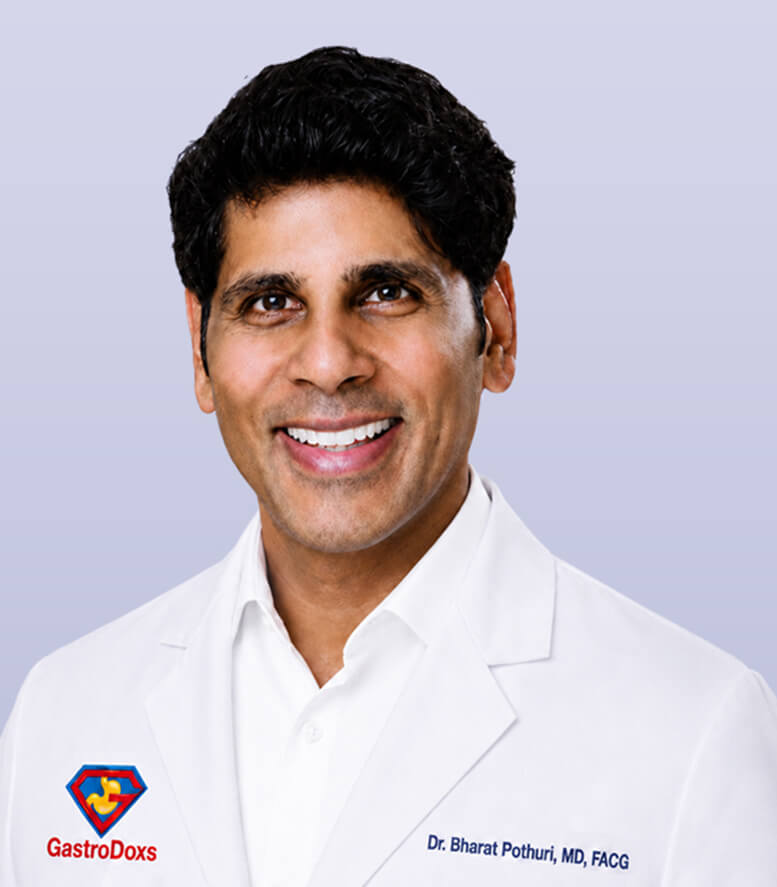 Medically Reviewed by
Dr. Bharat Pothuri, MD, FACG
| Updated 07-23-2026
Medically Reviewed by
Dr. Bharat Pothuri, MD, FACG
| Updated 07-23-2026
Dysphagia treatment is determined by the mechanism: structural narrowing, inflammation, abnormal esophageal movement, or impaired mouth-and-throat coordination.
Dysphagia should be treated according to the exact swallowing disorder rather than managed only with softer food. GastroDoxs GutRescue Mission™ connects the clinical pattern, upper endoscopy and biopsies, dilation findings, barium imaging, high-resolution manometry, reflux or eosinophilic inflammation, and aspiration risk to a cause-specific treatment plan.

Structural, inflammatory, motility, and neurologic dysphagia are separated before treatment is selected.
EGD with biopsies, barium esophagram, and high-resolution manometry are matched to the suspected disorder.
Selected rings and strictures can be dilated, and food impactions can be managed urgently in the proper setting.
Reflux, EoE, achalasia, recurrent narrowing, and aspiration risk receive follow-up beyond the first procedure.
Dysphagia treatment decisions are based on urgency, the symptom pattern, medical history, prior testing, and the condition causing the problem rather than a one-size-fits-all remedy.
Your guardians. GastroDoxs GutGuardians™ is an elite team of board-certified gastroenterologists - a physician-led defense force of specialists, systems, and solution pathways working together to protect, detect, solve, and defend your digestive health through expert GI evaluation, advanced diagnostic screening, and endoscopic evaluation - commanded from your first concern to your last follow-up, and every critical stage in between.
Your rescue plan. When your diagnosis is confirmed, GastroDoxs GutRescue Mission™ deploys at full force - a gastroenterologist-led intervention plan delivering advanced colonoscopy, upper endoscopy, capsule endoscopy, and precision biologic and medication management across the full range of digestive conditions and complex GI emergencies - fighting for you with everything we have.
Explain whether symptoms involve solids only, liquids only, both, pills, or saliva and whether they are intermittent or progressive.
Describe choking or difficulty initiating versus food sticking seconds later in the neck or chest.
Bring EGD, biopsy, dilation, barium, manometry, swallow-study, surgery, radiation, and neurologic records.
The next step may include dilation, medical therapy, manometry-directed intervention, swallowing rehabilitation, nutrition care, or surgery.
GastroDoxs evaluates and treats esophageal dysphagia through endoscopy, biopsies, dilation, reflux and EoE care, and motility-test coordination. Complete obstruction, drooling, or inability to swallow saliva needs emergency care.







GastroDoxs provides dysphagia evaluation in Cypress, Jersey Village, Katy, and Brookshire-area communities, with access to EGD, biopsy and dilation planning, reflux and EoE treatment, and motility-care coordination.
GastroDoxs offers outpatient evaluation for stable dysphagia. Complete food obstruction, inability to swallow saliva, drooling, or breathing trouble requires emergency care.
Gastroenterologists manage many esophageal causes. ENT and speech-language pathology evaluate oropharyngeal swallowing, while neurology, surgery, or nutrition may join the team.
The best treatment depends on the cause. Options include swallowing therapy, dilation, reflux or EoE treatment, achalasia procedures, infection therapy, surgery, and nutrition support.
Yes. Endoscopy can remove impacted food, dilate certain narrowings, inspect the esophagus, and obtain biopsies. Motility and throat-phase problems may require other tests and treatments.
Dilation gradually widens a ring or stricture. It may provide rapid relief but should be paired with treatment of the cause and monitoring for recurrence.
Yes. Controlling EoE inflammation with appropriate medicine or dietary therapy and dilating fixed narrowing when needed can reduce dysphagia and impaction risk.
Treatment may include pneumatic dilation, peroral endoscopic myotomy, surgical myotomy, or selected temporary therapies. The choice depends on achalasia type, age, anatomy, and local expertise.
High-resolution manometry is commonly used when endoscopy does not explain dysphagia or when achalasia, spasm, or another motility disorder is suspected.
The clinician reviews the swallow phase, solids and liquids pattern, impactions, weight, aspiration, prior tests, medicines, and then chooses EGD, swallow imaging, barium testing, or manometry.
Treating the cause can improve intake. Patients with significant weight loss may also need dietitian support, texture guidance, supplements, or temporary nutrition support.
Coverage depends on the plan, network, referral, authorization, test, and procedure. The office can help verify benefits before scheduled care.
Progressive dysphagia, weight loss, anemia, pain, or recurrent food impaction needs prompt care. Complete obstruction is an emergency.
It may help reflux inflammation or support healing after dilation, but dysphagia should not be treated empirically without assessing for narrowing, EoE, tumor, or motility disease.
Yes. Recurrence depends on the underlying cause. Repeat dilation or additional disease treatment may be needed.
Use only textures you can swallow safely, take small bites, chew thoroughly, and avoid dry, tough, or repeatedly sticking foods. Individual guidance may change after a swallow assessment.
Risks include food impaction, aspiration pneumonia, dehydration, malnutrition, weight loss, social isolation, and delayed diagnosis of a serious esophageal or neurologic disorder.
If dysphagia is persistent, recurring, progressive, or affecting eating, breathing, sleep, or daily life, book a focused GI evaluation and get a clearer treatment plan.