
Crampy Abdominal Pain / Colicky Pain Treatment
 Medically Reviewed by
Dr. Bharat Pothuri, MD, FACG
| Updated July 27, 2026
Treatment depends on what is producing the pain waves. GastroDoxs helps stable patients move from recurring cramps or unexplained colic toward a cause-focused plan, while directing obstruction, severe infection and other emergencies to faster care.
GastroDoxs GutRescue Mission™ helps stable patients connect pain location, wave timing, bowel and urinary function, meals, medicines, prior surgery and diagnostic findings with the treatment most likely to address the underlying cause.
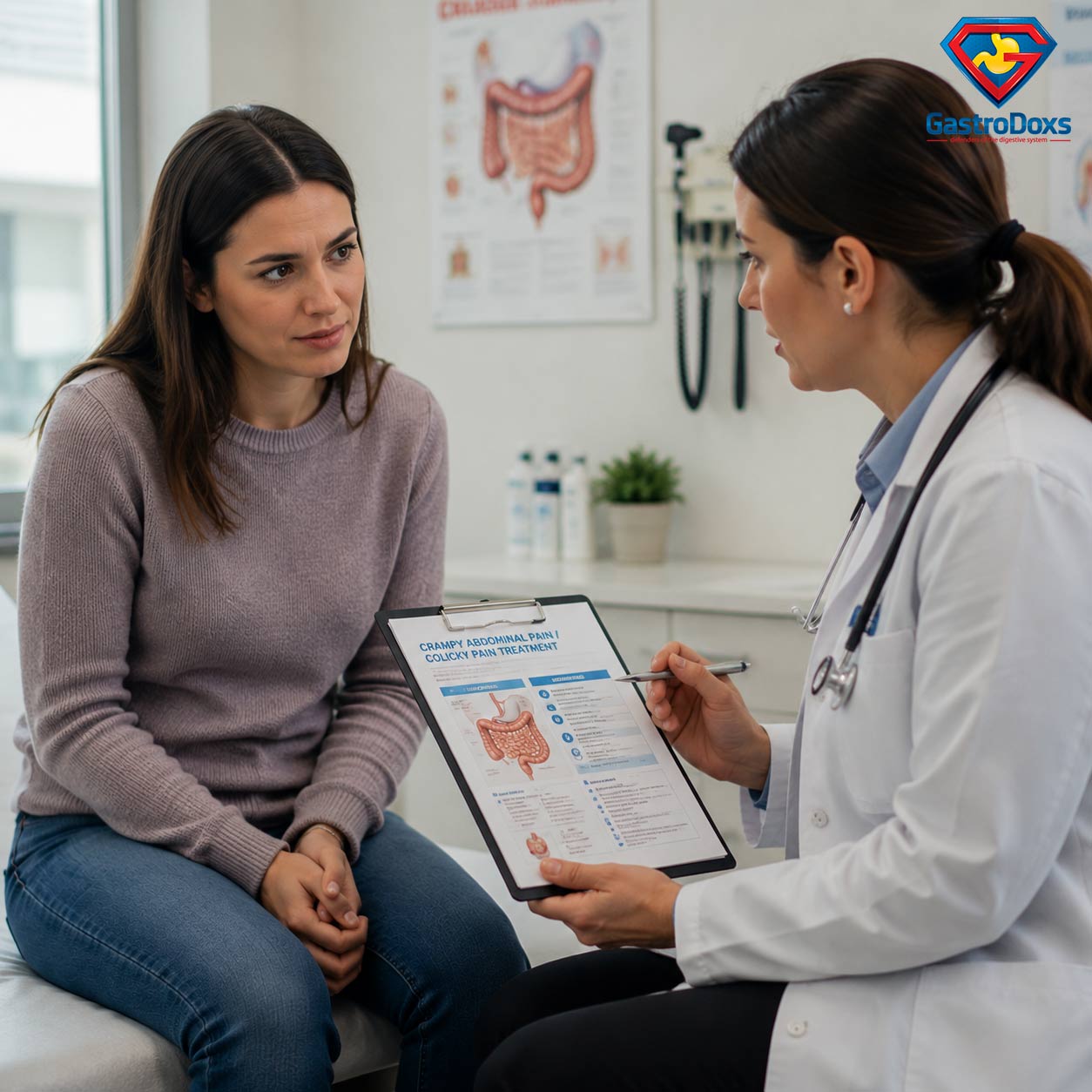
Why Choose GastroDoxs for Crampy or Colicky Pain Care?
Digestive treatment decisions built around the pain pattern rather than the symptom label alone
Treatment Matches the Suspected Mechanism
Constipation, IBS, infection, biliary disease, inflammation and post-surgical bowel problems require different care. The plan uses examination and prior testing to identify the best target.
Urgent and Outpatient Care Stay Separate
Persistent vomiting, marked swelling, inability to pass stool or gas, a rigid abdomen, jaundice, fainting or severe worsening pain is not managed as routine outpatient cramping.
GI Testing Is Used Selectively
Laboratory work, stool studies, ultrasound, CT, upper endoscopy or colonoscopy is recommended only when the result can clarify the cause or change treatment.
Non-GI Causes Are Routed Appropriately
Kidney stones, gynecologic conditions, hernias and surgical abdominal disease may require urology, gynecology or surgery rather than continued digestive treatment.
GastroDoxs treats digestive causes after urgent obstruction, severe infection, threatened bowel and other emergencies have been excluded.
GastroDoxs GutGuardians™
Your guardians. GastroDoxs GutGuardians™ is our team of gastroenterologists board-certified by the American Board of Internal Medicine (ABIM) - a physician-led defense force of specialists, systems, and solution pathways working together to protect, detect, solve, and defend your digestive health through expert GI evaluation, advanced diagnostic screening, and endoscopic evaluation - commanded from your first concern to your last follow-up, and every critical stage in between.
GastroDoxs GutRescue Mission™
Your rescue plan. When your diagnosis is confirmed, GastroDoxs GutRescue Mission™ deploys at full force - a gastroenterologist-led intervention plan delivering advanced colonoscopy, upper endoscopy, capsule endoscopy, and precision biologic and medication management across the full range of digestive conditions and complex GI emergencies - fighting for you with everything we have.
What Happens After You Book?
A clear path from symptom review to a treatment plan that fits the cause
Request a Crampy Pain Evaluation
Book online or call for recurring, meal-related, bowel-related or unexplained pain after immediate emergency warning signs have been excluded.
Send Prior Records
Ultrasound, CT, MRI, endoscopy, colonoscopy, hospital and surgical records help show whether the current pattern is new, recurring or already partly evaluated.
Complete a Cause-Focused Review
The specialist reviews pain waves, location, triggers, stool and gas passage, urinary changes, medicines, surgery history and objective findings.
Receive a Defined Treatment Path
The plan may include constipation care, IBS treatment, infection therapy, dietitian guidance, endoscopy, gallbladder coordination, or referral for stone or surgical care.
Who May Benefit From Crampy Abdominal Pain / Colicky Pain Care?
An appointment may help when the pain keeps returning, changes pattern or interferes with eating, bowel function, sleep or daily activity.
- Recurring Cramp-Like Abdominal Pain
- Wave-Like Pain That Starts and Stops
- Pain With Constipation or Incomplete Evacuation
- Pain With Diarrhea, Mucus or Urgency
- Upper Abdominal Attacks After Meals
- Pain After Previous Abdominal Surgery
- Persistent Pain Despite Basic Home Care
- Pain With Weight Loss, Bleeding or Nighttime Symptoms
GI Specialist Review for Crampy or Colicky Pain
GastroDoxs reviews crampy and colicky pain through a digestive lens while recognizing that urinary, pelvic and surgical conditions can produce similar symptoms.









Preparing for Crampy or Colicky Pain Treatment
Record the exact pain location, duration, triggers, movement, stool and gas passage, vomiting, urinary changes, meals and medicines before the visit.
Frequently Asked Questions About Crampy Abdominal Pain / Colicky Pain Treatment
Crampy abdominal pain feels like squeezing, tightening or strong muscle contractions. Treatment depends on whether the cause is gas, constipation, infection, IBS, inflammation or another condition.
Colicky pain builds and eases in waves and may occur when the bowel, gallbladder, bile duct, kidney or ureter contracts around irritation or a blockage.
Possible causes include gas, gastroenteritis, constipation, IBS, bowel obstruction, gallstones, kidney stones, hernias, inflammatory disease, food intolerance, pelvic conditions and medicine effects.
Nausea, vomiting, bloating, visible swelling, diarrhea, constipation, inability to pass gas, urinary changes, sweating or restlessness can occur. The combination helps identify the likely organ.
Often it is not, but serious causes are possible. Severe pain with vomiting, swelling, no stool or gas, fever, bleeding, jaundice, fainting or a rigid abdomen needs urgent evaluation.
Intestinal obstruction, gallstones, bile-duct stones, kidney or ureteral stones, fecal impaction, hernias and selected pelvic conditions can produce wave-like pain.
The clinician reviews pain location, timing, movement, triggers, bowel and urinary symptoms, previous operations, medicines and examination findings before selecting tests.
Testing may include blood work, urine or stool studies, pregnancy testing when relevant, ultrasound, CT, MRI, upper endoscopy, colonoscopy or another specialty-directed test.
Yes. Gas and intestinal stretching can cause temporary cramps and bloating. Persistent pain, marked swelling, vomiting, fever, bleeding or inability to pass gas should not be assumed to be simple gas.
IBS can cause recurring cramps linked with bowel movements and stool changes. New warning signs or a changing pattern should be evaluated rather than automatically labeled IBS.
Treatment depends on the cause and may include hydration, constipation care, dietary changes, infection treatment, antispasmodic medicine, endoscopic care, stone treatment or surgery.
Large or high-fat meals, lactose, fermentable carbohydrates, sugar alcohols, alcohol, caffeine and personally poorly tolerated foods may trigger symptoms. There is no universal avoid list.
Arrange medical review when pain is recurrent, worsening, persistent, disrupts normal activities or occurs with bowel changes, urinary symptoms, nighttime symptoms, appetite loss or weight loss.
Yes. A stone moving through a ureter can cause severe side or back pain that travels toward the lower abdomen or groin and may occur with nausea, vomiting or blood in urine.
Constant pain stays present even when intensity changes. Colicky pain has clearer waves and partial relief between peaks. A shift to constant localized pain can increase concern.
Yes. Gas, IBS, constipation, gallstones, urinary stones and partial obstruction can recur. Improvement between episodes does not rule out disease when the pattern is worsening.
Book Crampy Abdominal Pain Treatment
Move from repeated symptom relief attempts to a cause-focused treatment plan based on pain location, waves, bowel and urinary function, meals, medicines, prior surgery and objective findings.