



★★★★★
"The GastroDoxs team carefully evaluated my upper abdominal pain and back discomfort before explaining which pancreatic conditions could be contributing to my symptoms."

 Medically Reviewed by
Dr. Bharat Pothuri, MD, FACG
| Updated July 22, 2026
Medically Reviewed by
Dr. Bharat Pothuri, MD, FACG
| Updated July 22, 2026
Pancreatic pain often begins deep in the upper abdomen and passes through to the back. GastroDoxs helps distinguish pancreatitis, duct problems, chronic pancreatic disease, gallstones, pancreatic cancer concerns, and non-pancreatic back pain.
Back pain that begins with upper abdominal pain, worsens after meals, or occurs with nausea, vomiting, greasy stool, weight loss, jaundice, or abnormal pancreatic imaging needs a focused evaluation. GastroDoxs GutRescue Mission™ helps patients understand lipase and liver tests, CT, MRI or MRCP, EUS, chronic pancreatitis care, pancreatic enzyme treatment, and cancer referral when findings justify it.
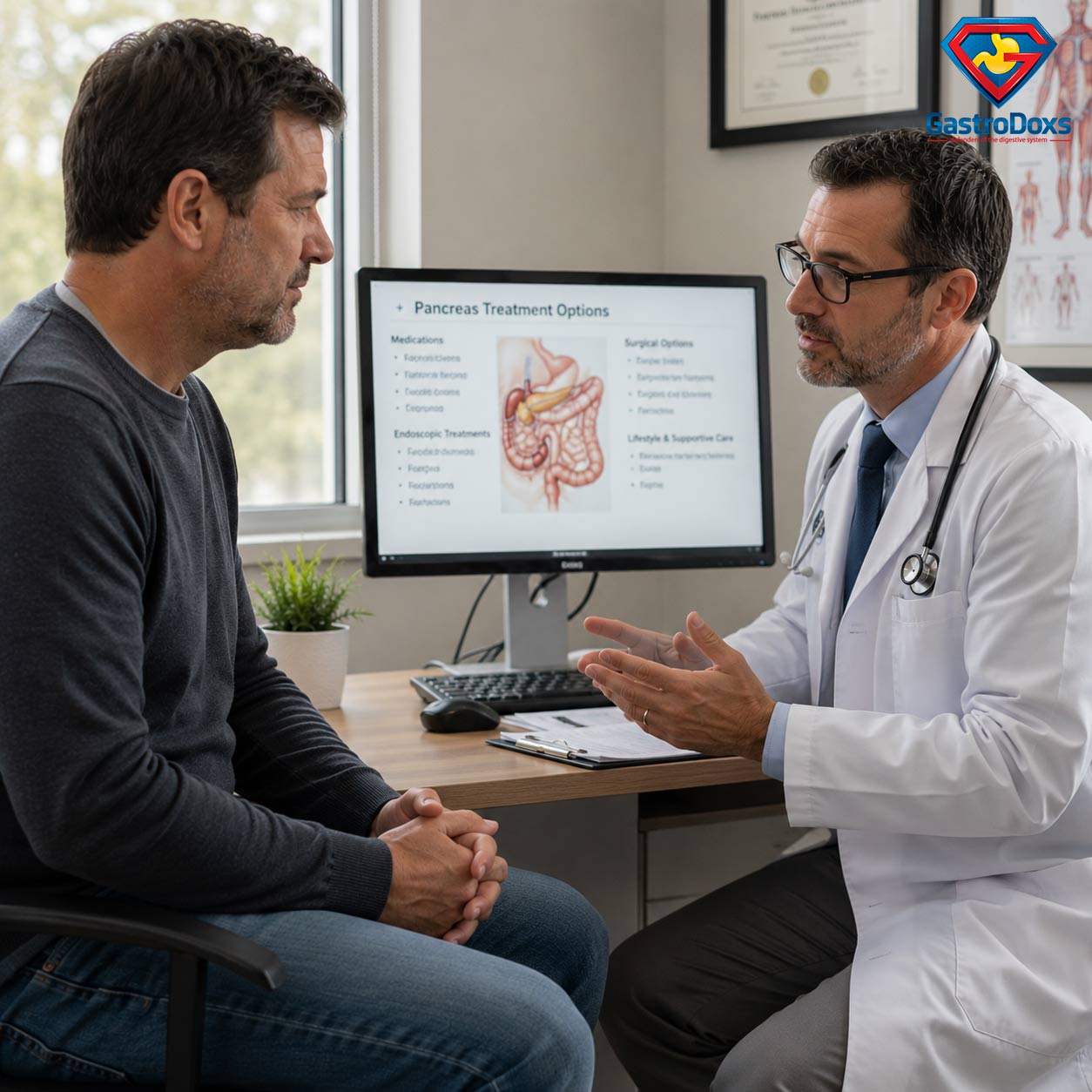
A symptom-specific plan that connects the most likely cause with the safest useful next step.
The care team compares abdominal onset, meal and posture effects, movement, tenderness, urinary symptoms, jaundice, stool changes, and weight loss.
The evaluation distinguishes a hospital-level acute attack from chronic pain, duct changes, enzyme insufficiency, diabetes risk, and nutrition problems.
CT, MRI or MRCP, EUS, ultrasound, prior ERCP, pathology, and cyst or mass findings are reconciled before another procedure is recommended.
Progressive pain, jaundice, weight loss, new diabetes, duct dilation, or a pancreatic mass receives timely oncology, surgery, or advanced-endoscopy coordination.
GastroDoxs evaluates stable pancreatic-pattern pain while directing severe pancreatitis, shock, breathing difficulty, major vomiting, jaundice with fever, or rapid decline to hospital care.
Your guardians. GastroDoxs GutGuardians™ is an elite team of board-certified gastroenterologists - a physician-led defense force of specialists, systems, and solution pathways working together to protect, detect, solve, and defend your digestive health through expert GI evaluation, advanced diagnostic screening, and endoscopic evaluation - commanded from your first concern to your last follow-up, and every critical stage in between.
Your rescue plan. When your diagnosis is confirmed, GastroDoxs GutRescue Mission™ deploys at full force - a gastroenterologist-led intervention plan delivering advanced colonoscopy, upper endoscopy, capsule endoscopy, and precision biologic and medication management across the full range of digestive conditions and complex GI emergencies - fighting for you with everything we have.
A clear path from symptoms and records to testing, treatment, and follow-up.
Note whether pain begins in the upper middle or left abdomen, passes through to the back, forms a band, or occurs only in the spine or flank.
Record whether eating, lying flat, leaning forward, bending, lifting, or pressing the area changes the pain.
Include nausea, vomiting, fever, jaundice, dark urine, pale stool, greasy stool, appetite loss, weight loss, and blood-sugar changes.
Bring lipase, liver tests, triglycerides, calcium, glucose, CT, MRI or MRCP, EUS, ERCP, cyst, biopsy, surgery, and hospital records.
Schedule when the symptom is persistent, recurring, unexplained, or connected with digestive, liver, biliary, or pancreatic warning patterns.
GastroDoxs evaluates stable pancreatic-pattern back pain through symptoms, pancreatic and liver tests, nutrition, CT, MRI or MRCP, EUS, prior procedures, and cancer-risk findings. Acute pancreatitis symptoms require hospital care.







Book evaluation for persistent upper abdominal pain radiating to the back, recurrent pancreatitis, greasy stool, weight loss, jaundice, pancreatic cysts, or unclear imaging. Seek urgent care for severe pain, vomiting, fever, rapid heartbeat, fainting, breathing difficulty, or rapid decline.
It often causes deep upper abdominal pain that passes to the back, nausea, vomiting, tenderness, and pain that worsens after eating or lying flat.
Acute pancreatitis often requires hospital evaluation for fluids, pain control, monitoring, nutrition, and treatment of the cause. Mild chronic symptoms may be managed outside the hospital.
Alcohol, smoking, dehydration, unreviewed high-fat triggers, and ignoring gallstones, high triglycerides, or medication causes can worsen risk. Individual advice depends on the diagnosis.
Severe upper abdominal pain and nausea or vomiting are common. Fever, rapid heartbeat, tenderness, and back radiation may also occur.
CT can show pancreatic inflammation and complications, but timing and severity matter. Blood lipase and clinical findings are also important.
Acute pain is often severe and persistent. Chronic pancreatitis pain may be constant or recurrent and often does not fully disappear.
Pancreatic pain usually begins in the upper abdomen, passes through to the back, and may occur with meals, nausea, greasy stool, weight loss, or jaundice.
An endocrinologist may manage diabetes or hormone problems related to pancreatic disease, while gastroenterology leads digestive and pancreatic evaluation.
Care usually involves gastroenterology, medical oncology, surgical oncology, radiation oncology, radiology, pathology, nutrition, and supportive care.
It is commonly felt in the upper middle or upper left abdomen and may pass to the middle back or under the shoulder blades.
Hospital care is appropriate for severe persistent pain, repeated vomiting, dehydration, fever, rapid heartbeat, breathing difficulty, low blood pressure, jaundice, or organ dysfunction.
Excess thirst, frequent urination, unexplained glucose changes, sweating, tremor, confusion, and unexplained low blood sugar may require endocrine evaluation.
Possible signs include jaundice, dark urine, pale stool, weight loss, appetite loss, upper abdominal or back pain, new diabetes, and digestive changes, but these are not specific.
It may spread to nearby lymph nodes, the liver, the lining of the abdomen, and other organs. Staging requires imaging and pathology.
Ask for a stepwise plan that separates common causes from higher-risk findings and explains when imaging, EUS biopsy, oncology, or supportive counseling is appropriate.
Get a structured review of upper abdominal pain radiating to the back, pancreatitis, pancreatic imaging, greasy stool, weight loss, jaundice, or cancer concerns. Seek urgent care for severe pain, vomiting, fever, fainting, breathing difficulty, or rapid decline.