



★★★★★
"GastroDoxs helped me understand why my abdominal distension kept coming back and what testing made sense."

 Medically Reviewed by
Dr. Bharat Pothuri, MD, FACG
| Updated July 10, 2026
Medically Reviewed by
Dr. Bharat Pothuri, MD, FACG
| Updated July 10, 2026
Abdominal distension treatment begins by confirming whether the abdomen is visibly enlarged and whether the cause is gas, stool, fluid, motility, inflammation, obstruction, or another condition. GastroDoxs GutRescue Mission™ helps patients move from visible swelling to safer testing, treatment, and follow-up decisions.
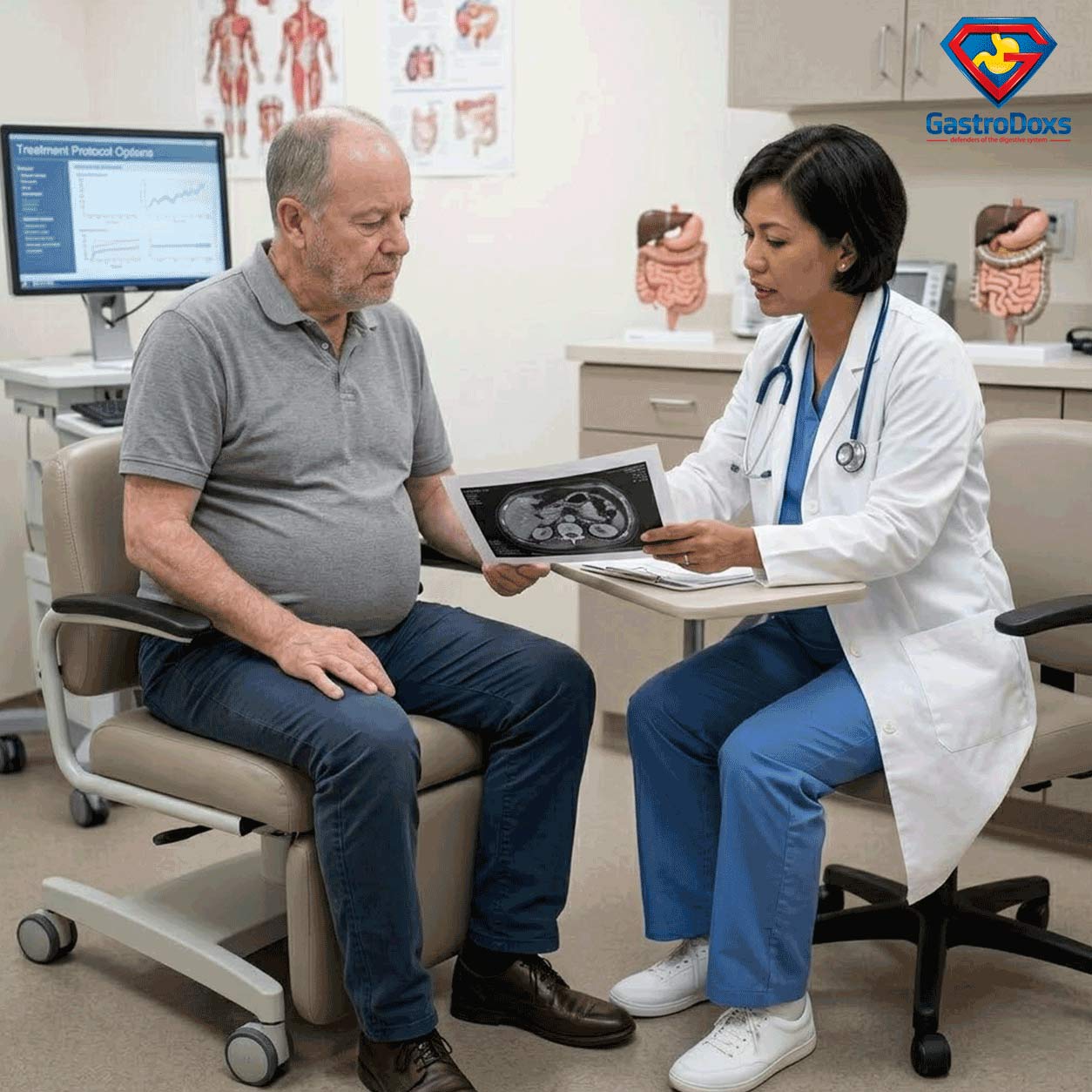
Focused GI evaluation, practical treatment planning, and clear follow-up
We assess whether swelling is constant, meal-related, evening-predominant, bowel-linked, or rapidly worsening.
Treatment depends on whether distension is driven by constipation, gas retention, ascites, obstruction, motility, or structural disease.
Labs, ultrasound, CT, stool tests, colonoscopy, or endoscopy may be considered based on the pattern.
Distension with vomiting, severe pain, fever, or inability to pass gas should not wait for routine care.
This BOFU page is built for patients ready to schedule care, compare options, and understand what happens next.
Your guardians. GastroDoxs GutGuardians™ is an elite team of board-certified gastroenterologists - a physician-led defense force of specialists, systems, and solution pathways working together to protect, detect, solve, and defend your digestive health through expert GI evaluation, advanced diagnostic screening, and endoscopic evaluation - commanded from your first concern to your last follow-up, and every critical stage in between.
Your rescue plan. When your diagnosis is confirmed, GastroDoxs GutRescue Mission™ deploys at full force - a gastroenterologist-led intervention plan delivering advanced colonoscopy, upper endoscopy, capsule endoscopy, and precision biologic and medication management across the full range of digestive conditions and complex GI emergencies - fighting for you with everything we have.
A clear path from appointment request to treatment planning
Book for recurrent or persistent visible swelling, especially when linked with bowel changes, pain, or abnormal testing.
Photos of swelling, waist changes, prior imaging, labs, endoscopy, and colonoscopy reports help clarify the pattern.
Your provider decides whether labs, ultrasound, CT, stool tests, colonoscopy, or endoscopy are needed.
Treatment may include constipation care, diet changes, fluid evaluation, medication review, or specialist referral.
Schedule a consultation if constipation is persistent, recurrent, painful, or affecting your daily routine
GastroDoxs provides GI-focused evaluation for abdominal distension using symptom review, appropriate testing, records review, treatment planning, and clear follow-up.







GastroDoxs helps patients evaluate and treat abdominal distension with board-certified GI care, appointment support, records review, and next-step planning.
Yes, but it depends on the cause. Long-term plans may treat constipation, IBS, food intolerance, motility issues, ascites, inflammation, or medication triggers.
Bring photos of swelling, symptom timing, bowel diary, medication list, prior imaging, labs, endoscopy reports, colonoscopy reports, and weight changes.
Do not wait if distension is severe, sudden, painful, or linked with vomiting, fever, inability to pass gas, jaundice, black stool, or weight loss.
Diet changes depend on the cause. Some patients benefit from fiber adjustment, reducing carbonated drinks, limiting trigger foods, or structured low-FODMAP guidance.
It is a clinical finding describing visible abdominal enlargement. The diagnosis should identify the underlying cause.
See a doctor for diarrhea with dehydration, blood, fever, severe pain, weight loss, nighttime symptoms, or symptoms lasting more than a few days.
A gastroenterologist may order stool tests, blood work, colonoscopy, biopsy, imaging, medication review, and treatment based on the cause.
Causes include constipation, gas, fluid, motility disorders, obstruction, IBS, liver disease, and inflammation. A gastroenterology clinic is appropriate for digestive causes.
Yes. Evaluation may start with history, exam, labs, ultrasound, stool tests, and imaging before procedures are considered.
Female providers may be available depending on scheduling. GastroDoxs can help match appointment availability and clinical needs.
Yes. Stool burden and gas retention from constipation can visibly enlarge the abdomen.
Yes. Ascites from liver disease can cause persistent swelling and should be evaluated.
Yes. IBS, infection, inflammation, malabsorption, food intolerance, or partial obstruction patterns can cause both.
Testing may include labs, ultrasound, CT, stool testing, endoscopy, colonoscopy, or motility testing based on the symptoms.
Urgent signs include rapid swelling, severe abdominal pain, vomiting, fever, inability to pass stool or gas, fainting, confusion, or dehydration.
Book a GastroDoxs abdominal distension evaluation when visible swelling is recurrent, persistent, bowel-linked, painful, or not explained by simple triggers.