1.9K Reviews | 4.7 Star Rating | 20+ years of experience | 72k+ Patients Treated
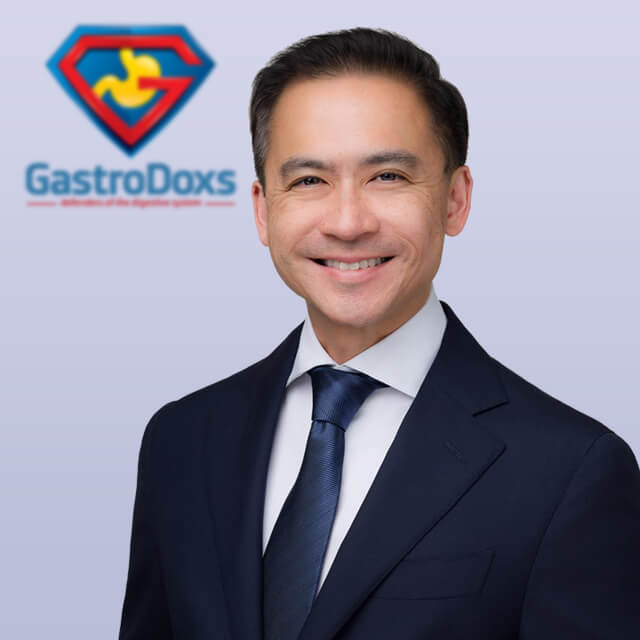
Expert Bloating Specialist - Dr. Scott Liu
Bloating care introduction in Houston by Dr. Scott of GastroDoxs. We provide a mix of individualized diagnoses, diet and lifestyle counseling, sophisticated examinations, and special treatment. Heal in professional board-approved care, high technology, customized permanent remedy.
Dr. Scott Liu, MD, is a board-certified gastroenterologist with over six years of experience and a background in military medicine. He earned his medical degree from the University of Maryland, Baltimore, completed his Internal Medicine residency at Naval Medical Center Portsmouth, and finished his Gastroenterology fellowship through the National Capital Consortium. Dr. Liu provides comprehensive care for a broad range of digestive conditions, including abdominal pain, acid reflux, liver disease, chronic diarrhea, and colon cancer screening. He is a member of the American College of Gastroenterology and is known for his disciplined, patient-focused approach and clear communication.
What Is Bloating?
The sensation of fullness, tightness or swellings of the abdomen is known as bloating. It may be extremely similar to pressure or discomfort and may be either accompanied by excess gas or belching. Bloating is a normal occurrence but when it is frequent or painful, then it indicates a problem.
Common Causes and Risk Factors
Eating fast or eating large amounts of food.
Taking of carbonated beverages.
Food intolerance (e.g., lactose or gluten)
Gastroenterologic illnesses such as IBS or SIBO.
Alteration in hormones (especially in women)
Stress of lifestyle, exercise or non-exercise.
Certain medicines that affect digestion.
Signs and Symptoms
Complete or complete sensation in the abdomen.
Belly distension or swellings can be easily observed.
Abdominal pain or cramping.
Flatulence, belching or excessive gas.
It is awkward when an individual gets full after a small meal.
How Dr. Scott Diagnoses This Condition?
Dr. Scott uses a step-by-step approach:
Medical History and Exam
He examines your symptoms-bloating, epic- abdominal pain, bowel habits-changes - and your diet, the intensity of your stress, and medications. Abdominal examination is performed by touch in order to establish the existence of tenderness or distension or even the existence of a mass.
Laboratory Tests
The complete blood count, metabolic panel, celiac disease panel and H. pylori are our blood work orders. Pneumatic tests can also be performed to assist in detecting small intestinal bacteria overgrowth (SIBO) or lactose intolerance.
Imaging Studies
Abdominal ultrasound to determine liver, gallbladder and fluid collections.
Abdominal/pelvis CT scan / MRI in case, it is needed to have a more detailed picture of the GI tract.
Advanced Testing (if needed)
The presence of ulcers, inflammation or stricture can be excluded by directly examining the esophagus, stomach, and duodenum, which can be visualized with the help of upper endoscopy (EGD). Esoophageal pH monitoring or motility studies can be used to measure these disorders of reflux and gut motility.
Treatment
Our Team offers a full range of care for bloating.
1. Lifestyle and Diet Modifications
Eating small meals between the times.
The gas forming foods including beans, milk, and carbonated beverages should be avoided.
Eating slowly and sitting straight after eating.
Keeping a food diary to determine causes of symptoms.
Probiotics to help restore healthy bowel flora.
2. Medications
Simethicone to liquidate gas bubbles.
Antipsasmodics to prevent cramps.
Related reflux or heartburn lowers the acid.
Antibiotics are administered when bacterial overgrowth (SIBO) has been diagnosed.
Personalized prescriptions based on your state.
3. Minimally Invasive or Advanced Procedures
The upper intestines, stomach, and esophagus endoscopy.
In case of in-depth examination, imaging scan (ultrasound or CT) is necessary.
Ambiguous cases Breath tests to prove SIBO or lactose intolerance.
Dr. Scott Liu, MD, is a board-certified gastroenterologist with over six years of experience and a background in military medicine. He earned his medical degree from the University of Maryland, Baltimore, completed his Internal Medicine residency at Naval Medical Center Portsmouth, and finished his Gastroenterology fellowship through the National Capital Consortium. Dr. Liu provides comprehensive care for a broad range of digestive conditions, including abdominal pain, acid reflux, liver disease, chronic diarrhea, and colon cancer screening. He is a member of the American College of Gastroenterology and is known for his disciplined, patient-focused approach and clear communication.
Frequently Asked Questions
How long does bloating last?
Most of the cases would be solved within a couple of hours up to a whole day. Dr. Scott needs to be contacted in case your bloating fails to improve after 2 days, or is acute.
Do probiotics help the treatment of bloating?
A few of the probiotic strains can reduce gas and digestion. Dr. Scott can prescribe you the right formulation based on your symptoms.
Does it mean that it starts bloating then the pregnancy begins?
Yes. The early pregnancy may lead to hormonal alterations that reduce the rate of digestion leading to bloating.
What is to be done in case I grow and I have to see a doctor?
Visit your physician to host an appointment in case of enduring, sharp, or painful bloating, weight loss, blood in the stool or strong pain.
Can stress lead to bloating?
Absolutely. Stress can cause disruption of motility and sensitivity of the gut that clearly causes increased bloating.
What foods cause bloating?
Common triggers may include beans, broccoli, cabbage, dairy products and foods that contain artificial sweeteners.
Which are some tests that can be conducted to identify the cause of the bloating?
Dr. Scott can order a breath analysis (SIBO or lactose intolerance), blood test, stool cultures, or scans (ultrasound) to determine the underlying cause.