Two or More Confirmed Attacks
Separate attacks with recovery between them require a focused search for a modifiable cause.

 Medically Reviewed by
Dr. Bharat Pothuri, MD, FACG
| Updated 07-31-2026
Emergency teams treat the active attack. GastroDoxs helps after stabilization by comparing prior episodes, identifying the trigger, selecting advanced testing, and building a plan intended to reduce another pancreatic crisis.
Recurrent acute pancreatitis involves separate confirmed attacks with improvement between episodes. GastroDoxs GutRescue Mission™ helps patients move from repeated hospital recovery to a cause-based prevention plan using attack records, laboratory trends, imaging, advanced testing, exposure history, nutrition, and pancreatic function.
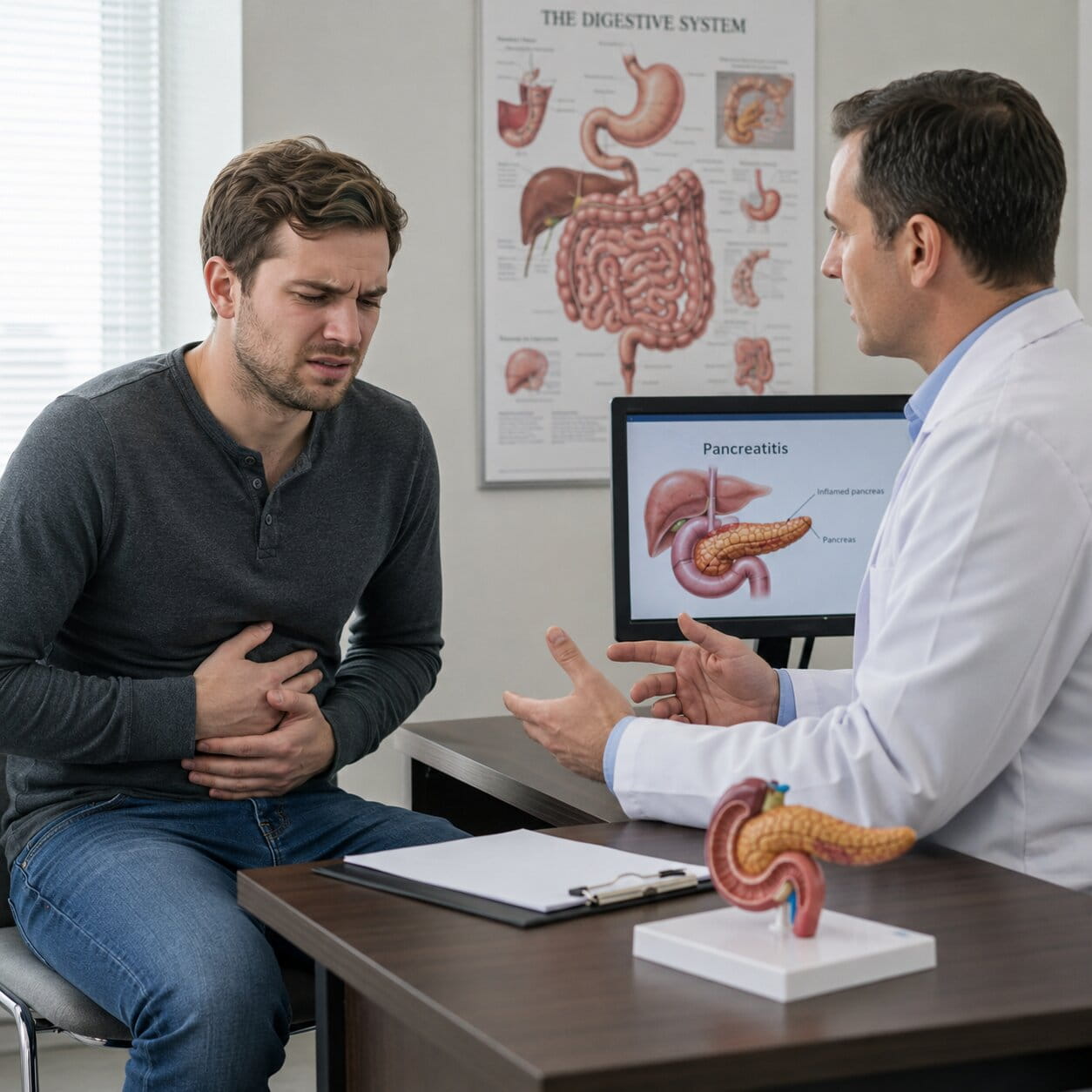
A prevention-focused evaluation connects separate hospital episodes into one pancreatic care plan.
Discharge summaries, lipase values, liver tests, triglycerides, calcium, ultrasound, CT, MRI, EUS, ERCP, and surgery records are compared across episodes.
Testing is selected according to the unanswered question—small stones, duct anatomy, chronic changes, cysts, tumors, autoimmune disease, or inherited risk.
The plan may involve biliary surgery, endoscopic treatment, metabolic care, medication review, abstinence support, smoking cessation, or specialist referral.
Weight, stool quality, nutrition, vitamins, glucose, persistent pain, and signs of pancreatic enzyme insufficiency or chronic pancreatitis are reviewed.
A structured path from hospital records to recurrence prevention
Share the date, symptoms, lipase results, imaging, treatment, complications, and recovery period for each suspected attack.
The clinician reviews gallstones, alcohol, smoking, triglycerides, calcium, medicines, procedures, trauma, family history, autoimmune clues, and duct anatomy.
Depending on prior results, the next step may be repeat ultrasound, EUS, MRCP, selected laboratory testing, genetics, or referral to an advanced pancreatic center.
You leave with cause-directed treatment, emergency instructions, nutrition guidance, monitoring targets, and a timeline for follow-up.
Your guardians. GastroDoxs GutGuardians™ is our team of gastroenterologists board-certified by the American Board of Internal Medicine (ABIM) - a physician-led defense force of specialists, systems, and solution pathways working together to protect, detect, solve, and defend your digestive health through expert GI evaluation, advanced diagnostic screening, and endoscopic evaluation - commanded from your first concern to your last follow-up, and every critical stage in between.
Your rescue plan. When your diagnosis is confirmed, GastroDoxs GutRescue Mission™ deploys at full force - a gastroenterologist-led intervention plan delivering advanced colonoscopy, upper endoscopy, capsule endoscopy, and precision biologic and medication management across the full range of digestive conditions and complex GI emergencies - fighting for you with everything we have.
Reasons to schedule follow-up after the acute episode has been stabilized
Separate attacks with recovery between them require a focused search for a modifiable cause.
When routine tests do not identify a cause, EUS, MRCP, medication review, metabolic testing, or selected genetic evaluation may provide additional information.
Abnormal liver tests, jaundice, dark urine, biliary sludge, or a retained stone may require coordinated surgical or advanced-endoscopy care.
Metabolic abnormalities and suspected medicine-related pancreatitis need coordinated treatment and repeat monitoring.
Persistent pain, unintended weight loss, oily stool, diarrhea, vitamin deficiency, or new diabetes may suggest chronic pancreatic injury.
GastroDoxs provides post-attack evaluation, cause-directed treatment planning, advanced-test coordination, pancreatic function review, and recurrence-prevention guidance. Active severe pancreatitis requires emergency or hospital care.






GastroDoxs appointments are for post-attack evaluation, records review, advanced-test planning, cause-based treatment, and prevention. Severe active pain, repeated vomiting, fever, jaundice, breathing difficulty, fainting, confusion, or inability to hydrate requires emergency care.
Doctors confirm that there were separate acute pancreatitis attacks with improvement between them. They compare pain, lipase, imaging, complications, and recovery, then investigate biliary, metabolic, medication, exposure, structural, autoimmune, and genetic causes.
Each attack is usually confirmed by at least two of three findings: characteristic pain, pancreatic enzymes more than three times normal, or compatible imaging. Recurrent disease requires separate confirmed episodes.
Testing commonly includes lipase, liver chemistries, blood counts, kidney function, electrolytes, glucose, triglycerides, and calcium. Additional tests depend on severity and the suspected cause.
It is less likely, but not impossible. Delayed testing or chronic pancreatic damage can alter enzyme results. Imaging and the complete clinical pattern are important, and other causes of pain must be considered.
Not automatically. CT is useful when diagnosis is uncertain, symptoms fail to improve, complications are suspected, or another cause must be evaluated. EUS or MRCP may be more useful after recovery for an unexplained recurrent pattern.
MRI with MRCP maps pancreatic and bile ducts and can identify stones, strictures, cysts, and other structural causes without radiation. It complements rather than replaces EUS.
After an unrevealing initial evaluation, EUS is often the preferred next diagnostic test. It can detect small stones, biliary sludge, subtle chronic changes, duct abnormalities, cysts, and small lesions.
Yes. Ultrasound is a first-line gallbladder test, but very small stones or sludge may be missed or may pass before imaging. Repeat ultrasound, EUS, or MRCP may be considered.
They review gallstones, alcohol, smoking, triglycerides, calcium, medicines, prior procedures, trauma, family history, pancreatic duct anatomy, autoimmune disease, genetics, and pancreatic lesions.
Yes, in selected patients—especially younger people, those with early chronic changes, a strong family history, or otherwise unexplained recurrent attacks. Results should be interpreted with appropriate counseling.
Diagnosis combines imaging, blood tests such as IgG4 when appropriate, other-organ findings, and sometimes tissue sampling. A treatment response alone should not replace a proper evaluation.
Pancreas divisum can be detected with MRCP, sometimes secretin-enhanced MRCP, or EUS. Because it may be incidental, clinicians look for recurrent confirmed attacks and objective drainage abnormalities before considering intervention.
ERCP is mainly therapeutic. It can remove bile-duct stones or treat selected strictures and drainage problems. EUS and MRCP are generally preferred for diagnosis because ERCP can itself cause pancreatitis.
They combine pain characteristics with lipase, liver tests, ultrasound, CT or MRI, and sometimes upper endoscopy or EUS. Pancreatitis requires objective support because symptoms alone are not specific.
During severe active symptoms, seek emergency care. After recovery, see a gastroenterologist with pancreatic expertise. An advanced endoscopist may be needed when EUS or therapeutic ERCP is being considered.
Bring records from every attack, including lipase, liver tests, triglycerides, calcium, imaging, procedures, surgery reports, medicines, and exposure history. GastroDoxs can help identify the unanswered question and build a cause-based prevention plan.



