Brief Attacks Are Becoming Frequent
Schedule when episodes recur often enough to disrupt sleep, concentration, work, travel, exercise, or intimacy.

 Medically Reviewed by
Dr. Bharat Pothuri, MD, FACG
| Updated 07-29-2026
Get a clear treatment plan for brief recurring rectal spasms after fissure, hemorrhoid, abscess, inflammation, and persistent pelvic-floor pain have been considered.
Proctalgia fugax treatment begins by confirming brief attacks with no anorectal pain between episodes and excluding structural or inflammatory disease. GastroDoxs GutRescue Mission™ helps connect attack frequency, pelvic-floor findings, bowel triggers, home relief, therapy options, medication risks, and reassessment thresholds.
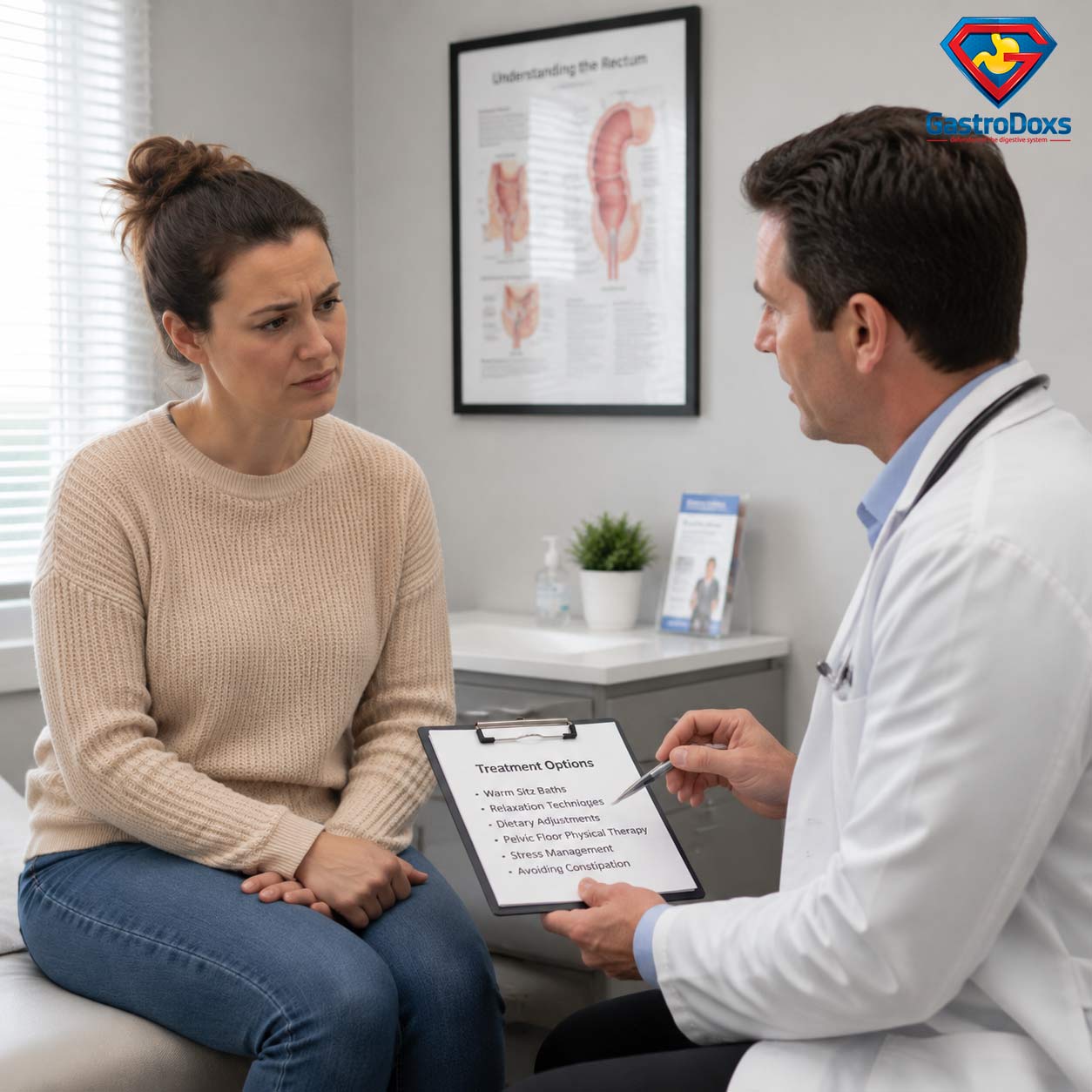
Treatment is matched to the diagnosis, symptom burden, prior care, risks, and the least invasive option likely to help —a distinction used in the functional anorectal-pain treatment pathway.
The team confirms that the timing fits proctalgia fugax and checks for fissure, thrombosed hemorrhoid, abscess, inflammation, mass, levator ani syndrome, and pelvic causes.
Management is matched to how often attacks occur, how long they last, and whether they disrupt sleep, work, sex, bowel movements, or daily activity.
Physical therapy or biofeedback is selected when muscle overactivity, poor coordination, constipation, or chronic pelvic-floor pain overlaps with the brief attacks.
Topical, inhaled, oral, or pain-modulating medicines are considered only after blood pressure, heart conditions, interactions, pregnancy, and side effects are reviewed.
A structured path from records and symptoms to treatment, monitoring, or referral.
Record the exact duration, frequency, location, triggers, pain-free intervals, bowel relationship, and whether symptoms wake you from sleep.
Share examinations, colonoscopy, pelvic imaging, hemorrhoid or fissure treatment, pelvic-floor therapy, and medication history.
The clinician checks whether the pattern remains functional or whether structural, inflammatory, neurologic, urinary, or pelvic findings need investigation.
The plan may include attack-time relaxation, bowel-habit care, pelvic-floor therapy, selected medication, pain support, or referral.
Your guardians. GastroDoxs GutGuardians™ is our team of gastroenterologists board-certified by the American Board of Internal Medicine (ABIM) - a physician-led defense force of specialists, systems, and solution pathways working together to protect, detect, solve, and defend your digestive health through expert GI evaluation, advanced diagnostic screening, and endoscopic evaluation - commanded from your first concern to your last follow-up, and every critical stage in between.
Your rescue plan. When your diagnosis is confirmed, GastroDoxs GutRescue Mission™ deploys at full force - a gastroenterologist-led intervention plan delivering advanced colonoscopy, upper endoscopy, capsule endoscopy, and precision biologic and medication management across the full range of digestive conditions and complex GI emergencies - fighting for you with everything we have.
Schedule when symptoms are recurring, affecting daily life, or remain unresolved after initial care.
Schedule when episodes recur often enough to disrupt sleep, concentration, work, travel, exercise, or intimacy.
An examination can distinguish fleeting functional pain from fissure, thrombosis, abscess, levator ani syndrome, and other causes.
Pelvic-floor treatment or a carefully selected medication may be appropriate when attacks remain severe or unpredictable.
Longer duration, persistent tenderness, bleeding, fever, swelling, discharge, or bowel changes require reassessment rather than automatic retreatment.
GastroDoxs evaluates recurrent brief anorectal pain, confirms whether the pattern fits proctalgia fugax, rules out treatable structural disease, and coordinates pelvic-floor, medication, pain, colorectal, or urgent care when indicated.






GastroDoxs provides non-emergency evaluation for recurring brief rectal pain, pelvic-floor overlap, medication questions, and symptoms that remain unexplained after an anorectal examination.
Treatment depends on attack frequency, duration, triggers, examination findings, and whether another anorectal or pelvic disorder has been excluded. Infrequent episodes may need education, reassurance, warm water, and pelvic relaxation. Frequent or disruptive episodes may lead to pelvic-floor physical therapy, biofeedback, selected topical or oral medicines, or pain-focused therapy.
No single medicine works for every person. Depending on the pattern and medical history, a clinician may consider topical smooth-muscle relaxants, inhaled salbutamol in selected cases, short-term muscle-relaxing treatment, neuromodulators, or other pain-modulating options. Evidence is limited, and side effects and interactions must be reviewed.
Yes. Brief infrequent attacks may be managed with explanation of the diagnosis, warm baths or compresses, slow breathing, conscious pelvic-floor relaxation, constipation or diarrhea management, and trigger tracking after structural causes have been excluded.
The plan is based on exact attack duration, pain-free intervals, bowel and pelvic symptoms, examination findings, prior procedures, medication exposure, and how much the episodes affect sleep or daily life. Persistent pain or abnormal examination findings require a different pathway.
Expect the clinician to first confirm that the pattern fits proctalgia fugax and explain warning signs that would require reassessment. Treatment usually begins with the least burdensome options, followed by pelvic-floor or medication treatment only if attacks remain frequent or disabling.
Pelvic-floor physical therapy and biofeedback may help when examination or symptom history suggests pelvic-floor overactivity, poor muscle coordination, or overlap with levator ani syndrome. Benefit is more established for chronic pelvic-floor pain than for very brief isolated attacks, so selection matters.
Relief during a single attack may occur within minutes because episodes are naturally brief. Longer-term improvement may take several weeks when therapy focuses on pelvic-floor retraining, bowel-habit correction, or stress and pain modulation.
Helpful measures may include treating constipation or diarrhea, avoiding prolonged straining, using regular bowel habits, practicing pelvic relaxation, improving sleep, and tracking stress, menstruation, sex, or defecation as possible triggers. No lifestyle method guarantees prevention.
These options may be considered when episodes are frequent, severe, or disruptive and simpler measures have not helped. The clinician reviews blood pressure, heart disease, medication interactions, pregnancy, and whether the pain pattern truly fits a functional muscle-spasm disorder.
The benefit of treatment is reduced attack frequency, intensity, fear, and disruption. Risks vary: topical medicines can cause headache or low blood pressure, oral medicines may cause sedation or interactions, and invasive options may not help if the diagnosis is incorrect.
Yes. Proctalgia fugax can recur after long symptom-free periods. A returning episode can use the established plan if the pattern is unchanged, but longer pain, bleeding, fever, swelling, discharge, weight loss, or bowel changes need renewed evaluation.
Coverage varies by plan and may differ for a specialist visit, anorectal examination, pelvic-floor physical therapy, biofeedback, medicines, or additional testing. Confirm referral, network, authorization, and therapy benefits before treatment begins.
A gastroenterologist can evaluate digestive and functional anorectal causes, while a colorectal surgeon may assess structural anal or rectal disease. Pelvic-floor physical therapists provide muscle retraining when indicated. GastroDoxs can coordinate the appropriate next step after initial review.
Seek prompt care for pain lasting longer than 30 minutes, pain that remains between episodes, rectal bleeding, fever, a painful lump, pus or drainage, unexplained weight loss, black stool, urinary retention, severe abdominal pain, vomiting, or inability to pass stool or gas.
Use the online appointment link or call GastroDoxs. Bring a record of attack duration, frequency, triggers, bowel symptoms, pelvic symptoms, prior anorectal procedures, medications, and previous examination or colonoscopy results.
Get a focused plan for recurring brief rectal spasms, pelvic-floor contributors, treatment options, and warning signs. Use urgent care for persistent pain, bleeding, fever, swelling, drainage, black stool, or severe abdominal symptoms.



