A Collection Persists After Pancreatitis
Persistent fluid collections should be classified correctly and compared over time before treatment decisions are made.

 Medically Reviewed by
Dr. Bharat Pothuri, MD, FACG
| Updated 07-20-2026
Many pancreatic pseudocysts resolve without drainage, while symptomatic or complicated collections may need EUS-guided treatment, duct therapy, radiology, or surgery. GastroDoxs helps confirm the diagnosis and choose the safest next step.
Pancreatic pseudocyst treatment depends on symptoms, complications, wall maturity, duct anatomy, growth, and confidence that the collection is truly a pseudocyst rather than walled-off necrosis or a cystic tumor. GastroDoxs GutRescue Mission™ helps patients connect the pancreatitis timeline, CT or MRI features, food tolerance, pain, infection or bleeding risk, and EUS findings before choosing monitoring, endoscopic drainage, duct therapy, or surgical referral.
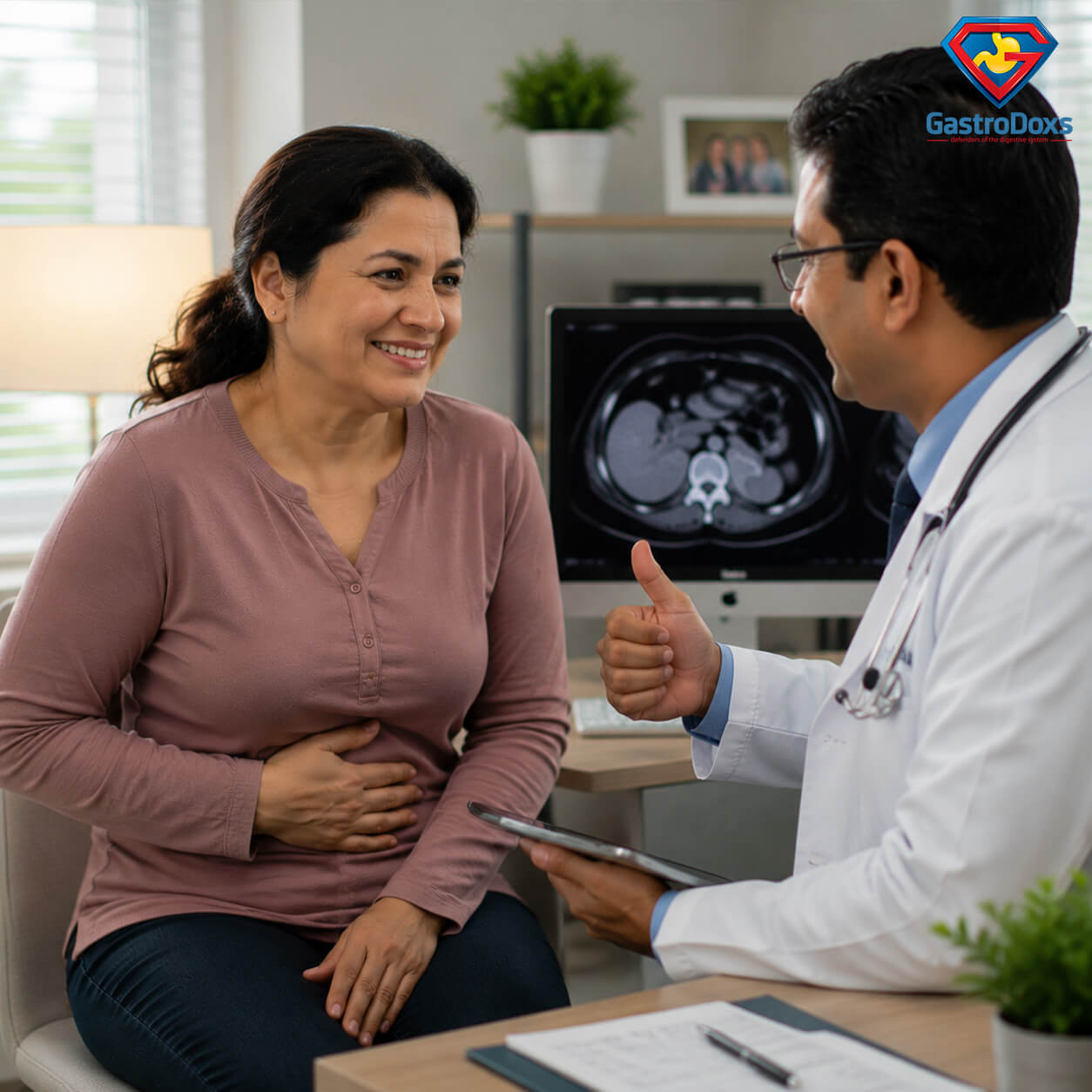
The decision to monitor or drain should be based on the complete clinical and imaging picture.
We review the pancreatitis history, wall, debris, nodules, septations, duct changes, and interval imaging to ensure the diagnosis fits.
Imaging is compared over time to assess maturation, growth, solid debris, nearby vessels, stomach or bile duct compression, and duct communication.
When treatment is indicated, EUS can identify intervening vessels and guide internal drainage into the stomach or duodenum.
Gallstones, alcohol, smoking, triglycerides, duct stones, strictures, nutrition, and pancreatic insufficiency are addressed to reduce recurrence.
A pancreas-focused review of diagnosis, symptoms, and drainage need.
Bring the date and cause of pancreatitis, hospital course, procedures, current pain, fever, vomiting, food tolerance, and weight change.
Bring CT, MRI, MRCP, ultrasound, EUS, and ERCP reports and image files to assess change and duct anatomy.
The review looks for infection, bleeding, rupture, obstruction, solid debris, vascular risk, and features suggesting a cystic tumor.
Your plan may include interval imaging, EUS, fluid analysis, internal drainage, pancreatic duct treatment, radiology, or surgical referral.
Your guardians. GastroDoxs GutGuardians™ is our team of gastroenterologists board-certified by the American Board of Internal Medicine (ABIM) - a physician-led defense force of specialists, systems, and solution pathways working together to protect, detect, solve, and defend your digestive health through expert GI evaluation, advanced diagnostic screening, and endoscopic evaluation - commanded from your first concern to your last follow-up, and every critical stage in between.
Your rescue plan. When your diagnosis is confirmed, GastroDoxs GutRescue Mission™ deploys at full force - a gastroenterologist-led intervention plan delivering advanced colonoscopy, upper endoscopy, capsule endoscopy, and precision biologic and medication management across the full range of digestive conditions and complex GI emergencies - fighting for you with everything we have.
Schedule specialist review when symptoms persist or the imaging diagnosis is uncertain.
Persistent fluid collections should be classified correctly and compared over time before treatment decisions are made.
Symptoms may result from pressure on the stomach, duodenum, bile duct, or surrounding structures and may justify drainage.
Nodules, septations, wall thickening, solid debris, or no clear pancreatitis history may require MRI, EUS, or fluid analysis.
A records review can clarify whether the wall is mature, whether EUS drainage is feasible, and whether duct treatment or surgery is necessary.
GastroDoxs evaluates pancreatic fluid collections, confirms pseudocyst features, reviews interval imaging and duct anatomy, and coordinates monitoring, EUS-guided drainage, selected ERCP therapy, radiology, or surgery. Size alone is not an indication for drainage.






GastroDoxs provides pancreatic fluid-collection review, interval imaging comparison, EUS evaluation, drainage planning, duct assessment, and pancreatitis follow-up. Bleeding, rupture, infection, severe pain, fainting, or rapidly worsening illness requires emergency care.
Choose a pancreas-focused gastroenterology or advanced endoscopy service that can compare CT and MRI, perform EUS, provide drainage when indicated, and coordinate radiology or surgery.
For complicated collections, choose a hospital or center with EUS-guided drainage, interventional radiology, pancreatic surgery, intensive care, and experience distinguishing pseudocysts from necrosis and cystic tumors.
A gastroenterologist or pancreas specialist usually directs evaluation. An advanced endoscopist performs EUS drainage. Interventional radiology or pancreatic surgery may be needed in selected cases.
Yes. Many asymptomatic, uncomplicated pseudocysts shrink or resolve with monitoring and treatment of the underlying pancreatitis.
Urgent complications need immediate hospital care. For a mature symptomatic pseudocyst that is accessible, EUS-guided internal drainage can provide effective minimally invasive treatment.
Not always. Observation is appropriate for many stable, asymptomatic pseudocysts. Drainage or surgery is considered for symptoms, complications, growth, uncertain diagnosis, or unfavorable anatomy.
Size alone does not determine urgency. Fever, bleeding, rupture signs, severe pain, vomiting, jaundice, obstruction, rapid growth, or unstable illness makes treatment more urgent.
Diagnosis uses the pancreatitis or trauma history and CT or MRI findings. MRCP assesses the duct, and EUS helps when the diagnosis is uncertain or drainage is planned.
Start with a pancreas-focused gastroenterologist or advanced endoscopist. A surgeon is involved for uncertain diagnosis, complex complications, inaccessible collections, or failed less-invasive treatment.
Rupture can cause severe abdominal inflammation, internal bleeding, infection, shock, or fistula. Sudden severe pain, fainting, rigid abdomen, or rapid deterioration needs emergency care.
Yes. Infection, hemorrhage, rupture, vascular injury, stomach or bile duct obstruction, and nutritional problems can become serious.
Warning signs include fever, chills, worsening pain, vomiting, inability to eat, jaundice, gastrointestinal bleeding, fainting, rapid enlargement, or a rigid abdomen.
EUS-guided drainage is commonly used and can be highly effective in experienced hands, but bleeding, infection, perforation, stent problems, and recurrence remain possible.
Recovery depends on the drainage method, pancreatitis severity, infection, nutrition, duct disease, and complications. Many patients improve quickly after successful drainage but still need imaging and stent follow-up.
Yes. Acute or chronic pancreatitis can disrupt the pancreatic duct and allow enzyme-rich fluid to collect and become encapsulated.
Yes. Small—and even larger—asymptomatic uncomplicated pseudocysts may be monitored. Symptoms, complications, anatomy, growth, and diagnostic certainty guide intervention.
Book GastroDoxs for pancreatic cyst or pseudocyst imaging review, EUS evaluation, monitoring, drainage planning, and pancreatitis follow-up. Seek emergency care for bleeding, rupture, infection, fainting, or severe worsening pain.



