Unexplained Iron-Deficiency Anemia
Blood loss continues even though upper endoscopy or colonoscopy did not identify a sufficient source, and regular NSAID or aspirin exposure is present.

 Medically Reviewed by
Dr. Bharat Pothuri, MD, FACG
| Updated 08-11-2026
NSAIDs can injure the small intestine as well as the stomach. GastroDoxs evaluates bleeding, anemia, ulcers, protein loss, and diaphragm-like strictures while coordinating a safer pain and antiplatelet plan.
NSAID enteritis may cause erosions, ulcers, occult bleeding, iron-deficiency anemia, protein loss, or thin diaphragm-like strictures in the small bowel. GastroDoxs GutRescue Mission™ identifies the injury pattern, coordinates whether the NSAID can be stopped or reduced, treats complications, and avoids tests such as capsule endoscopy when a narrowing could trap the capsule.
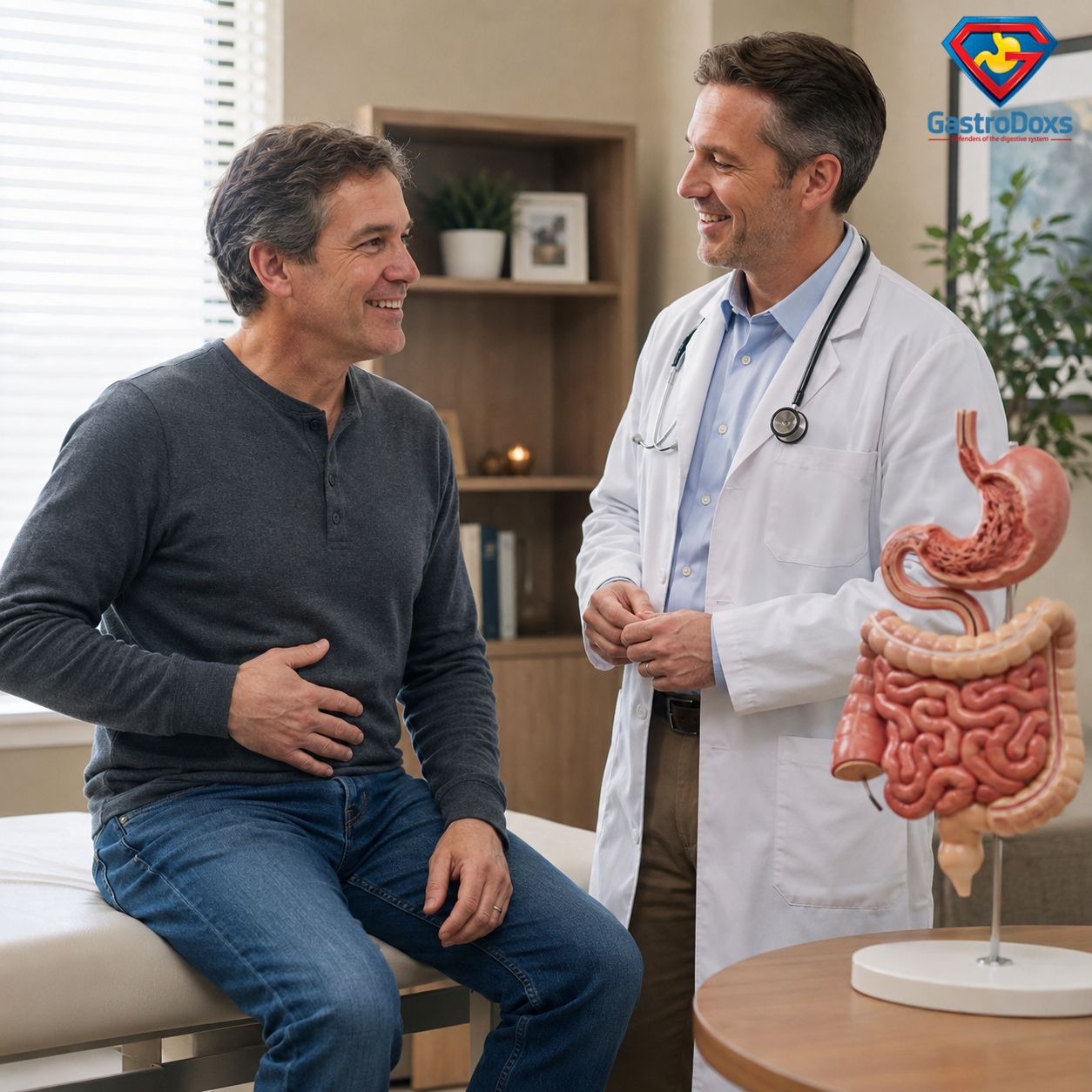
Small-bowel injury requires a different strategy from routine acid-related stomach protection.
We review prescription NSAIDs, aspirin, combination cold medicines, headache products, topical products, dose, duration, and other drugs that increase bleeding risk.
Blood-count and iron trends, stool findings, upper and lower endoscopy, capsule studies, and small-bowel imaging are integrated to locate clinically important injury.
When obstruction or diaphragm disease is possible, cross-sectional imaging or a patency strategy may be considered before capsule endoscopy to reduce retention risk.
We communicate with primary care, cardiology, rheumatology, pain management, or orthopedics so GI protection does not come at the cost of unmanaged pain or cardiovascular risk.
A focused pathway from medication exposure to injury severity and safer long-term management.
We establish which NSAIDs or aspirin products you use, why you use them, how often, and what other medicines or conditions alter bleeding risk.
Symptoms, anemia, protein levels, endoscopy, capsule images, imaging, and pathology are reviewed for ulcers, bleeding, inflammation, or strictures.
The treating clinician and relevant prescriber decide whether to stop, reduce, substitute, or continue the medicine with a documented monitoring plan.
Care may include iron replacement, selected mucosal therapy, endoscopic treatment, dilation, surgery, or additional investigation when injury persists after exposure changes.
Your guardians. GastroDoxs GutGuardians™ is our team of gastroenterologists board-certified by the American Board of Internal Medicine (ABIM) - a physician-led defense force of specialists, systems, and solution pathways working together to protect, detect, solve, and defend your digestive health through expert GI evaluation, advanced diagnostic screening, and endoscopic evaluation - commanded from your first concern to your last follow-up, and every critical stage in between.
Your rescue plan. When your diagnosis is confirmed, GastroDoxs GutRescue Mission™ deploys at full force - a gastroenterologist-led intervention plan delivering advanced colonoscopy, upper endoscopy, capsule endoscopy, and precision biologic and medication management across the full range of digestive conditions and complex GI emergencies - fighting for you with everything we have.
Consider GI evaluation when small-bowel injury is suspected or anemia continues despite routine stomach treatment.
Blood loss continues even though upper endoscopy or colonoscopy did not identify a sufficient source, and regular NSAID or aspirin exposure is present.
You need to determine whether the findings are clinically important, medication-related, and safe to monitor or require intervention.
Cramping, distension, vomiting, or intermittent blockage may reflect NSAID-related diaphragm disease or another small-bowel narrowing.
Aspirin or anti-inflammatory therapy is important for another condition and you need a coordinated risk-benefit and monitoring plan.
Proton pump inhibitors reduce acid-related upper-GI injury but do not reliably prevent NSAID damage in the small intestine. No medication fully neutralizes enteropathy risk. Discontinuing or minimizing the NSAID when medically safe is foundational; misoprostol and other agents have limited or context-specific evidence and require individualized supervision.






GastroDoxs evaluates suspected NSAID-related small-bowel injury for patients in Cypress, Katy, Jersey Village, Brookshire, Houston, and nearby communities, with coordination across prescribing specialties.
Yes. Aspirin, ibuprofen, naproxen, diclofenac and other NSAIDs can disrupt the small-bowel lining and contribute to inflammation, erosions, ulcers, bleeding, protein loss, and diaphragm-like strictures. Risk depends on drug, dose, duration, age, other medicines, and individual susceptibility.
The foundation is stopping or reducing the responsible drug when medically safe and coordinating alternatives with the prescriber. Treatment may also include iron or nutrient replacement, management of bleeding, selected mucosal therapy, and endoscopic or surgical treatment for strictures or other complications.
Many erosions and ulcers can improve after exposure stops, but healing time varies. Established scar-like diaphragm strictures may not reverse and can require dilation or surgery. Persistent anemia or symptoms after withdrawal should prompt reassessment for continued exposure, another cause, or a complication.
No NSAID is risk-free. Some choices may have lower upper-GI risk in selected patients, but cardiovascular, kidney, bleeding, and small-bowel risks differ. Use the lowest effective dose for the shortest appropriate duration and choose the drug with the prescriber based on the full risk profile.
Evidence does not support a single universally safest NSAID for every patient. COX-2-selective drugs may reduce some GI injury compared with certain traditional NSAIDs, but small-bowel damage can still occur and cardiovascular risk may limit use. Individualized prescribing is essential.
PPIs help prevent or heal acid-related ulcers in the stomach and duodenum, but the small intestine is exposed to different injury mechanisms. A PPI should not be assumed to protect the small bowel, and it does not make continued high-risk NSAID use automatically safe.
Misoprostol has shown benefit in some studies of small-bowel injury and bleeding, but evidence is not universal and diarrhea or cramping can limit use. It is unsafe in pregnancy because it can cause uterine contractions. A clinician must weigh indication, dose, risks, and alternatives.
No. Aspirin may have been prescribed to prevent heart attack, stroke, or stent thrombosis. Abruptly stopping it can be dangerous for some patients. Contact the prescribing clinician and gastroenterologist so bleeding risk and cardiovascular benefit are considered together.
Symptoms are variable and may be absent. When present, patients may report diffuse or cramping abdominal pain, bloating, nausea, diarrhea, or intermittent obstructive pain. Iron-deficiency anemia or occult bleeding may be the only sign, so pain intensity does not measure injury severity.
Diagnosis combines medication exposure with blood counts, iron studies, stool findings, endoscopy, capsule endoscopy, CT or MR enterography, device-assisted enteroscopy, and response after withdrawal. Other causes such as Crohn disease, infection, celiac disease, tumors, and vascular lesions must be considered.
A capsule can become trapped behind a narrow diaphragm or other stricture. If obstruction symptoms or imaging raise concern, the clinician may choose cross-sectional imaging, a patency capsule, or another test first. Do not proceed with capsule endoscopy without disclosing prior obstruction or bowel surgery.
Stopping NSAIDs helps prevent further injury but may not remove established scar tissue. Accessible short strictures may be treated with balloon dilation during device-assisted enteroscopy. Multiple, severe, inaccessible, perforated, or uncertain strictures may require surgical treatment and pathology.
Alternatives depend on the pain condition and your liver, kidney, heart, bleeding, and medication history. Options may include acetaminophen within safe limits, topical therapy, physical therapy, injections, neuropathic-pain medicines, or disease-specific treatment. The prescriber should design the substitution.
Seek emergency help for vomiting blood, black tarry stools with weakness, heavy rectal bleeding, fainting, chest pain, severe or rapidly worsening abdominal pain, repeated vomiting, a swollen rigid abdomen, fever with illness, or inability to pass stool or gas.
Bring all prescription and over-the-counter medicines or photographs of their labels, the reason for aspirin or NSAID use, dose and frequency, blood-count and iron trends, endoscopy and capsule reports or images, CT or MRI results, pathology, transfusion history, and prior ulcer or bowel-surgery records.
If NSAID exposure may be causing anemia, small-bowel ulcers, bleeding, protein loss, or obstruction symptoms, book GastroDoxs for coordinated medication and complication care.