Adenoma or Dysplasia on Biopsy
Precancerous change generally requires complete removal and a defined surveillance plan.

 Medically Reviewed by
Dr. Bharat Pothuri, MD, FACG
| Updated 07-28-2026
Treatment depends on the polyp type, size, number, pathology, symptoms, medication history, and risk of dysplasia or cancer.
Gastric polyp treatment begins with the pathology, because fundic gland polyps, hyperplastic polyps, adenomas, and other growths do not carry the same risk or require the same follow-up. GastroDoxs GutRescue Mission™ connects endoscopy images, biopsy results, polyp size and location, H. pylori status, medication use, and family history to the safest removal or surveillance plan.
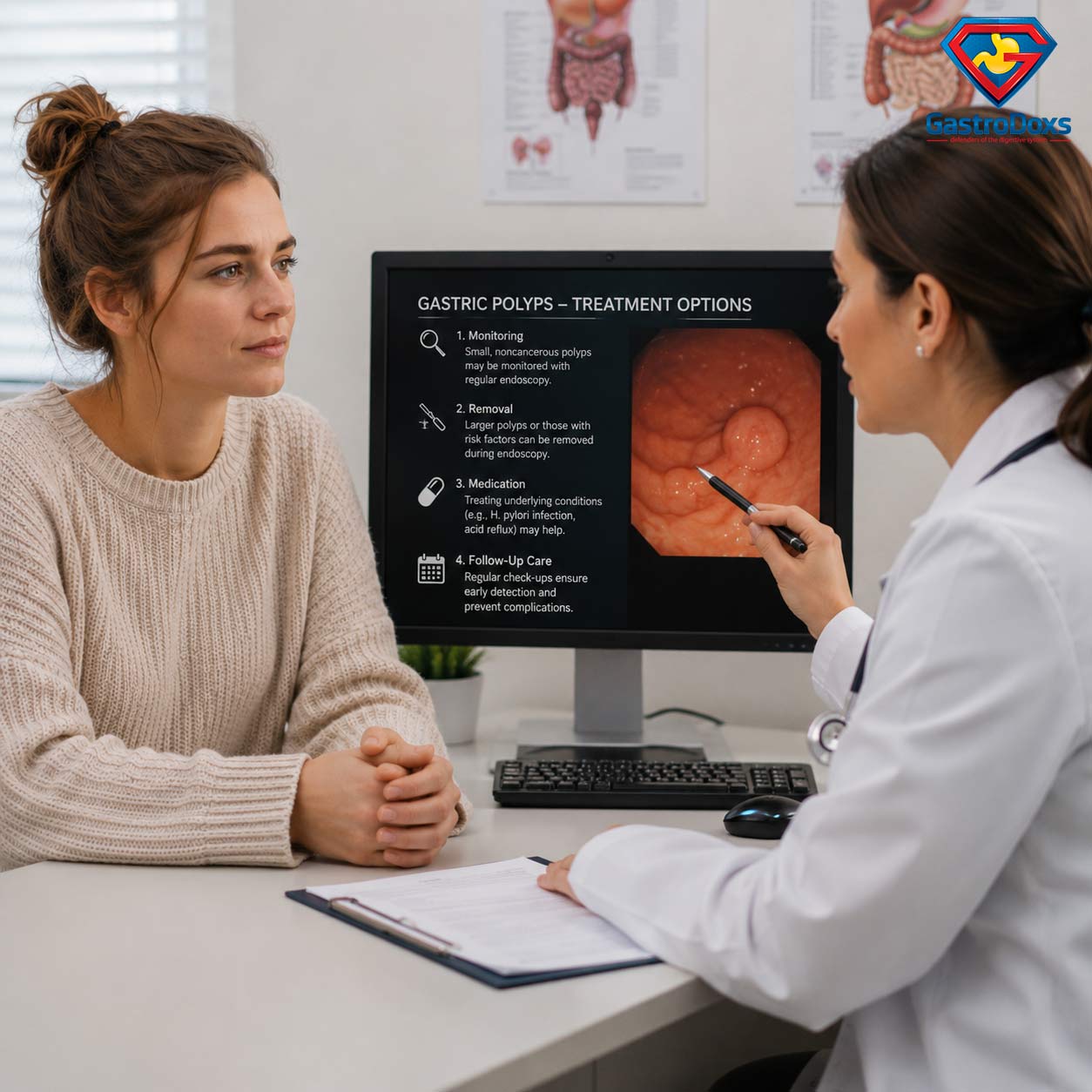
The plan uses pathology and endoscopic risk rather than treating every polyp the same.
We review whether the polyp is fundic gland, hyperplastic, adenomatous, neuroendocrine, or another type before planning care.
Polyps may be removed with biopsy forceps, snare polypectomy, mucosal resection, or referral for advanced endoscopic treatment.
H. pylori, chronic gastritis, and long-term acid-suppressing medicine can affect the polyp pattern and follow-up.
Repeat endoscopy timing is individualized using pathology, completeness of removal, background stomach changes, and family history.
The visit translates a polyp finding into a removal and surveillance plan.
Bring the procedure report, images, pathology, polyp measurements, and any recommendation already given.
We review the type, size, number, location, dysplasia, symptoms, and whether removal was complete.
The next step may be surveillance, standard polypectomy, advanced resection, H. pylori treatment, or surgical referral.
You receive a written plan for pathology review, medication changes, repeat endoscopy, and warning signs after removal.
Your guardians. GastroDoxs GutGuardians™ is our team of gastroenterologists board-certified by the American Board of Internal Medicine (ABIM) - a physician-led defense force of specialists, systems, and solution pathways working together to protect, detect, solve, and defend your digestive health through expert GI evaluation, advanced diagnostic screening, and endoscopic evaluation - commanded from your first concern to your last follow-up, and every critical stage in between.
Your rescue plan. When your diagnosis is confirmed, GastroDoxs GutRescue Mission™ deploys at full force - a gastroenterologist-led intervention plan delivering advanced colonoscopy, upper endoscopy, capsule endoscopy, and precision biologic and medication management across the full range of digestive conditions and complex GI emergencies - fighting for you with everything we have.
Specialist review is useful when the pathology or follow-up plan is unclear.
Precancerous change generally requires complete removal and a defined surveillance plan.
Size, number, and location can affect removal technique and whether advanced endoscopy is needed.
Selected polyps can bleed or interfere with the stomach outlet and should be evaluated promptly.
A second review can clarify whether and when repeat endoscopy is appropriate.
GastroDoxs manages gastric polyps through upper endoscopy, biopsy and pathology review, endoscopic removal, H. pylori treatment when indicated, and risk-based surveillance. Advanced lesions may require referral for specialized endoscopic resection or surgery.






GastroDoxs provides upper endoscopy, biopsy, standard polyp removal, pathology review, H. pylori management, and surveillance planning. Complex or cancerous lesions are coordinated with advanced endoscopy, oncology, or surgery.
Treatment depends on pathology. Low-risk small fundic gland polyps may only need sampling or observation, while adenomas, larger hyperplastic polyps, symptomatic polyps, and suspicious lesions are generally removed. H. pylori and background gastritis are also treated when present.
No. The need for removal depends on type, size, number, symptoms, dysplasia, and cancer risk. Biopsy and endoscopy findings guide the decision.
Upper endoscopy is used to biopsy, measure, photograph, and remove gastric polyps. It is also used for surveillance after removal when pathology or background stomach changes increase risk.
Yes. Most polyps are treated endoscopically rather than with surgery. Surgery is reserved for invasive cancer, a lesion that cannot be safely removed through the scope, or another unusual complication.
Small polyps may be removed with forceps or a wire snare. Larger flat lesions may require endoscopic mucosal resection or endoscopic submucosal dissection by an advanced endoscopist.
Doctors consider pathology, size, number, location, symptoms, H. pylori, medication use, family history, background gastritis or metaplasia, and whether the polyp was completely removed.
You will receive fasting and medication instructions, sedation, endoscopic removal, and recovery monitoring. Tissue is sent to pathology, and the final follow-up plan is made after those results return.
Most patients go home the same day and resume normal activity after sedation restrictions end. Larger resections may require a longer diet progression and closer monitoring for bleeding or pain.
Yes. New polyps can develop, especially when the underlying stomach condition continues. Recurrence risk and surveillance depend on the polyp type and background mucosa.
Endoscopic removal avoids an incision and provides definitive tissue diagnosis. Risks include bleeding, perforation, reaction to sedation, incomplete removal, and the need for repeat or advanced treatment.
Some patients need repeat endoscopy after adenoma removal, dysplasia, incomplete resection, multiple polyps, or significant background gastritis. The interval is based on the final pathology and clinical context.
Coverage varies for endoscopy, anesthesia, polypectomy, pathology, and advanced resection. GastroDoxs can help verify benefits and authorization requirements.
A gastroenterologist with endoscopic polyp-removal experience is appropriate. GastroDoxs can review pathology and determine whether standard removal, advanced endoscopy, surveillance, or surgical referral is needed.
Seek care for vomiting blood, black stools, anemia, unexplained weight loss, persistent vomiting, or worsening upper abdominal pain. Many polyps cause no symptoms and are managed based on pathology.
Use the online appointment link or call GastroDoxs. Bring prior endoscopy and pathology reports, images if available, and your current medication list.
Get a pathology-guided plan for gastric polyp removal, H. pylori treatment, advanced endoscopy referral, and surveillance. Seek urgent care for vomiting blood, black stools, fainting, or severe worsening pain.



