Abnormal Stomach Biopsy
A biopsy showing adenocarcinoma, suspicious cells, dysplasia, or unclear pathology should be reviewed quickly.

 Medically Reviewed by
Dr. Bharat Pothuri, MD, FACG
| Updated July 17, 2026
Gastric adenocarcinoma care depends on biopsy confirmation, tumor location, stage, nutrition status, and coordinated oncology/surgical planning. GastroDoxs helps patients understand stomach cancer findings, endoscopy results, pathology reports, and next-step referrals.
Gastric adenocarcinoma is a type of stomach cancer that requires accurate diagnosis, biopsy review, staging, and coordinated specialist care. GastroDoxs GutRescue Mission™ helps patients organize endoscopy findings, pathology reports, imaging results, nutrition concerns, oncology referrals, surgical questions, and follow-up planning after concerning stomach symptoms or abnormal results.
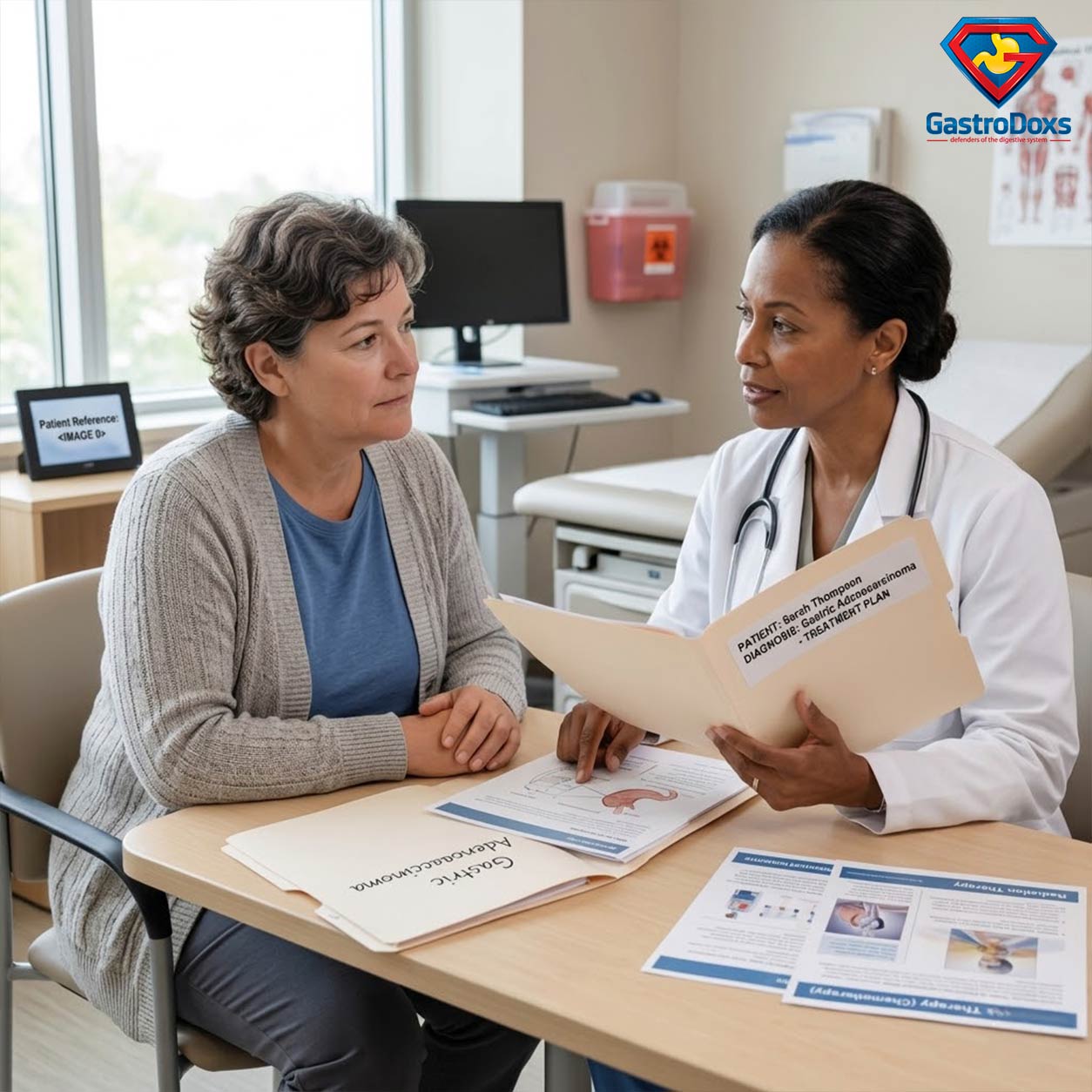
A digestive-specialist visit helps connect symptoms, records, test results, risk factors, and care coordination into a clearer plan.
Upper endoscopy with biopsy is central to diagnosis. GastroDoxs can review reports, pathology wording, tumor location, and whether additional GI testing is needed.
CT, PET, endoscopic ultrasound, laparoscopy reports, blood tests, and outside records often need careful organization before treatment decisions.
Early fullness, nausea, poor intake, anemia, bleeding, and weight loss can affect treatment readiness and should be reviewed promptly.
Patients may need oncology, surgical oncology, radiation oncology, nutrition, genetic risk evaluation, or second-opinion support depending on stage and overall health.
A simple visit path for treatment planning and next-step clarity.
Book for abnormal upper endoscopy results, biopsy questions, stomach cancer symptoms, or help organizing next steps.
Bring pathology, endoscopy, CT/PET, ultrasound, oncology notes, discharge records, and medication lists.
Your provider reviews weight loss, anemia, early satiety, bleeding, H. pylori history, family history, reflux, and prior stomach conditions.
The plan may include repeat endoscopy, endoscopic ultrasound referral, oncology referral, surgical review, nutrition planning, or additional records review.
Your guardians. GastroDoxs GutGuardians™ is our team of gastroenterologists board-certified by the American Board of Internal Medicine (ABIM) - a physician-led defense force of specialists, systems, and solution pathways working together to protect, detect, solve, and defend your digestive health through expert GI evaluation, advanced diagnostic screening, and endoscopic evaluation - commanded from your first concern to your last follow-up, and every critical stage in between.
Your rescue plan. When your diagnosis is confirmed, GastroDoxs GutRescue Mission™ deploys at full force - a gastroenterologist-led intervention plan delivering advanced colonoscopy, upper endoscopy, capsule endoscopy, and precision biologic and medication management across the full range of digestive conditions and complex GI emergencies - fighting for you with everything we have.
Schedule GI care when symptoms, test results, or prior records need clearer next-step review.
A biopsy showing adenocarcinoma, suspicious cells, dysplasia, or unclear pathology should be reviewed quickly.
Indigestion with weight loss, anemia, black stool, vomiting, or early fullness needs more careful evaluation.
Patients often need help understanding which tests and specialists should come next after diagnosis.
Early satiety, nausea, poor appetite, and weight loss can affect readiness for treatment and should be addressed.
GastroDoxs can help organize records for multidisciplinary review or second-opinion planning.
GastroDoxs supports gastric adenocarcinoma-related GI care through symptom review, endoscopy and biopsy record review, staging coordination, and referral planning with oncology and surgical specialists.






Patients with suspected or diagnosed gastric adenocarcinoma need prompt, organized care. GastroDoxs helps with GI evaluation, records review, endoscopy planning, and coordination while cancer treatment decisions are made by oncology and surgical teams.
GastroDoxs can help with GI evaluation, endoscopy review, biopsy report discussion, and referral coordination. Cancer treatment usually involves oncology, surgical oncology, radiation, nutrition, and supportive-care teams.
The best setting is one with coordinated gastroenterology, oncology, surgical oncology, imaging, radiation, pathology, nutrition, and staging support. GastroDoxs can help organize the GI records and referral pathway.
Care usually involves a gastroenterologist for diagnosis and endoscopy, a medical oncologist, surgical oncologist, radiation oncologist when needed, radiology, pathology, and nutrition support.
Surgery may be used when cancer is removable and the patient is fit for surgery. Some cases need chemotherapy or radiation first, and advanced cases may focus on systemic therapy or symptom control.
Treatment depends on stage and tumor biology. Options may include endoscopic removal for very early cancers, surgery, chemotherapy, radiation, targeted therapy, immunotherapy, nutrition support, and palliative care.
Early-stage gastric cancer has better treatment options and may be curable in selected patients. Outlook depends on stage, tumor location, complete removal, response to therapy, and overall health.
A confirmed diagnosis should be acted on quickly. The next steps usually include staging, oncology referral, surgical assessment, nutrition review, and treatment planning.
Untreated stomach cancer can grow, bleed, obstruct food passage, spread to lymph nodes or organs, worsen nutrition, and reduce treatment options.
Upper endoscopy with biopsy confirms diagnosis. Staging may include CT, PET, endoscopic ultrasound, laparoscopy, blood tests, and additional pathology or biomarker testing.
A gastroenterologist often confirms diagnosis through endoscopy and biopsy. Once cancer is found, oncology and surgical specialists become essential. Many patients need both teams.
Survival depends strongly on stage, tumor biology, treatment response, and overall health. Your oncology team can discuss prognosis after staging is complete.
Chemotherapy and radiation can be important parts of treatment, sometimes before or after surgery. Advanced disease may use chemotherapy, targeted therapy, or immunotherapy depending on testing.
Warning signs include unplanned weight loss, persistent indigestion, early fullness, stomach pain, vomiting, black stool, anemia, poor appetite, or trouble swallowing.
Gastric cancer can spread to lymph nodes, liver, peritoneum, or other areas. Staging tests help determine whether spread has occurred.
Seek a multidisciplinary cancer program with stomach cancer experience. GastroDoxs can help organize endoscopy, pathology, imaging, and symptom records before a second opinion.
Recovery depends on the operation and stage. It may include hospital stay, diet changes, weight monitoring, nutrition support, activity limits, and close oncology and surgical follow-up.
If you have abnormal stomach biopsy results, persistent indigestion with warning signs, weight loss, early fullness, anemia, or records needing review, schedule a GastroDoxs GI evaluation for next-step coordination.



