Severe Constipation or No Stool Passage
Long gaps without bowel movements, hard stool, straining, or inability to pass stool can require medical guidance.

 Medically Reviewed by
Dr. Bharat Pothuri, MD, FACG
| Updated July 17, 2026
Medically Reviewed by
Dr. Bharat Pothuri, MD, FACG
| Updated July 17, 2026
Fecal impaction can cause severe constipation, abdominal pain, bloating, nausea, overflow diarrhea, urinary symptoms, or inability to pass stool. GastroDoxs helps patients get safe next-step guidance, treatment planning, medication review, and prevention support after blockage concerns are addressed.
Fecal impaction happens when hardened stool becomes stuck in the rectum or colon and cannot pass normally. GastroDoxs GutRescue Mission™ supports patients who need safe constipation care, medication review, stool-blockage assessment, disimpaction discussion, bowel-regimen planning, and follow-up to reduce recurrence.
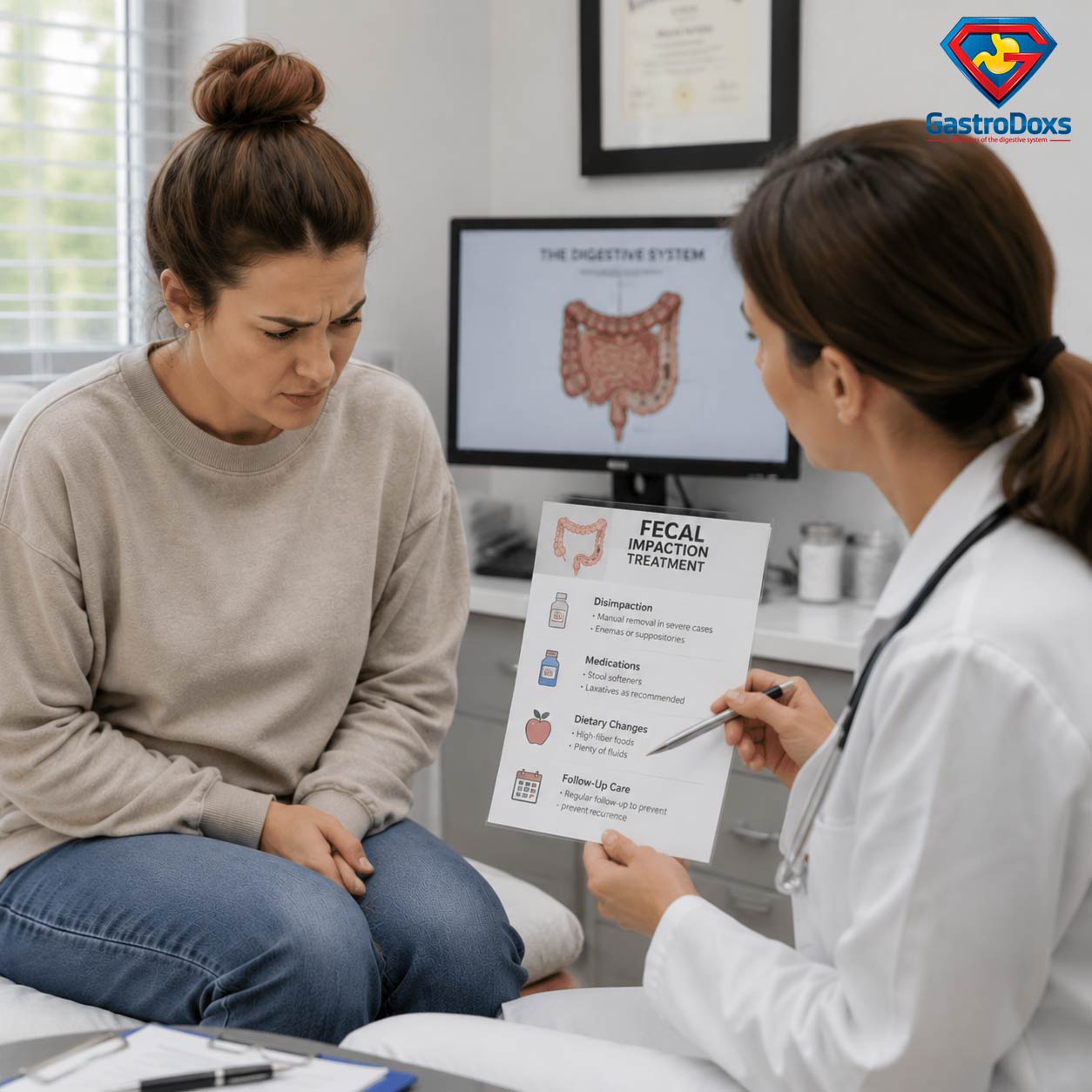
A digestive-specialist visit helps connect symptoms, records, test results, risk factors, and care coordination into a clearer plan.
Your provider reviews stool frequency, blockage sensation, pain, bloating, leakage, vomiting, medication use, hydration, diet, mobility, and neurologic or metabolic risks.
Impaction treatment should match severity. The visit may cover laxatives, enemas, bowel regimens, manual disimpaction history, and when urgent care is safer.
Opioids, iron, anticholinergics, calcium supplements, dehydration, low mobility, and chronic constipation can increase impaction risk and should be addressed.
After stool is cleared, long-term success often requires a scheduled bowel regimen, fiber or fluid guidance, activity support, and follow-up testing when appropriate.
A simple visit path for treatment planning and next-step clarity.
Book if severe constipation, incomplete emptying, stool blockage, or recurrent impaction is affecting comfort or daily life.
Share laxatives tried, stool frequency, pain severity, prior ER visits, colonoscopy history, and medications that may slow the bowel.
Your provider reviews whether office-based GI care is appropriate or whether urgent evaluation is needed for vomiting, severe pain, bleeding, dehydration, or confusion.
Your plan may include bowel regimen changes, hydration, fiber strategy, medication adjustment, pelvic floor evaluation, colonoscopy discussion, or follow-up monitoring.
Your guardians. GastroDoxs GutGuardians™ is an elite team of board-certified gastroenterologists - a physician-led defense force of specialists, systems, and solution pathways working together to protect, detect, solve, and defend your digestive health through expert GI evaluation, advanced diagnostic screening, and endoscopic evaluation - commanded from your first concern to your last follow-up, and every critical stage in between.
Your rescue plan. When your diagnosis is confirmed, GastroDoxs GutRescue Mission™ deploys at full force - a gastroenterologist-led intervention plan delivering advanced colonoscopy, upper endoscopy, capsule endoscopy, and precision biologic and medication management across the full range of digestive conditions and complex GI emergencies - fighting for you with everything we have.
Schedule GI care when symptoms, test results, or prior records need clearer next-step review.
Long gaps without bowel movements, hard stool, straining, or inability to pass stool can require medical guidance.
Watery stool leaking around hard stool can be a sign of impaction, not simple diarrhea.
Pain, distension, nausea, vomiting, or appetite loss can signal a more serious blockage pattern.
Opioids, iron, calcium, anticholinergics, and some neurologic or metabolic conditions can raise risk.
Repeat episodes need a prevention plan rather than repeated short-term rescue treatment.
GastroDoxs supports fecal impaction care with constipation evaluation, medication-risk review, treatment planning, bowel-regimen guidance, and follow-up to reduce recurrence.







Fecal impaction can become serious when pain, vomiting, bleeding, dehydration, or confusion appears. GastroDoxs provides non-emergency GI evaluation and prevention planning while urgent symptoms should be handled promptly.
GastroDoxs can evaluate severe constipation and recurrent impaction risk, review medications, and plan a safer bowel regimen. Severe pain, vomiting, dehydration, confusion, or bleeding may need urgent care first.
The fastest safe option depends on stool location and severity. Treatment may include enemas, oral osmotic laxatives, supervised disimpaction, bowel cleanout, or hospital care for severe cases.
A gastroenterologist can evaluate chronic constipation and recurrent impaction. Emergency care may be needed for severe pain, vomiting, complete blockage, dehydration, bleeding, or confusion.
Yes. Severe impaction can require hospital care if there is vomiting, dehydration, severe pain, bleeding, confusion, suspected bowel obstruction, or concern for perforation.
Severe bowel impaction is usually evaluated in an emergency department where imaging, fluids, monitored disimpaction, enemas, or surgical consultation can be arranged if needed.
Treatment may include manual disimpaction, enemas, polyethylene glycol solutions, laxatives, abdominal massage, or monitored cleanout. The method depends on severity and stool location.
Warning signs include inability to pass stool, severe rectal pressure, abdominal pain, bloating, nausea, vomiting, watery leakage, urinary symptoms, bleeding, dehydration, or confusion.
Yes. Vomiting, severe abdominal pain, and distension can occur and may suggest a more serious blockage or complication that should be evaluated promptly.
Manual disimpaction can be safe when performed by trained medical staff for appropriate cases. It should not be attempted at home without clinician guidance.
Clinicians may use polyethylene glycol solutions, osmotic laxatives, stimulant laxatives, stool softeners, or enemas depending on severity, medical history, and blockage location.
It can become dangerous when it leads to bowel obstruction, perforation, severe dehydration, bleeding, infection, confusion, or worsening abdominal distension and pain.
Yes. A large stool mass can block stool movement and mimic or contribute to bowel obstruction. Severe symptoms need urgent evaluation.
Treatment should not be delayed when stool is completely blocked, pain is severe, vomiting occurs, or there are signs of dehydration, bleeding, confusion, or distension.
Yes. Recurrence is common when chronic constipation, medications, low fluid intake, low mobility, pelvic floor dysfunction, or untreated bowel conditions remain unaddressed.
Diagnosis may include physical exam, digital rectal exam, abdominal exam, and imaging such as abdominal X-ray or CT when stool is higher in the colon or complications are suspected.
Do not keep escalating laxatives without guidance. Contact a clinician promptly or seek urgent care if pain, vomiting, distension, dehydration, bleeding, or inability to pass gas occurs.
If severe constipation, stool blockage, overflow diarrhea, abdominal pain, or recurrent impaction is affecting daily life, schedule a GastroDoxs GI evaluation for treatment and prevention planning.