Trouble Swallowing or Food Sticking
Progressive dysphagia, choking, painful swallowing, or food sticking should be evaluated promptly.

 Medically Reviewed by
Dr. Bharat Pothuri, MD, FACG
| Updated July 17, 2026
Medically Reviewed by
Dr. Bharat Pothuri, MD, FACG
| Updated July 17, 2026
Esophageal cancer care starts with clear diagnosis, biopsy confirmation, staging, and referral coordination. GastroDoxs helps patients understand swallowing symptoms, endoscopy findings, pathology reports, and the next steps between GI, oncology, surgery, radiation, and supportive care.
Esophageal cancer requires a coordinated plan based on biopsy results, cancer type, stage, swallowing function, nutrition risk, and overall health. GastroDoxs GutRescue Mission™ supports patients who need endoscopy review, pathology interpretation, staging-record organization, referral coordination, and clear next-step planning after concerning symptoms or abnormal findings.
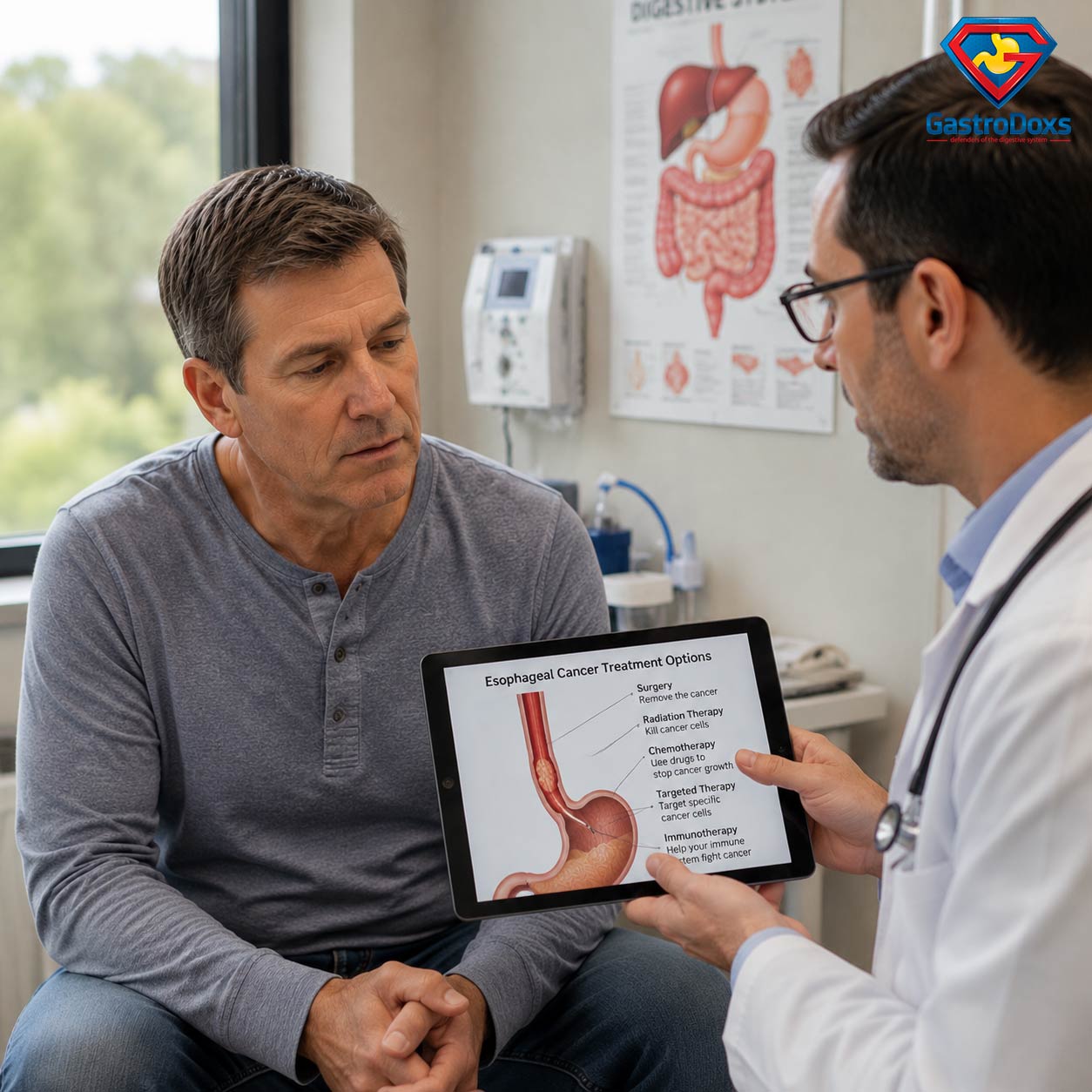
A digestive-specialist visit helps connect symptoms, records, test results, risk factors, and care coordination into a clearer plan.
GastroDoxs can review whether upper endoscopy, biopsy results, Barrett’s changes, stricture, bleeding, or tumor findings need additional coordination.
Esophageal cancer can affect eating, hydration, weight, and medication swallowing. The visit can help identify urgent nutrition or swallowing-support needs.
Patients may need medical oncology, surgical oncology, radiation oncology, nutrition, imaging, or second-opinion referral based on stage and overall health.
Pathology reports, CT/PET imaging, endoscopic ultrasound, discharge notes, and prior endoscopy images can be reviewed so the next step is organized.
A simple visit path for treatment planning and next-step clarity.
Schedule if you have abnormal endoscopy results, biopsy questions, swallowing symptoms, or need help coordinating the next GI step.
Bring biopsy reports, endoscopy reports, CT/PET results, oncology notes, hospital paperwork, and medication lists.
Your provider reviews swallowing trouble, weight loss, reflux history, Barrett’s esophagus, anemia, bleeding, and nutrition concerns.
The visit may lead to repeat endoscopy, endoscopic ultrasound referral, oncology referral, surgical review, nutrition support, or records-based follow-up.
Your guardians. GastroDoxs GutGuardians™ is an elite team of board-certified gastroenterologists - a physician-led defense force of specialists, systems, and solution pathways working together to protect, detect, solve, and defend your digestive health through expert GI evaluation, advanced diagnostic screening, and endoscopic evaluation - commanded from your first concern to your last follow-up, and every critical stage in between.
Your rescue plan. When your diagnosis is confirmed, GastroDoxs GutRescue Mission™ deploys at full force - a gastroenterologist-led intervention plan delivering advanced colonoscopy, upper endoscopy, capsule endoscopy, and precision biologic and medication management across the full range of digestive conditions and complex GI emergencies - fighting for you with everything we have.
Schedule GI care when symptoms, test results, or prior records need clearer next-step review.
Progressive dysphagia, choking, painful swallowing, or food sticking should be evaluated promptly.
Weight loss, dehydration, or difficulty maintaining nutrition may require coordinated cancer and supportive-care planning.
A pathology report showing cancer, dysplasia, Barrett’s changes, or suspicious tissue needs organized next steps.
Patients often need help understanding CT, PET, endoscopic ultrasound, oncology, surgery, or radiation referrals.
GastroDoxs can help organize records and clarify which specialists should be involved next.
GastroDoxs supports esophageal cancer-related GI care through symptom review, upper endoscopy or biopsy record review, staging coordination, and referral planning with oncology and surgical specialists when needed.







Patients with suspected or diagnosed esophageal cancer need timely, coordinated care. GastroDoxs can help with GI evaluation and records review while cancer treatment decisions are made with oncology and surgical teams.
You can schedule GastroDoxs for GI evaluation, endoscopy review, biopsy/pathology discussion, and referral coordination. Cancer treatment itself usually involves oncology, surgery, radiation oncology, and supportive-care teams.
The best setting is one with coordinated gastroenterology, oncology, surgical oncology, radiation oncology, imaging, nutrition, and staging support. GastroDoxs can help organize the GI side of that pathway.
Treatment usually involves several specialists, including a gastroenterologist, medical oncologist, radiation oncologist, thoracic or surgical oncologist, nutrition specialist, and sometimes palliative-care support.
Treatment depends on type and stage. Options may include endoscopic resection for very early disease, surgery, chemotherapy, radiation therapy, immunotherapy, targeted therapy, feeding support, or palliative procedures.
Early-stage disease has more treatment options and may be curable in selected patients. The outlook depends on stage, tumor type, location, overall health, and whether the cancer can be fully treated.
Not always. Surgery may be used for some cases, while very early disease may qualify for endoscopic treatment and advanced disease may require chemotherapy, radiation, immunotherapy, or symptom-relief procedures.
Delay can allow worsening swallowing problems, malnutrition, bleeding, tumor growth, spread to lymph nodes or organs, and fewer treatment options. Prompt staging and specialist referral are important.
A diagnosis should be acted on quickly. Urgency depends on swallowing ability, weight loss, bleeding, stage, imaging findings, and whether nutrition or airway/symptom support is needed.
Diagnosis is confirmed by biopsy during upper endoscopy. Staging may include CT, PET, endoscopic ultrasound, bronchoscopy in selected cases, MRI, and other tests based on the tumor location.
A gastroenterologist often helps with endoscopy and biopsy. Once cancer is confirmed, oncology and surgical teams become essential for staging and treatment planning. Many patients need both.
Survival varies widely by stage, tumor type, response to treatment, and overall health. Your oncology team can explain prognosis after staging tests are complete.
Yes. Chemotherapy and radiation are often used together for certain stages, sometimes before surgery and sometimes as the main treatment depending on tumor stage and patient factors.
Emergency signs include inability to swallow liquids, dehydration, vomiting blood, black stool, severe chest pain, breathing trouble, fainting, or rapid decline in strength.
Seek a second opinion from a multidisciplinary cancer program. GastroDoxs can help organize endoscopy, biopsy, and imaging records so another team can review them efficiently.
Some esophageal cancers can spread to lymph nodes or distant organs. Staging tests are needed to understand extent and guide treatment.
Recovery depends on the type of surgery and overall health. It may include hospital stay, diet changes, swallowing support, nutrition planning, activity limits, and close surgical and oncology follow-up.
If you have trouble swallowing, abnormal endoscopy results, biopsy questions, weight loss, bleeding signs, or records that need review, schedule a GastroDoxs GI evaluation for next-step planning.