Persistent Upper Abdominal Symptoms
Ongoing burning, nausea, early fullness, or discomfort may need evaluation when simple measures do not help.

 Medically Reviewed by
Dr. Bharat Pothuri, MD, FACG
| Updated 07-28-2026
Treatment focuses on removing the stomach irritant, lowering acid exposure, checking for bleeding, and confirming that the lining is healing.
Erosive gastropathy treatment works best when the source of stomach-lining injury is identified and removed. GastroDoxs GutRescue Mission™ connects medication exposure, alcohol use, illness, endoscopy findings, bleeding risk, and acid-reducing therapy into a practical plan built around healing and prevention.
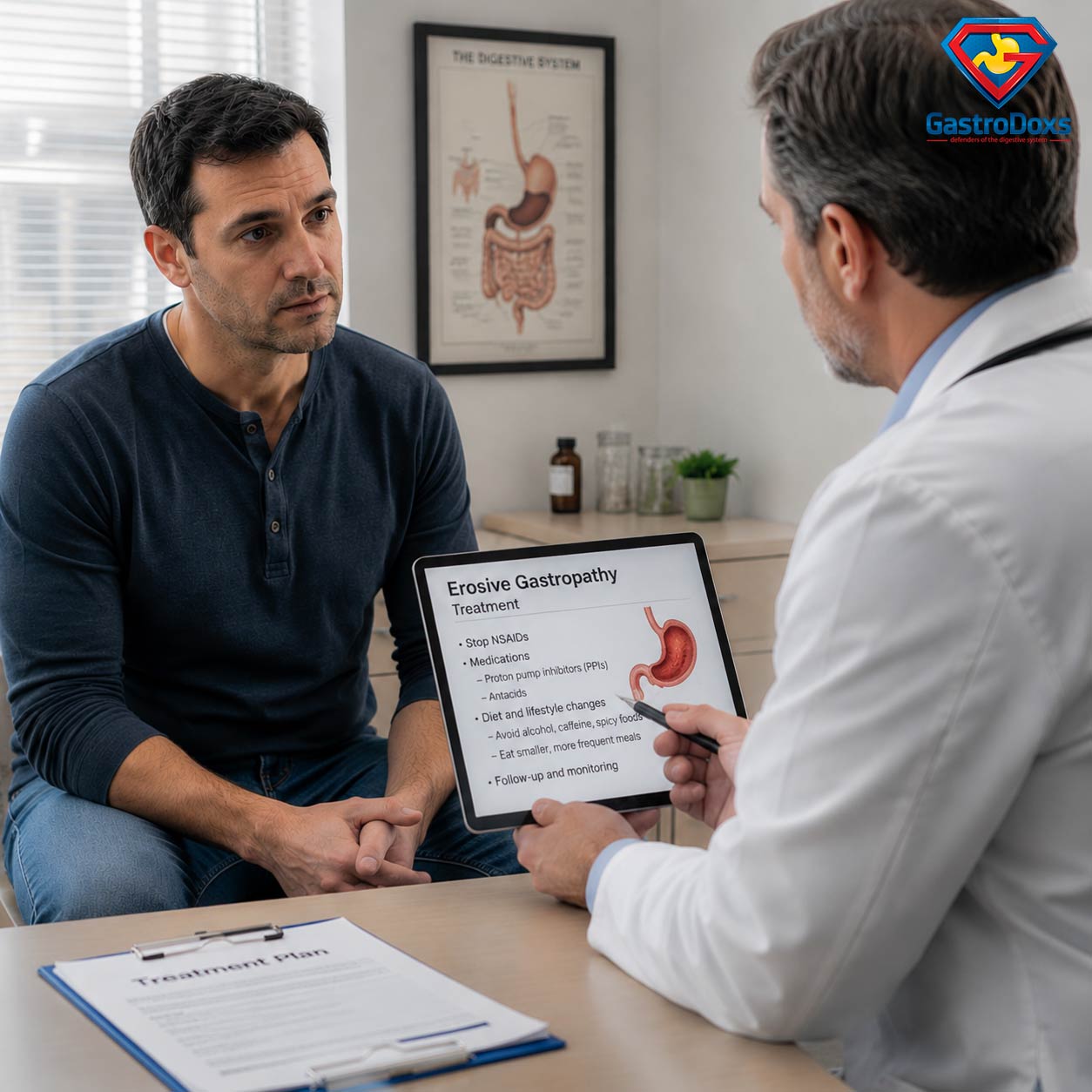
Treatment is matched to the cause, severity, bleeding risk, and prior test results.
We review NSAIDs, aspirin, blood thinners, supplements, alcohol exposure, and other factors that can keep the stomach lining injured.
When alarm symptoms or persistent problems are present, upper endoscopy can assess erosions, bleeding, ulcers, and competing diagnoses.
The plan may include a proton pump inhibitor, H2 blocker, sucralfate, or other therapy based on the clinical situation.
Follow-up addresses the trigger, safer medication choices, nutrition, and whether repeat testing is needed.
A structured visit turns a stomach-lining finding into a treatment plan.
Bring a list of pain relievers, prescriptions, supplements, alcohol use, recent illness, and the date symptoms began.
We ask about black stools, vomiting blood, dizziness, anemia, and medicines that increase bleeding risk.
Prior endoscopy and pathology are reviewed; new endoscopy, labs, or H. pylori testing may be recommended when appropriate.
You receive instructions for medication use, trigger removal, diet tolerance, follow-up timing, and urgent warning signs.
Your guardians. GastroDoxs GutGuardians™ is our team of gastroenterologists board-certified by the American Board of Internal Medicine (ABIM) - a physician-led defense force of specialists, systems, and solution pathways working together to protect, detect, solve, and defend your digestive health through expert GI evaluation, advanced diagnostic screening, and endoscopic evaluation - commanded from your first concern to your last follow-up, and every critical stage in between.
Your rescue plan. When your diagnosis is confirmed, GastroDoxs GutRescue Mission™ deploys at full force - a gastroenterologist-led intervention plan delivering advanced colonoscopy, upper endoscopy, capsule endoscopy, and precision biologic and medication management across the full range of digestive conditions and complex GI emergencies - fighting for you with everything we have.
A GI visit is appropriate when symptoms or endoscopy findings need a cause-specific plan.
Ongoing burning, nausea, early fullness, or discomfort may need evaluation when simple measures do not help.
A pathology and medication review can clarify why erosions developed and whether additional treatment is needed.
Low iron, fatigue, or dark stools may require prompt evaluation for gastrointestinal blood loss.
Recurrence may mean the irritant remains, medication was stopped too early, or another condition is present.
GastroDoxs treats erosive gastropathy by identifying the injury pattern, reducing ongoing irritation, managing acid exposure, checking for blood loss, and deciding whether endoscopic follow-up is needed. Severe bleeding is managed in an emergency or hospital setting.






GastroDoxs provides non-emergency evaluation, upper endoscopy planning, pathology review, medication management, and follow-up for erosive gastropathy. Vomiting blood, black tarry stools, fainting, or severe weakness requires emergency care.
Treatment usually combines removal of the irritant with acid suppression and protection of the stomach lining. The plan may include changing an NSAID or other trigger with the prescribing clinician, a proton pump inhibitor or H2 blocker, and treatment of bleeding or another identified cause.
Common prescriptions include proton pump inhibitors, H2-receptor blockers, and sometimes sucralfate. The safest choice depends on the cause, severity, other medicines, kidney or liver conditions, and whether bleeding is present.
Yes. Most cases do not require surgery. Removing the cause and using prescribed acid-reducing or lining-protective treatment often allows healing. Surgery is uncommon and generally reserved for a complication that cannot be controlled another way.
Upper endoscopy may be recommended for bleeding, anemia, persistent pain, vomiting, weight loss, difficulty swallowing, uncertain diagnosis, or failure to improve. It can show erosions, ulcers, active bleeding, and allow biopsy.
Doctors consider the suspected trigger, endoscopy and biopsy findings, H. pylori status, blood count, bleeding risk, symptoms, medication history, and other medical conditions before choosing therapy.
Expect a medication and trigger review, clear dosing instructions, discussion of food tolerance, and a follow-up plan. Symptoms may improve before the lining fully heals, so prescribed treatment should not be stopped early without guidance.
Healing time varies from several weeks to longer depending on the depth of injury, whether the trigger is removed, and whether bleeding or another condition is present. Follow-up is based on symptoms, labs, and sometimes repeat endoscopy.
PPIs are commonly used because they strongly reduce acid exposure, but they are not automatically the best choice for every patient. The cause, bleeding risk, medication interactions, and duration of therapy all matter.
Diet does not cure erosive gastropathy, but smaller meals and avoiding personal triggers such as alcohol or foods that worsen burning may improve comfort. The priority is removing the cause and following prescribed treatment.
Acid-reducing medicines can promote healing and lower bleeding risk, but side effects and interactions vary. Your clinician should review the expected benefit, treatment length, kidney or bone considerations, infection risk, and other medicines.
Yes. Erosions can return if NSAIDs, alcohol, bile reflux, severe illness, or another trigger continues. Recurrence prevention is part of the follow-up plan.
Coverage depends on the insurance plan and whether consultation, endoscopy, biopsy, pathology, or medication authorization is needed. GastroDoxs can help verify benefits before scheduled care.
A gastroenterologist who performs upper endoscopy and treats stomach-lining disorders is appropriate. GastroDoxs can evaluate non-emergency symptoms, review prior pathology, and develop a treatment plan.
Seek emergency care for vomiting blood, black tarry stools, fainting, confusion, rapid heartbeat, severe weakness, or severe worsening abdominal pain. Do not wait for a routine appointment when significant bleeding is possible.
Use the online booking link or call GastroDoxs. Share any prior endoscopy, pathology, medication list, recent blood counts, and details about bleeding symptoms when scheduling.
Get a cause-focused plan for stomach-lining injury, medication review, endoscopy findings, healing, and recurrence prevention. Seek emergency care now for vomiting blood, black stools, fainting, or severe weakness.



