Terminal Ileum Biopsy Shows Prominent Eosinophils
A specialist review can determine whether the finding fits eosinophilic ileitis or reflects Crohn disease, infection, medicine injury, parasites, or a systemic disorder.

 Medically Reviewed by
Dr. Bharat Pothuri, MD, FACG
| Updated 08-09-2026
Eosinophilic ileitis is rare and can resemble Crohn’s disease, infection, medication injury, or another form of ileitis. GastroDoxs reviews tissue findings, enterography, bowel-wall involvement, secondary causes, prior treatment, nutrition, and recurrence before building a treatment plan.
Eosinophilic ileitis is an eosinophilic gastrointestinal disorder involving the ileum, the final section of the small intestine. GastroDoxs GutRescue Mission™ helps patients connect terminal-ileum biopsy, CT or MR enterography, Crohn’s disease features, medication and parasite exposure, blood eosinophils, disease depth, nutrition, previous steroid or dietary response, and recurrence into one treatment strategy.
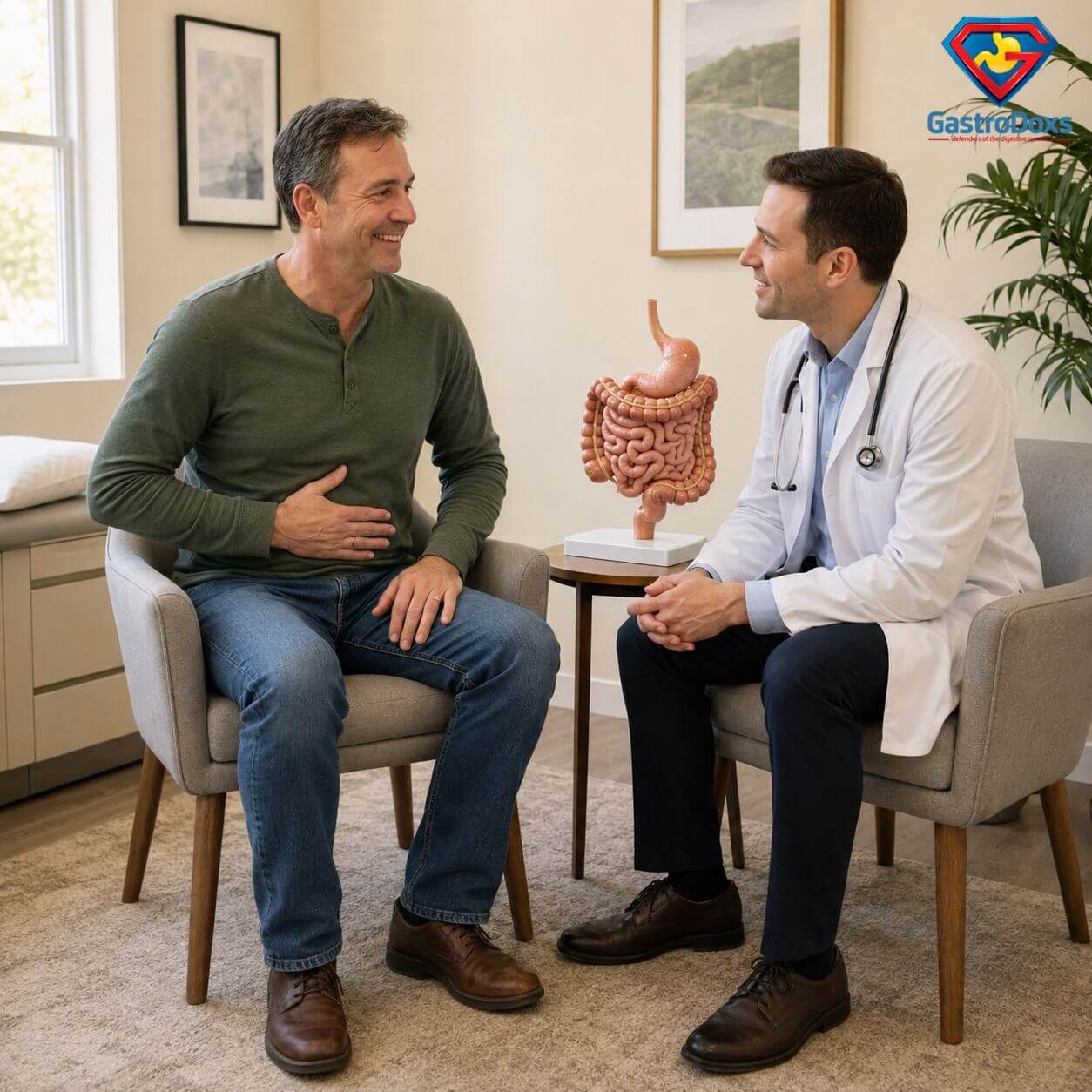
Treatment-stage care focused on diagnostic confidence, individualized therapy, measurable response, and clear escalation when symptoms change.
GastroDoxs compares the biopsy, endoscopic appearance, imaging distribution, inflammatory markers, medication history, infection risk, and other features before labeling the process as primary eosinophilic ileitis.
Terminal-ileum pathology is interpreted alongside CT or MR enterography to determine whether disease appears mucosal, transmural, stricturing, obstructive, or more extensive.
Steroid, diet, nutritional, and other treatment decisions account for symptom severity, bowel-wall involvement, anemia or protein loss, weight change, obstruction risk, and previous response.
The plan distinguishes expected chronic or relapsing symptoms from warning signs that require urgent reassessment for obstruction, bleeding, perforation, or another diagnosis.
A structured path from outside records and current symptoms to treatment selection and follow-up.
Include the terminal-ileum report, pathology description, CT or MR enterography, prior small-bowel imaging, and any records related to Crohn disease or obstruction.
Document medicines, supplements, travel, parasite risk, infections, autoimmune symptoms, allergies, blood eosinophils, and previous inflammatory bowel disease testing.
Weight trend, diarrhea, pain, vomiting, anemia, protein status, vitamin abnormalities, hydration, and obstruction-like episodes are incorporated into treatment planning.
The visit defines whether corticosteroid-based therapy, a supervised diet, nutritional support, additional diagnostic work, or another specialist is appropriate and how recurrence will be measured.
Your guardians. GastroDoxs GutGuardians™ is our team of gastroenterologists board-certified by the American Board of Internal Medicine (ABIM) - a physician-led defense force of specialists, systems, and solution pathways working together to protect, detect, solve, and defend your digestive health through expert GI evaluation, advanced diagnostic screening, and endoscopic evaluation - commanded from your first concern to your last follow-up, and every critical stage in between.
Your rescue plan. When your diagnosis is confirmed, GastroDoxs GutRescue Mission™ deploys at full force - a gastroenterologist-led intervention plan delivering advanced colonoscopy, upper endoscopy, capsule endoscopy, and precision biologic and medication management across the full range of digestive conditions and complex GI emergencies - fighting for you with everything we have.
Schedule when the diagnosis is established or strongly suspected and the treatment, response, or next step remains unclear.
A specialist review can determine whether the finding fits eosinophilic ileitis or reflects Crohn disease, infection, medicine injury, parasites, or a systemic disorder.
When imaging and biopsy do not fit a classic Crohn pattern, a structured second review can clarify what evidence supports each diagnosis.
Short-term improvement does not prove the diagnosis. Recurrence should trigger review of disease extent, secondary causes, objective inflammation, and a safer longer-term strategy.
These symptoms may indicate deeper bowel-wall disease, nutritional impact, or a structural complication and deserve timely GI assessment.
Eosinophilic ileitis is diagnosed and treated only after ileal eosinophilia is interpreted in context and important secondary causes are excluded. Disease depth, small-bowel imaging, nutritional effects, Crohn-disease features, and obstruction risk can materially change management.






GastroDoxs provides non-emergency evaluation for persistent ileitis, eosinophilic terminal-ileum biopsies, recurrent abdominal pain or diarrhea, unclear Crohn’s disease workups, nutritional effects, and treatment plans that require pathology and enterography review.
GastroDoxs can evaluate suspected eosinophilic ileitis through a gastroenterology visit that reviews terminal-ileum biopsy, colonoscopy, CT or MR enterography, Crohn’s disease features, secondary causes, prior treatment, nutrition, and recurrence.
Diagnosis requires intestinal symptoms plus eosinophilic inflammation in ileal tissue and exclusion of competing causes such as parasites, infection, medicines, Crohn disease, autoimmune or vasculitic disease, and systemic eosinophilic disorders.
Expect review of pain, diarrhea, nausea, vomiting, weight loss, bleeding, obstruction-like episodes, allergy history, medicines and travel, blood eosinophils, colonoscopy and biopsy, cross-sectional imaging, previous steroids or diets, and nutritional laboratory results.
Biopsy is important because it provides direct tissue evidence and can reveal inflammatory features that help distinguish eosinophilic disease from Crohn disease, infection, and drug injury. A normal-looking terminal ileum does not always exclude microscopic disease.
Treatment is individualized. Options may include corticosteroid-based therapy, selected supervised dietary therapy, correction of iron, protein or vitamin deficiencies, treatment of an identified secondary cause, and endoscopic or surgical management when structural complications occur.
Systemic corticosteroids are commonly used for clinically significant eosinophilic enteritis, and budesonide may be considered in selected cases. Other immune-directed treatments have less established evidence and require specialist selection.
The cause is determined by comparing tissue findings with Crohn-disease features, parasite and infection risk, medication exposure, systemic eosinophilic disease, autoimmune or vasculitic conditions, atopic history, imaging, and the distribution of bowel inflammation.
Dietary changes may help selected patients when a food-related component is plausible, but evidence for isolated ileal disease is limited. Restrictive elimination diets should be supervised to protect calories, protein, vitamins, and quality of life.
Follow-up may track symptoms, weight, CBC and eosinophils when informative, iron and protein markers, inflammatory tests, enterography, and repeat ileal biopsy when objective reassessment is likely to change treatment.
Bring the colonoscopy and terminal-ileum biopsy report, pathology, CT or MR enterography, previous Crohn-disease testing, blood work, stool or parasite testing, medication list, travel and infection history, and details of prior steroid or dietary response.
There is no fixed recovery time. Symptoms may improve over days to weeks with effective therapy, while nutritional recovery or deeper bowel-wall inflammation may take longer. Chronic or relapsing disease can require ongoing management.
Yes. Eosinophilic enteritis can relapse after improvement or during treatment reduction. Recurrent symptoms should prompt reassessment of the original diagnosis, secondary causes, treatment adherence, nutrition, and objective inflammation.
Schedule when abdominal pain, diarrhea, weight loss, anemia, terminal-ileum inflammation, or eosinophilic biopsy findings are persistent or unexplained. Severe pain, repeated vomiting, marked distension, bleeding, or inability to pass stool or gas requires urgent care.
Choose a gastroenterologist experienced in small-bowel and inflammatory disease, terminal-ileum biopsy interpretation, CT or MR enterography, Crohn-disease differentiation, eosinophilic GI disorders, nutrition, and referral for complications.
Ask what evidence supports eosinophilic ileitis over Crohn disease or another cause, whether imaging suggests deeper bowel-wall disease, which treatment is being used and why, how response will be measured, and which symptoms require urgent reassessment.
For unexplained ileitis, eosinophilic biopsy findings, recurrent symptoms, or an inconclusive Crohn’s disease workup, book a GastroDoxs evaluation for diagnostic review, individualized treatment, nutrition planning, and relapse monitoring.



