Diverticulum found on imaging, endoscopy, or colonoscopy
Surgery or endoscopic treatment is reserved for selected symptomatic, complicated, bleeding, obstructing, or high-risk cases. Many findings are monitored.

 Medically Reviewed by
Dr. Bharat Pothuri, MD, FACG
| Updated July 17, 2026
Medically Reviewed by
Dr. Bharat Pothuri, MD, FACG
| Updated July 17, 2026
A diverticulum is a pouch that can form in the digestive tract. Some require only monitoring, while others cause symptoms, inflammation, bleeding, swallowing issues, or complications. GastroDoxs GutRescue Mission™ helps patients clarify the next step.
A diverticulum is a pouch that protrudes from the wall of part of the digestive tract. GastroDoxs GutRescue Mission™ helps patients understand whether a diverticulum is incidental, linked to diverticulosis, causing symptoms, associated with bleeding or inflammation, or located in an area that may need endoscopy, imaging review, treatment, or referral.
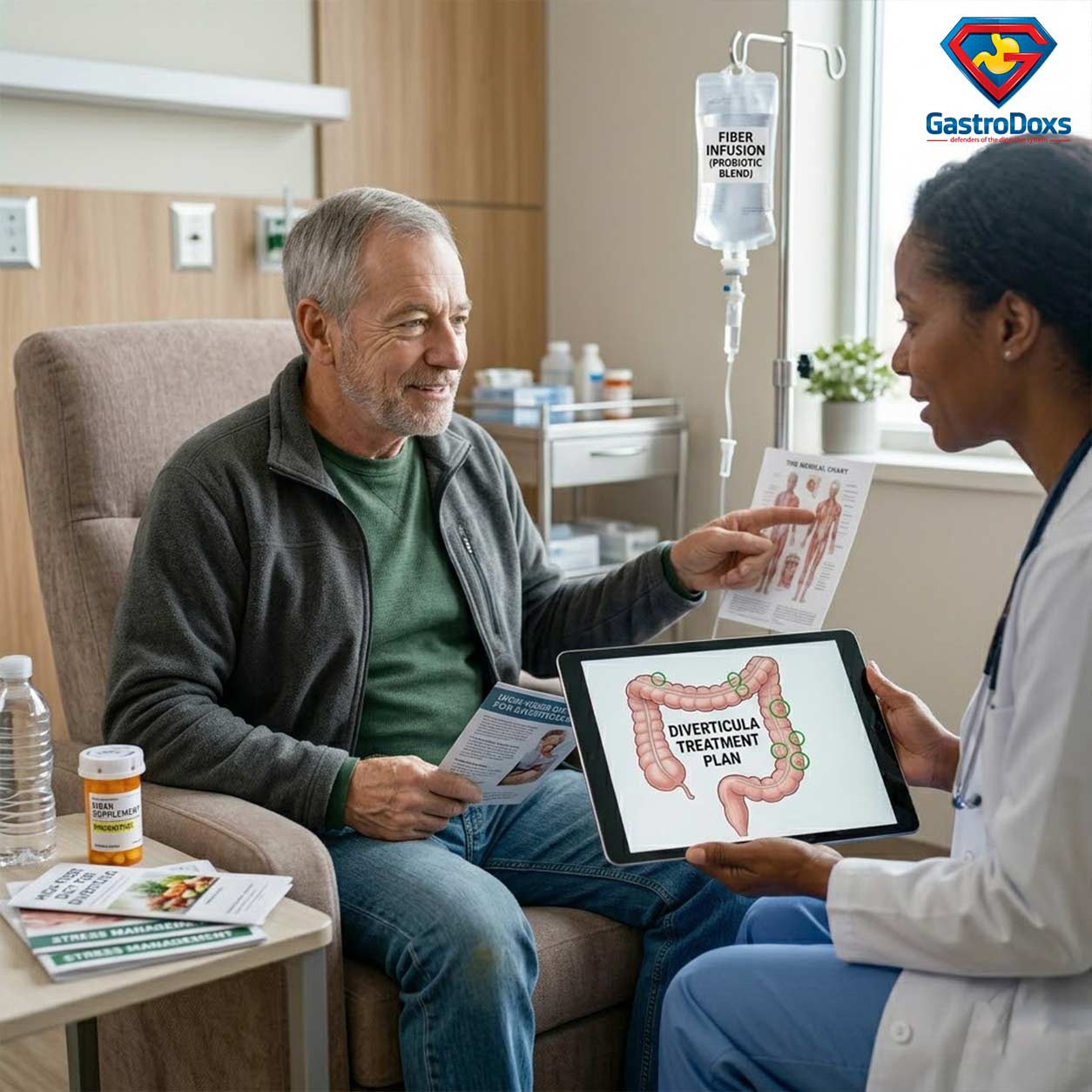
Digestive-focused decision support, records review, testing guidance, and clear next-step planning.
A colon diverticulum is managed differently from an esophageal or small-bowel diverticulum. GastroDoxs helps match care to the location and symptoms.
CT, barium study, endoscopy, colonoscopy, and prior hospital notes can clarify the type of diverticulum and whether it is causing problems.
Pain, fever, bleeding, infection, food sticking, regurgitation, or recurrent symptoms may change the urgency of care.
Patients receive guidance on monitoring, medication, endoscopic evaluation, bowel habits, or referral when needed.
A simple visit path for treatment-stage decision making.
Share CT, MRI, barium study, endoscopy, colonoscopy, or hospital documents that mention the diverticulum.
Your provider reviews whether the pouch involves the colon, esophagus, small intestine, or another area and whether it matches your symptoms.
The visit reviews bleeding, infection, obstruction, swallowing problems, inflammation, or repeated symptoms.
The next step may include monitoring, diet guidance, medication review, endoscopy, colonoscopy, imaging, or referral.
Your guardians. GastroDoxs GutGuardians™ is an elite team of board-certified gastroenterologists - a physician-led defense force of specialists, systems, and solution pathways working together to protect, detect, solve, and defend your digestive health through expert GI evaluation, advanced diagnostic screening, and endoscopic evaluation - commanded from your first concern to your last follow-up, and every critical stage in between.
Your rescue plan. When your diagnosis is confirmed, GastroDoxs GutRescue Mission™ deploys at full force - a gastroenterologist-led intervention plan delivering advanced colonoscopy, upper endoscopy, capsule endoscopy, and precision biologic and medication management across the full range of digestive conditions and complex GI emergencies - fighting for you with everything we have.
Schedule a GI-focused visit when symptoms, reports, or prior findings need clearer next steps.
Surgery or endoscopic treatment is reserved for selected symptomatic, complicated, bleeding, obstructing, or high-risk cases. Many findings are monitored.
A diverticulum may cause pain or digestive symptoms if inflamed, infected, bleeding, obstructing, or located where it traps food or irritates tissue.
Diverticula can cause bleeding. Heavy or repeated rectal bleeding, clots, dizziness, or weakness should be evaluated urgently.
Diverticulum treatment depends on symptoms, test results, risk factors, and prior records. GastroDoxs can help review digestive findings, explain next steps, and coordinate care when needed.
Diverticula can cause bleeding. Heavy or repeated rectal bleeding, clots, dizziness, or weakness should be evaluated urgently.
Diverticulum treatment depends on symptoms, test results, risk factors, and prior records. GastroDoxs can help review digestive findings, explain next steps, and coordinate care when needed.
GastroDoxs evaluates diverticulum findings through location-based symptom review, endoscopy or imaging interpretation, complication screening, and next-step treatment or referral guidance.







A diverticulum finding should be interpreted by location, symptoms, and complication risk rather than treated as a single generic condition.
Patients with diverticulum findings can request GastroDoxs evaluation for symptom review, records review, colonoscopy questions, prevention planning, and treatment guidance.
A gastroenterologist commonly manages diverticular disease, reviews colonoscopy or CT findings, and helps decide when urgent care or surgical referral is needed.
Surgery or endoscopic treatment is reserved for selected symptomatic, complicated, bleeding, obstructing, or high-risk cases. Many findings are monitored.
A diverticulum may stay quiet, but complications can include inflammation, bleeding, abscess, perforation, obstruction, or infection depending on location.
Treatment depends on the problem. Stable symptoms may need bowel and diet guidance, while infection, bleeding, or complications need faster medical evaluation.
A diverticulum may cause pain or digestive symptoms if inflamed, infected, bleeding, obstructing, or located where it traps food or irritates tissue.
CT, colonoscopy, endoscopy, barium study, or other imaging may confirm diverticulum location and whether inflammation, bleeding, or complications are present.
Surgery or endoscopic treatment is reserved for selected symptomatic, complicated, bleeding, obstructing, or high-risk cases. Many findings are monitored.
Infected or inflamed diverticula may cause diverticulitis, with pain, fever, nausea, bowel changes, and sometimes abscess or perforation.
Hospital care may be needed for severe diverticulitis, abscess, perforation, obstruction, heavy bleeding, dehydration, or inability to tolerate fluids.
A diverticulum may stay quiet, but complications can include inflammation, bleeding, abscess, perforation, obstruction, or infection depending on location.
Not always. Many diverticula are monitored, but pain, infection, bleeding, swallowing issues, obstruction, or recurrent symptoms may require treatment.
Treatment depends on the problem. Stable symptoms may need bowel and diet guidance, while infection, bleeding, or complications need faster medical evaluation.
Diverticulum treatment depends on symptoms, test results, risk factors, and prior records. GastroDoxs can help review digestive findings, explain next steps, and coordinate care when needed.
Diverticulum treatment depends on symptoms, test results, risk factors, and prior records. GastroDoxs can help review digestive findings, explain next steps, and coordinate care when needed.
Surgery or endoscopic treatment is reserved for selected symptomatic, complicated, bleeding, obstructing, or high-risk cases. Many findings are monitored.
Severe pain, fever, heavy bleeding, vomiting, trouble swallowing with weight loss, or signs of infection should be evaluated promptly. Take the next step with GastroDoxs for GI-focused evaluation, records review, treatment planning, and coordinated follow-up.