Positive H. pylori Test or Prior Treatment Failure
Patients may need a guideline-concordant treatment choice, review of allergies and prior antibiotics, adherence support, and a properly timed test of cure.

 Medically Reviewed by
Dr. Bharat Pothuri, MD, FACG
| Updated 07-31-2026
Treatment depends on the exact diagnosis. GastroDoxs helps patients connect symptoms, H. pylori results, endoscopy findings, biopsy reports, medicine risks, nutrition concerns, and follow-up needs into a practical plan.
Diseases of the stomach and duodenum include gastritis, gastropathy, H. pylori infection, gastric and duodenal ulcers, duodenitis, celiac injury, gastroparesis, narrowing, polyps, and tumors. GastroDoxs GutRescue Mission™ helps patients move from symptoms or test results to treatment that addresses the confirmed cause and verifies recovery.
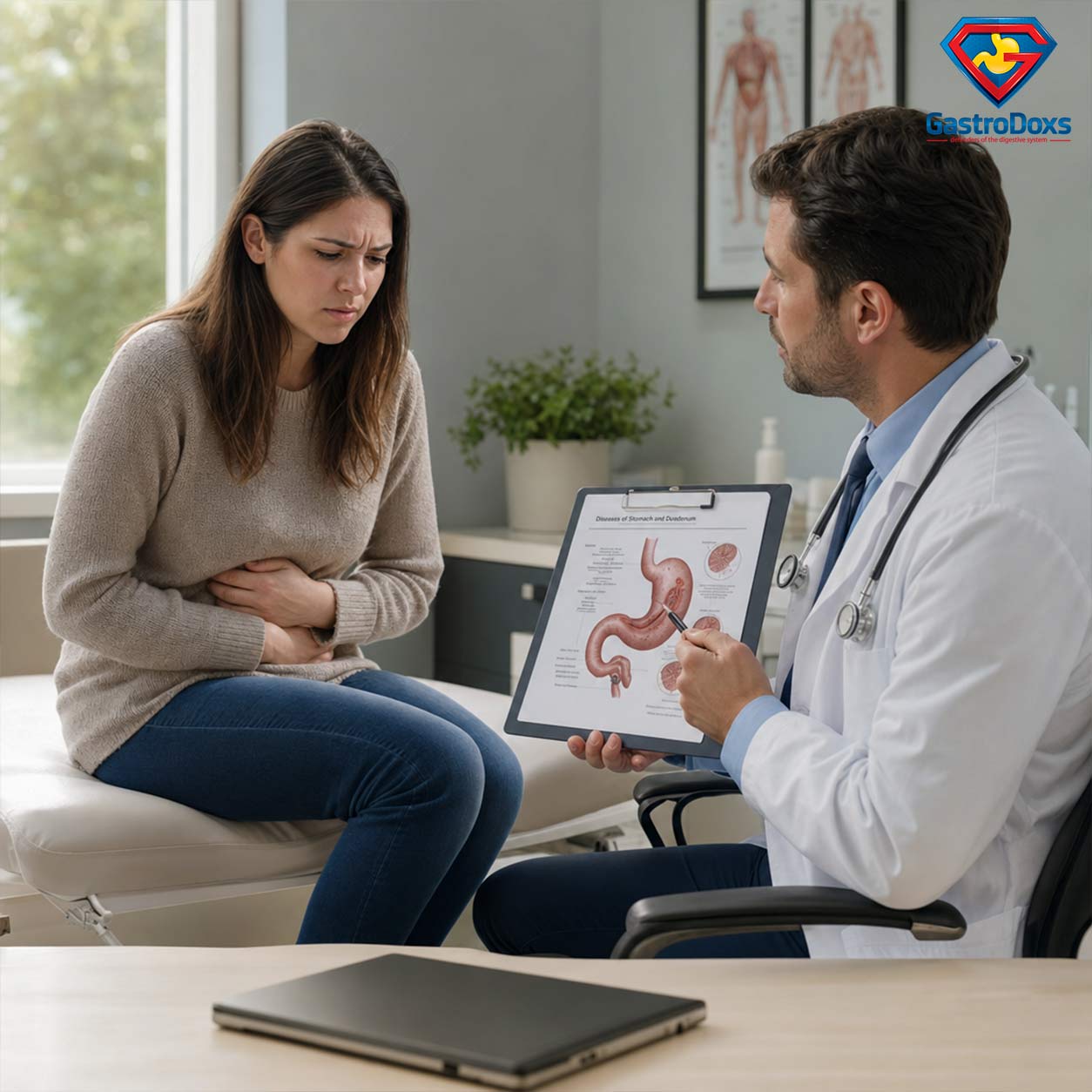
The care plan connects the diagnosis with symptom relief, healing, risk reduction, and the right follow-up interval.
The plan is matched to H. pylori, NSAID injury, gastritis, ulcer disease, duodenitis, celiac disease, gastroparesis, obstruction, pathology findings, or another confirmed cause.
Prior EGD photographs, procedure reports, biopsies, H. pylori results, ulcer location, bleeding findings, and abnormal tissue are reviewed before deciding what should happen next.
Aspirin, NSAIDs, anticoagulants, steroids, supplements, acid medicines, allergies, and prior treatment failures are considered without asking patients to stop prescribed therapy independently.
Care may include H. pylori test of cure, repeat blood counts or iron studies, symptom monitoring, repeat endoscopy when indicated, or surveillance for selected pathology findings.
A focused path from records review to a personalized treatment plan
Describe pain timing, meal effects, nausea, vomiting, early fullness, stool color, appetite, weight change, and whether symptoms are improving or progressing.
Bring H. pylori results, endoscopy and pathology reports, blood counts, iron or vitamin studies, imaging, medication lists, and details of treatments already attempted.
The clinician explains which finding is driving symptoms, what treatment is appropriate, expected benefits, possible side effects, and alternatives.
The plan identifies what to take, what to avoid, when to repeat testing, which warning signs need faster care, and when another specialist or procedure is appropriate.
Your guardians. GastroDoxs GutGuardians™ is our team of gastroenterologists board-certified by the American Board of Internal Medicine (ABIM) - a physician-led defense force of specialists, systems, and solution pathways working together to protect, detect, solve, and defend your digestive health through expert GI evaluation, advanced diagnostic screening, and endoscopic evaluation - commanded from your first concern to your last follow-up, and every critical stage in between.
Your rescue plan. When your diagnosis is confirmed, GastroDoxs GutRescue Mission™ deploys at full force - a gastroenterologist-led intervention plan delivering advanced colonoscopy, upper endoscopy, capsule endoscopy, and precision biologic and medication management across the full range of digestive conditions and complex GI emergencies - fighting for you with everything we have.
Reasons to schedule care after symptoms, testing, or an abnormal procedure result
Patients may need a guideline-concordant treatment choice, review of allergies and prior antibiotics, adherence support, and a properly timed test of cure.
Treatment can address acid injury, H. pylori, NSAID exposure, smoking, alcohol, anemia, bleeding risk, and whether follow-up endoscopy is appropriate.
Patients with suspected gastroparesis, impaired meal tolerance, or possible narrowing may need nutrition planning, medicine review, and selected procedural or surgical coordination.
After urgent bleeding is addressed, GI follow-up can organize healing treatment, iron or vitamin monitoring, pathology review, and surveillance.
Persistent symptoms may reflect an incorrect diagnosis, incomplete H. pylori eradication, ongoing medicine exposure, a motility problem, functional dyspepsia, or another upper digestive disorder.
GastroDoxs evaluates and treats non-emergency stomach and duodenal conditions using diagnosis-directed medication, endoscopy, pathology review, nutrition support, follow-up testing, and specialist coordination.






Routine GastroDoxs appointments are appropriate for persistent upper digestive symptoms, treatment planning, abnormal tests, endoscopy or pathology review, and non-emergency follow-up. Active bleeding, fainting, severe sudden pain, a rigid abdomen, or inability to hydrate requires urgent care.
Testing may include blood counts, iron or vitamin studies, H. pylori breath or stool testing, celiac blood tests, upper endoscopy with biopsy, imaging, or gastric-emptying testing. At a treatment visit, prior results are reviewed before deciding whether another test is needed.
Yes. EGD can identify inflammation, erosions, ulcers, bleeding, retained food, narrowing, polyps, masses, and other structural findings. Biopsy may be needed to identify H. pylori, celiac injury, autoimmune gastritis, metaplasia, dysplasia, or cancer.
Symptoms may include upper-abdominal pain or burning, nausea, vomiting, early fullness, bloating, appetite loss, black stool, anemia, or weight loss. Symptoms overlap, so treatment should follow a confirmed or well-supported diagnosis.
Endoscopy may be considered when symptoms persist despite appropriate initial care or occur with bleeding, anemia, vomiting, early fullness, swallowing difficulty, appetite loss, or weight loss. The decision also depends on age, medicines, and individual risk.
Yes. Inflammation, ulcers, delayed emptying, obstruction, celiac disease, and other disorders can cause these symptoms. Repeated vomiting, dehydration, or inability to keep liquids down needs prompt medical assessment.
Upper endoscopy directly shows an ulcer and can assess bleeding, narrowing, or another lesion. Doctors also test for H. pylori and review NSAID, aspirin, anticoagulant, and smoking exposure because the cause determines treatment.
Yes. H. pylori is a major cause of gastritis and peptic ulcers. When infection is found, treatment should be completed as prescribed and a test of cure should be arranged at the correct interval.
It describes a visible finding, not always the final cause. Biopsy and clinical history may distinguish H. pylori, medicine injury, autoimmune disease, celiac injury, Crohn’s disease, infection, or nonspecific inflammation.
Yes. Ulcers, erosions, vascular lesions, inflammation, or tumors may bleed. Black tarry stool with weakness, dizziness, fainting, or vomiting blood requires urgent evaluation.
Endoscopy identifies the location and depth of injury. Gastritis affects the stomach lining, duodenitis affects the duodenum, and an ulcer is a deeper break. Biopsy and H. pylori testing help identify the cause.
Not always. Biopsy is used when the clinician needs to assess H. pylori, celiac disease, autoimmune gastritis, microscopic inflammation, abnormal tissue, metaplasia, dysplasia, or cancer.
Symptoms can overlap. Reflux affects the esophagus, while upper-abdominal pain, early fullness, nausea, anemia, or black stool may point to an additional stomach or duodenal problem requiring separate treatment.
Warning signs include vomiting blood, black tarry stool, fainting, severe sudden pain, a rigid abdomen, progressive vomiting, swallowing difficulty, weight loss, persistent appetite loss, or unexplained anemia.
Imaging can identify obstruction, perforation, masses, wall thickening, external compression, or nearby gallbladder and pancreatic disease. Small ulcers and surface inflammation may require upper endoscopy.
Yes, when symptoms persist, return after treatment, interfere with eating, or occur with vomiting, anemia, early fullness, weight loss, or abnormal test results. Emergency warning signs should be handled urgently.
Bring your symptom timeline, medicines, H. pylori results, endoscopy and pathology reports, laboratory findings, and treatments already attempted. GastroDoxs can help turn those details into a clear cause-based plan.



