Brookshire Cypress Jersey Village Katy
1.9K Reviews    |    4.7 Star Rating    |    20+ years of experience    |    75k+ Patients Treated
Call

Colon Tumor Treatment

Dr. Bharat Pothuri Medically Reviewed by Dr. Bharat Pothuri, MD, FACG  |  Updated July 17, 2026

A colon tumor finding needs a clear next step, not guesswork. GastroDoxs GutRescue Mission™ helps patients connect symptoms, stool tests, colonoscopy results, biopsy findings, imaging, and referral needs into a structured plan.

A colon tumor may be benign, precancerous, or cancerous, and treatment depends on pathology, size, location, symptoms, and whether cancer has spread. GastroDoxs GutRescue Mission™ supports patients with colonoscopy planning, biopsy-pathology review, polyp or mass evaluation, bleeding/anemia workup, and coordination with surgery or oncology when needed.

ABIM Board-Certified GI Specialists
Most Major Insurance Accepted
Clear Follow-Up Planning

Why Choose GastroDoxs for Colon Tumor Care?

Digestive-focused decision support, records review, testing guidance, and clear next-step planning.

Colonoscopy and Biopsy Expertise

GastroDoxs helps evaluate colon tumors through colonoscopy planning, biopsy review, pathology interpretation, and next-step recommendations.

Cancer-Risk and Staging Clarity

If cancer is suspected or confirmed, the team helps patients understand imaging, labs, pathology, referral timing, and the need for coordinated care.

Symptom-Focused Evaluation

Bleeding, anemia, stool changes, abdominal pain, weight loss, and abnormal stool tests are reviewed in context rather than treated as isolated symptoms.

Referral Coordination

When surgery, oncology, advanced endoscopic removal, or additional imaging is needed, GastroDoxs helps clarify the transition.

What Happens After You Book a Colon Tumor Visit?

A simple visit path for treatment-stage decision making.

  1. Bring Test Results

    Share stool test results, CT scan reports, colonoscopy notes, pathology reports, and lab work such as anemia testing.

  2. Review Tumor Location and Pathology

    Your provider reviews whether the finding appears polyp-like, mass-like, benign, precancerous, or cancer-suspicious.

  3. Plan Colonoscopy or Next Referral

    The plan may include colonoscopy, biopsy, advanced removal, surgical referral, oncology coordination, or additional imaging review.

  4. Prepare for Follow-Up

    You leave with clearer timing, records-transfer guidance, and next-step instructions based on the tumor concern.

GastroDoxs GutGuardians™

Your guardians. GastroDoxs GutGuardians™ is our team of gastroenterologists board-certified by the American Board of Internal Medicine (ABIM) - a physician-led defense force of specialists, systems, and solution pathways working together to protect, detect, solve, and defend your digestive health through expert GI evaluation, advanced diagnostic screening, and endoscopic evaluation - commanded from your first concern to your last follow-up, and every critical stage in between.

GastroDoxs GutRescue Mission™

Your rescue plan. When your diagnosis is confirmed, GastroDoxs GutRescue Mission™ deploys at full force - a gastroenterologist-led intervention plan delivering advanced colonoscopy, upper endoscopy, capsule endoscopy, and precision biologic and medication management across the full range of digestive conditions and complex GI emergencies - fighting for you with everything we have.

Who May Benefit from a Colon Tumor Appointment?

Schedule a GI-focused visit when symptoms, reports, or prior findings need clearer next steps.

Abnormal colonoscopy showing a mass, tumor, or suspicious lesion

Colon Tumor treatment depends on symptoms, test results, risk factors, and prior records. GastroDoxs can help review digestive findings, explain next steps, and coordinate care when needed.

Positive stool test needing colonoscopy

Colon Tumor treatment depends on symptoms, test results, risk factors, and prior records. GastroDoxs can help review digestive findings, explain next steps, and coordinate care when needed.

Blood in stool, anemia, or unexplained fatigue

Colon Tumor treatment depends on symptoms, test results, risk factors, and prior records. GastroDoxs can help review digestive findings, explain next steps, and coordinate care when needed.

New bowel habit changes or narrowing stool pattern

Colon Tumor treatment depends on symptoms, test results, risk factors, and prior records. GastroDoxs can help review digestive findings, explain next steps, and coordinate care when needed.

Unexplained weight loss with digestive symptoms

Possible signs include blood in stool, anemia, bowel habit changes, narrowing stool pattern, abdominal pain, fatigue, unexplained weight loss, or positive stool test.

Patients needing biopsy or pathology-result explanation

Colon Tumor treatment depends on symptoms, test results, risk factors, and prior records. GastroDoxs can help review digestive findings, explain next steps, and coordinate care when needed.

Medical Review & GI Expertise

GastroDoxs supports colon tumor evaluation through colonoscopy, biopsy review, pathology explanation, diagnostic workup, and coordinated referral when cancer or complex lesions are suspected.

Harris County Medical Society
American College of Gastroenterology
American Society for Gastrointestinal Endoscopy
Memorial Hermann
Methodist leading medicine logo
HCA healthcare logo

Colon Tumor Care Access

A colon tumor concern should be evaluated with clear documentation, timely colonoscopy or pathology review, and referral coordination when treatment requires a broader care team.

Cypress Office

Grand Cypress Doctors Pavilion I

22215 Cypresswood Drive, Suite 315
Cypress, TX 77433
Mon – Fri: 7:00 AM – 7:00 PM
Most major insurance accepted
Jersey Village Office

HCA North Cypress — Doctors' Pavilion

10425 Huffmeister Road, Suite 280
Houston, TX 77065
Mon – Fri: 7:00 AM – 7:00 PM
Most major insurance accepted
Katy Office

Memorial Hermann Katy — Medical Plaza 1

23920 Katy Freeway, Suite 510
Katy, TX 77494
Mon – Fri: 7:00 AM – 7:00 PM
Most major insurance accepted
Brookshire Office

North Turnberry Ln

407 N Turnberry Ln
Fulshear, TX 77423
Mon – Fri: 7:00 AM – 7:00 PM
Most major insurance accepted
All locations accept most major insurance — Aetna, BCBS, Cigna, UnitedHealthcare, Medicare. Book an Appointment →

Patient Journey: Before Starting Colon Tumor Treatment

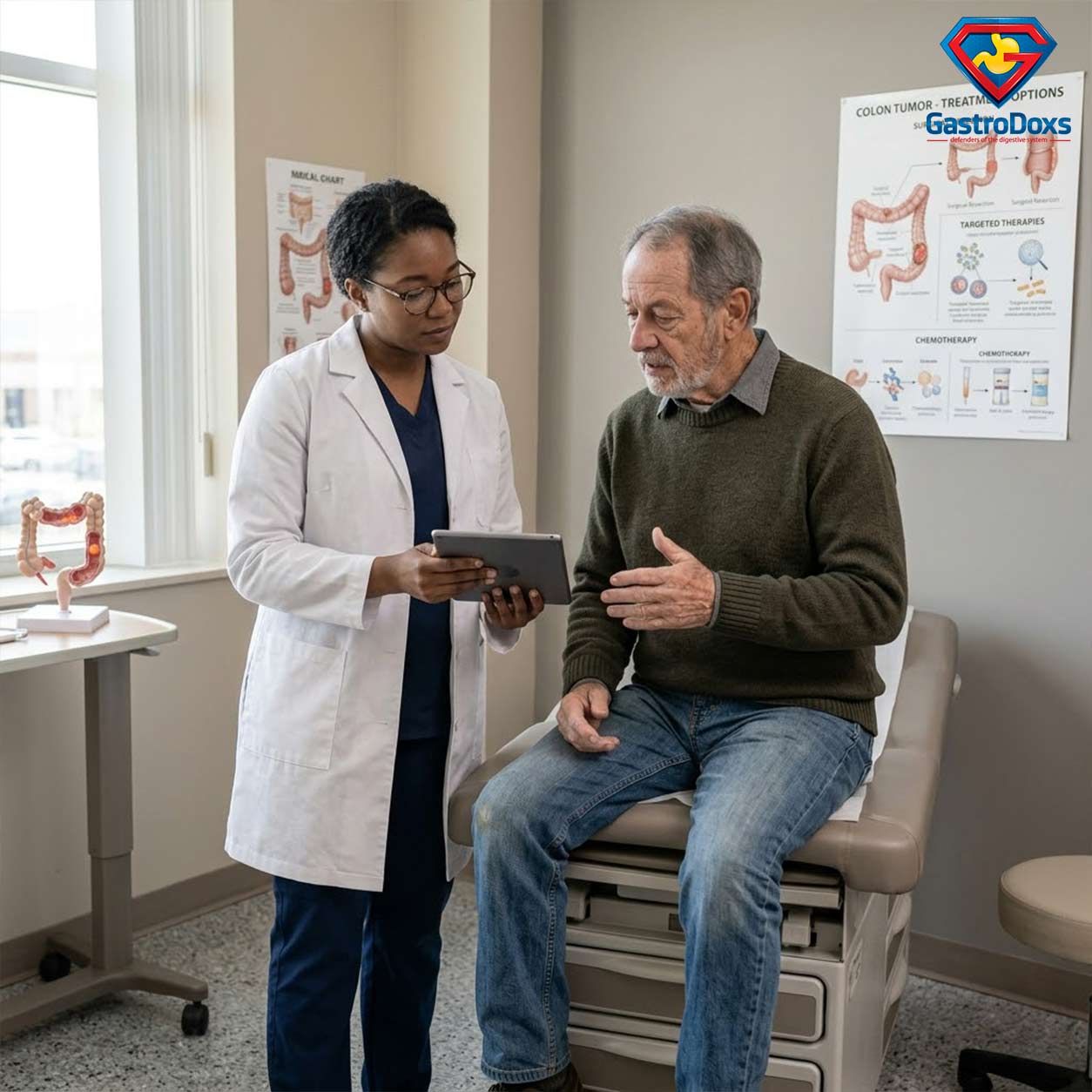
After a colon tumor diagnosis, many patients want to know what treatment may involve, how visits are planned, and what questions to ask before booking care.

This patient journey explains the practical and emotional side of moving from diagnosis to treatment planning with clearer expectations.

Frequently Asked Questions About Colon Tumor Treatment

Patients with a suspected or confirmed colon tumor can request GastroDoxs evaluation for colonoscopy planning, biopsy review, pathology interpretation, and referral coordination.

The best surgical plan depends on tumor location, stage, biopsy, imaging, and overall health. GastroDoxs helps coordinate GI records and referral needs.

A gastroenterologist diagnoses many colon tumors through colonoscopy and biopsy. Treatment may involve colorectal surgery and oncology if cancer is confirmed.

The best surgical plan depends on tumor location, stage, biopsy, imaging, and overall health. GastroDoxs helps coordinate GI records and referral needs.

Some early or polyp-like lesions may be removed endoscopically, but invasive cancer or complex tumors often require surgery and oncology review.

The best surgical plan depends on tumor location, stage, biopsy, imaging, and overall health. GastroDoxs helps coordinate GI records and referral needs.

A colon tumor finding should be evaluated promptly. Heavy bleeding, obstruction symptoms, severe pain, or major weakness needs urgent care.

Colonoscopy with biopsy is a key test. CT imaging, labs, tumor markers, and pathology may help stage confirmed cancer.

A gastroenterologist diagnoses many colon tumors through colonoscopy and biopsy. Treatment may involve colorectal surgery and oncology if cancer is confirmed.

Untreated malignant colon tumors can grow, bleed, obstruct the bowel, and spread to lymph nodes or organs. Timely evaluation improves planning.

Untreated malignant colon tumors can grow, bleed, obstruct the bowel, and spread to lymph nodes or organs. Timely evaluation improves planning.

Survival depends on stage, tumor biology, lymph node involvement, spread, treatment response, and overall health. Your team should review your exact reports.

The best surgical plan depends on tumor location, stage, biopsy, imaging, and overall health. GastroDoxs helps coordinate GI records and referral needs.

No. A colon tumor may be benign, precancerous, or cancerous. Biopsy and pathology are needed to know what it is.

Possible signs include blood in stool, anemia, bowel habit changes, narrowing stool pattern, abdominal pain, fatigue, unexplained weight loss, or positive stool test.

Colonoscopy with biopsy is a key test. CT imaging, labs, tumor markers, and pathology may help stage confirmed cancer.

Book a Colon Tumor Evaluation

Heavy rectal bleeding, black stool, severe weakness, fainting, severe abdominal pain, or rapid weight loss should be handled promptly. Take the next step with GastroDoxs for GI-focused evaluation, records review, treatment planning, and coordinated follow-up.