Newly Diagnosed Budd-Chiari Syndrome
Prompt specialist review can confirm the extent of outflow obstruction and begin the stepwise treatment pathway.

 Medically Reviewed by
Dr. Bharat Pothuri, MD, FACG
| Updated 08-06-2026
Budd-Chiari syndrome blocks blood flow out of the liver and can cause abdominal pain, ascites, liver enlargement, portal hypertension, or liver failure.
Budd-Chiari syndrome is a rare hepatic venous outflow disorder that requires specialist-directed treatment. GastroDoxs GutRescue Mission™ supports rapid diagnosis, anticoagulation coordination, ascites and portal-hypertension care, thrombosis workup, and referral for angioplasty, TIPS, or liver transplantation when needed.
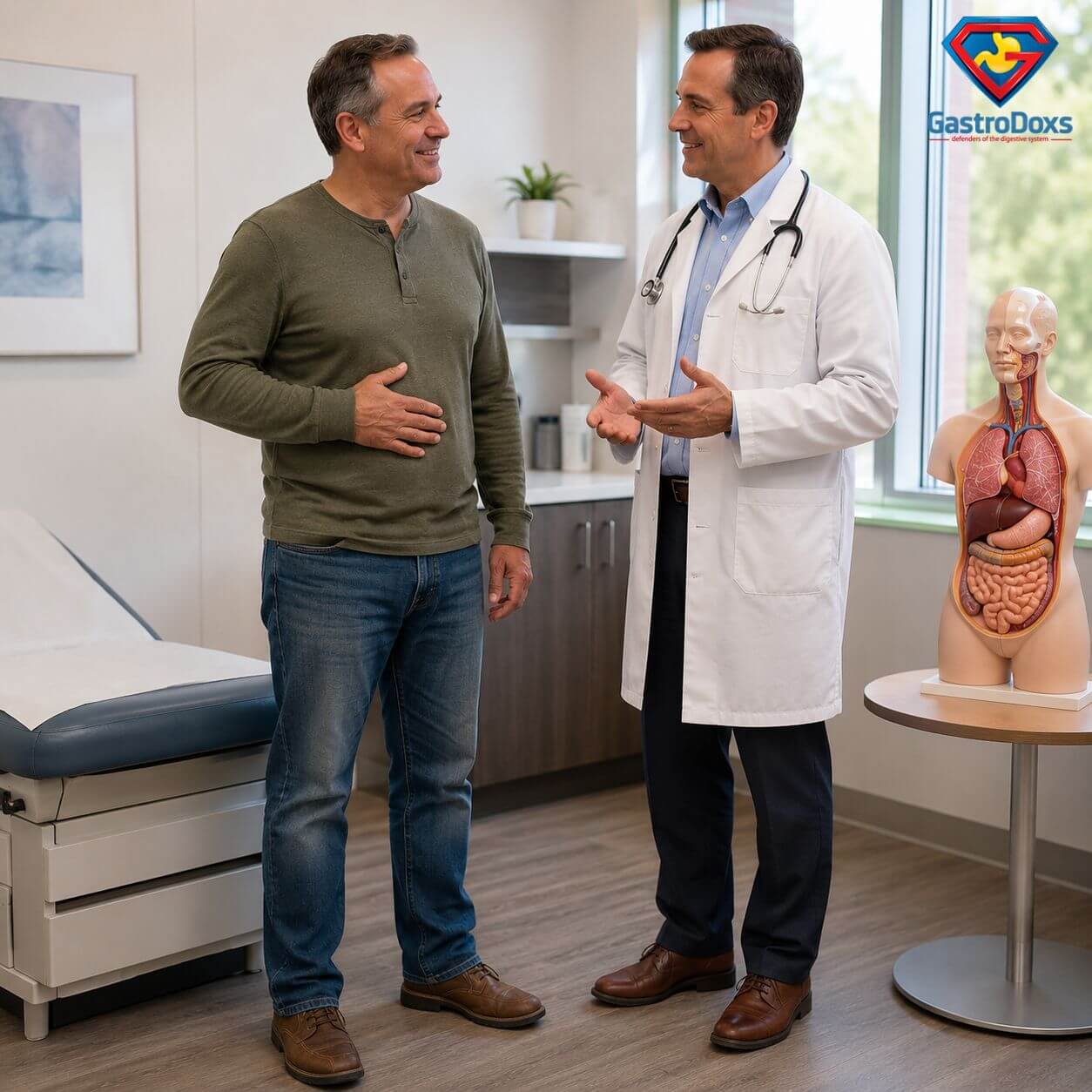
A treatment-stage pathway focused on accurate records review, appropriate testing, specialist coordination, and clear follow-up.
We assess liver function, portal hypertension, ascites, bleeding risk, kidney function, and signs of acute or chronic liver injury.
Care includes review of thrombophilia testing and collaboration with hematology because an underlying prothrombotic condition is common.
Patients who do not improve with medical therapy are referred for hepatic-vein angioplasty, stenting, TIPS, or transplant-center evaluation.
Follow-up addresses anticoagulation safety, varices, ascites, liver nodules, nutrition, and decompensation warning signs.
A structured visit path for treatment planning and next-step clarity.
Provide Doppler ultrasound, CT or MRI, venography, liver biopsy, laboratory results, discharge records, and anticoagulation details.
The specialist evaluates abdominal pain, ascites, jaundice, confusion, bleeding, kidney function, infection, and whether urgent hospital care is needed.
The team reviews clotting disorders, medications, pregnancy-related risks, cancer history, prior angioplasty or TIPS, and current anticoagulation.
Your plan may include medication adjustment, ascites treatment, variceal screening, hematology referral, interventional radiology, or transplant-center coordination.
Your guardians. GastroDoxs GutGuardians™ is our team of gastroenterologists board-certified by the American Board of Internal Medicine (ABIM) - a physician-led defense force of specialists, systems, and solution pathways working together to protect, detect, solve, and defend your digestive health through expert GI evaluation, advanced diagnostic screening, and endoscopic evaluation - commanded from your first concern to your last follow-up, and every critical stage in between.
Your rescue plan. When your diagnosis is confirmed, GastroDoxs GutRescue Mission™ deploys at full force - a gastroenterologist-led intervention plan delivering advanced colonoscopy, upper endoscopy, capsule endoscopy, and precision biologic and medication management across the full range of digestive conditions and complex GI emergencies - fighting for you with everything we have.
Specialist review is useful when the diagnosis, treatment choice, complications, or follow-up plan needs clarification.
Prompt specialist review can confirm the extent of outflow obstruction and begin the stepwise treatment pathway.
Ongoing fluid buildup despite medical care may require paracentesis, TIPS assessment, or another intervention.
The plan balances lifelong clot prevention with variceal, menstrual, procedural, or other bleeding risks.
Patients need surveillance of shunt or vessel patency, liver function, symptoms, and recurrent portal-hypertension complications.
Budd-Chiari syndrome should be managed with hepatology and vascular-liver expertise. GastroDoxs supports anticoagulation coordination, treatment of portal-hypertension complications, evaluation of underlying clotting disorders, and timely referral for angioplasty, TIPS, or transplantation.






GastroDoxs provides hepatology evaluation, portal-hypertension management, anticoagulation coordination, endoscopic variceal care, and referral to vascular-liver and transplant centers.
Seek a hepatologist or gastroenterologist experienced in vascular liver disease who can coordinate with hematology, interventional radiology, and a transplant center.
Diagnosis typically begins with Doppler ultrasound and may include contrast CT, MRI, venography, blood tests, clotting evaluation, and occasionally liver biopsy.
Expect review of abdominal swelling, pain, jaundice, bleeding, imaging, liver and kidney function, anticoagulation, clotting history, and possible causes such as myeloproliferative disease.
Doppler ultrasound is commonly first. CT or MRI can define hepatic-vein and vena-cava obstruction, collateral vessels, liver changes, ascites, and nodules. Venography may be used before intervention.
Treatment usually starts with anticoagulation and management of the underlying cause, followed by angioplasty or stenting, TIPS, and liver transplantation if earlier steps do not control the disease.
Anticoagulants are central. Diuretics may help ascites, and other medicines may treat portal hypertension, infection, or the underlying blood disorder. Medication choices require specialist supervision.
Angioplasty or stenting may be considered for short-segment obstruction. TIPS is considered when congestion, ascites, or liver dysfunction persists despite medical treatment. Transplant is reserved for advanced or refractory disease.
Management may include sodium restriction, diuretics, paracentesis, evaluation for infection, and TIPS when ascites remains difficult to control.
Follow-up includes anticoagulation monitoring, blood counts and liver tests, imaging of hepatic veins or TIPS, ascites and variceal assessment, and surveillance for liver complications.
Bring Doppler, CT and MRI reports or images, venography and biopsy results, blood and thrombophilia tests, hospital records, medication lists, and details of prior clots or procedures.
Yes. Gastroenterology and hepatology care can coordinate anticoagulation, portal-hypertension treatment, endoscopy, imaging surveillance, hematology, interventional radiology, and transplant referral.
Arrange urgent specialist review for new ascites, liver enlargement, right-upper abdominal pain, or abnormal hepatic-vein imaging. Confusion, vomiting blood, black stool, fever, severe pain, or rapid swelling requires emergency care.
Treatment is often long term. Anticoagulation may be indefinite, while recovery and monitoring after angioplasty, TIPS, or transplant vary according to liver function and complications.
Look for a hepatologist with vascular-liver and portal-hypertension experience and access to hematology, interventional radiology, TIPS, and liver transplantation.
Ask about the location and severity of the blockage, underlying cause, anticoagulation plan, bleeding precautions, need for angioplasty or TIPS, transplant thresholds, and monitoring schedule.
Get a coordinated plan for hepatic-vein obstruction, anticoagulation, ascites, portal hypertension, clotting evaluation, and escalation to advanced liver procedures.



