Low-Grade Dysplasia on Biopsy
Confirmed low-grade dysplasia requires a discussion of endoscopic eradication therapy versus structured surveillance.

 Medically Reviewed by
Dr. Bharat Pothuri, MD, FACG
| Updated 08-05-2026
Barrett’s esophagus with dysplasia requires timely confirmation and a coordinated plan for endoscopic treatment, reflux control, and long-term surveillance.
Barrett’s dysplasia care starts by confirming the pathology and defining whether changes are low grade, high grade, indefinite, or associated with a visible lesion. GastroDoxs GutRescue Mission™ organizes expert review, reflux control, advanced endoscopy planning, and surveillance into a clear treatment pathway.
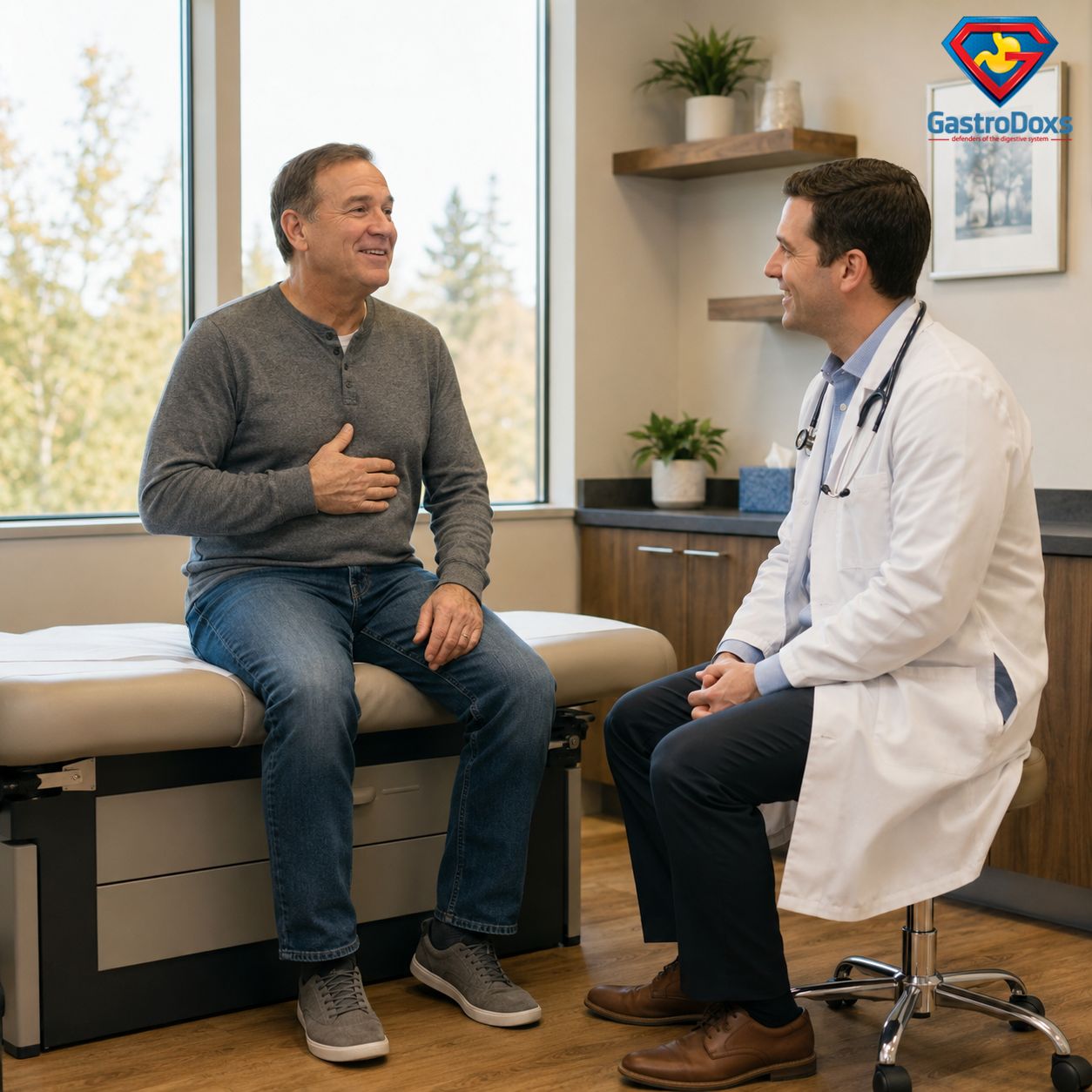
Accurate grading and coordinated endoscopic care are essential before a treatment decision is made.
Low-grade and high-grade dysplasia can be difficult to classify, so outside slides or reports may need review by an experienced gastrointestinal pathologist.
Care planning reviews the Barrett’s segment, inflammation, biopsy protocol, and whether a visible lesion requires endoscopic resection.
When treatment is indicated, GastroDoxs helps plan or coordinate resection, radiofrequency ablation, cryotherapy, and the necessary follow-up.
Acid suppression, reflux management, and scheduled endoscopy remain important even after dysplastic tissue is eradicated.
A treatment-stage pathway built around confirmation, risk level, and endoscopic options.
Provide the EGD report, images, biopsy map, pathology report, medication list, and previous surveillance history.
The clinician determines whether expert pathology review or repeat endoscopy after reflux treatment is needed before therapy.
Visible lesions, flat dysplasia, Barrett’s length, and overall health guide resection, ablation, cryotherapy, surveillance, or referral.
You receive a medication plan, procedure timeline, warning signs, and a written schedule for post-treatment endoscopy.
Your guardians. GastroDoxs GutGuardians™ is our team of gastroenterologists board-certified by the American Board of Internal Medicine (ABIM) - a physician-led defense force of specialists, systems, and solution pathways working together to protect, detect, solve, and defend your digestive health through expert GI evaluation, advanced diagnostic screening, and endoscopic evaluation - commanded from your first concern to your last follow-up, and every critical stage in between.
Your rescue plan. When your diagnosis is confirmed, GastroDoxs GutRescue Mission™ deploys at full force - a gastroenterologist-led intervention plan delivering advanced colonoscopy, upper endoscopy, capsule endoscopy, and precision biologic and medication management across the full range of digestive conditions and complex GI emergencies - fighting for you with everything we have.
Prompt specialist review is appropriate whenever a biopsy shows possible precancerous change.
Confirmed low-grade dysplasia requires a discussion of endoscopic eradication therapy versus structured surveillance.
High-grade dysplasia is an advanced precancerous change that generally requires timely expert endoscopic treatment.
Acid injury can complicate pathology interpretation, so reflux optimization and repeat assessment may be needed.
Patients treated previously still need monitoring for residual, buried, or recurrent Barrett’s tissue and dysplasia.
Confirmed Barrett’s dysplasia should be reviewed promptly because management depends on accurate pathology grading, careful endoscopic inspection, removal of visible lesions, eradication of remaining dysplastic Barrett’s tissue, reflux control, and continued surveillance.






GastroDoxs provides Barrett’s pathology review, reflux management, endoscopic treatment planning, advanced-care coordination, and surveillance follow-up.
Schedule with a gastroenterologist experienced in Barrett’s surveillance and dysplasia management. Evaluation should include review of the original endoscopy, biopsy locations, pathology grade, reflux treatment, and whether confirmation by an expert gastrointestinal pathologist or advanced endoscopist is needed.
Treatment begins by confirming the grade of dysplasia and controlling reflux. Visible abnormalities may be removed endoscopically, and remaining dysplastic Barrett’s tissue may be treated with endoscopic eradication therapy such as radiofrequency ablation or cryotherapy. Ongoing surveillance is required after treatment.
Expect a detailed review of reflux history, swallowing symptoms, family history, smoking history, prior endoscopy images and reports, biopsy results, medication use, and pathology interpretation. The clinician will discuss whether repeat high-quality endoscopy, expert pathology review, treatment, or surveillance is the safest next step.
Yes. Barrett’s esophagus with confirmed dysplasia generally requires structured endoscopic management and follow-up. The interval depends on whether dysplasia is low grade or high grade, whether endoscopic eradication therapy was completed, and whether residual or recurrent Barrett’s tissue is found.
The plan is based on expert pathology confirmation, dysplasia grade, visible lesions, Barrett’s segment length, inflammation, overall health, procedure risk, and patient preferences. Visible lesions are typically addressed first, followed by eradication of remaining dysplastic Barrett’s tissue when appropriate.
Options include endoscopic mucosal resection or endoscopic submucosal dissection for selected visible lesions, radiofrequency ablation for flat dysplastic Barrett’s tissue, and cryotherapy in selected situations. The exact sequence depends on endoscopic findings and specialist expertise.
Follow the endoscopy team’s fasting and medication instructions, arrange an adult driver if sedation is used, and ask about blood thinners, diabetes medicines, and GLP-1 medicines. Bring prior reports and pathology results so the endoscopist can plan careful inspection and targeted or protocol biopsies.
Monitoring continues after successful therapy because Barrett’s tissue or dysplasia can recur. The schedule is based on the original dysplasia grade, treatment response, and current guidelines. Your gastroenterologist should give you a written surveillance timeline after each procedure.
A gastroenterologist can confirm the diagnosis, arrange appropriate endoscopic therapy, maintain acid suppression, manage reflux, support smoking cessation and healthy weight goals, and keep surveillance on schedule. These steps address modifiable risks and help detect recurrent or progressive disease early.
Confirmed dysplasia can progress toward esophageal adenocarcinoma, with high-grade dysplasia carrying greater concern. The timing is unpredictable, so delaying specialist review may allow a treatable precancerous change to advance. Dysplasia should be confirmed and managed promptly.
Ask whether the pathology was confirmed by an expert, whether any visible lesion needs resection, which eradication method is recommended, who will perform it, how many sessions may be needed, what complications to watch for, how reflux will be treated, and what surveillance schedule will follow.
Treatment often occurs over multiple endoscopy sessions separated by healing intervals, followed by surveillance. The total timeline varies with dysplasia grade, visible lesions, Barrett’s length, healing, and response to therapy. Long-term endoscopic follow-up remains important even after eradication.
Yes. Reflux control and Barrett’s management are closely linked. A gastroenterologist can optimize proton pump inhibitor therapy, address persistent reflux symptoms, evaluate a hiatal hernia, coordinate endoscopic eradication therapy, and maintain the required surveillance plan.
Schedule promptly after any biopsy report showing indefinite, low-grade, or high-grade dysplasia. Also seek evaluation for progressive trouble swallowing, painful swallowing, food sticking, unexplained weight loss, vomiting blood, black stools, anemia, or persistent reflux despite treatment.
Look for experience with Barrett’s surveillance protocols, expert pathology coordination, high-definition endoscopy, endoscopic resection and ablation pathways, and long-term post-treatment surveillance. Ask whether advanced therapy is performed directly or coordinated with a specialized center.
Get expert review of your pathology, endoscopy findings, reflux treatment, endoscopic therapy options, and the surveillance plan needed after treatment.



