Adenocarcinoma found on biopsy or pathology report
Adenocarcinoma treatment depends on symptoms, test results, risk factors, and prior records. GastroDoxs can help review digestive findings, explain next steps, and coordinate care when needed.

 Medically Reviewed by
Dr. Bharat Pothuri, MD, FACG
| Updated July 17, 2026
Adenocarcinoma care depends on where the cancer started, biopsy results, stage, and spread risk. GastroDoxs GutRescue Mission™ helps patients with GI-related adenocarcinoma concerns move from abnormal symptoms or reports to clearer testing, records review, and referral planning.
Adenocarcinoma can develop in gland-forming tissue, including the colon, stomach, pancreas, esophagus, and other organs. GastroDoxs GutRescue Mission™ supports treatment-stage decision making when patients need GI symptom review, endoscopy or colonoscopy planning, biopsy-pathology interpretation, staging-record review, and coordinated referral to oncology or surgery when needed.
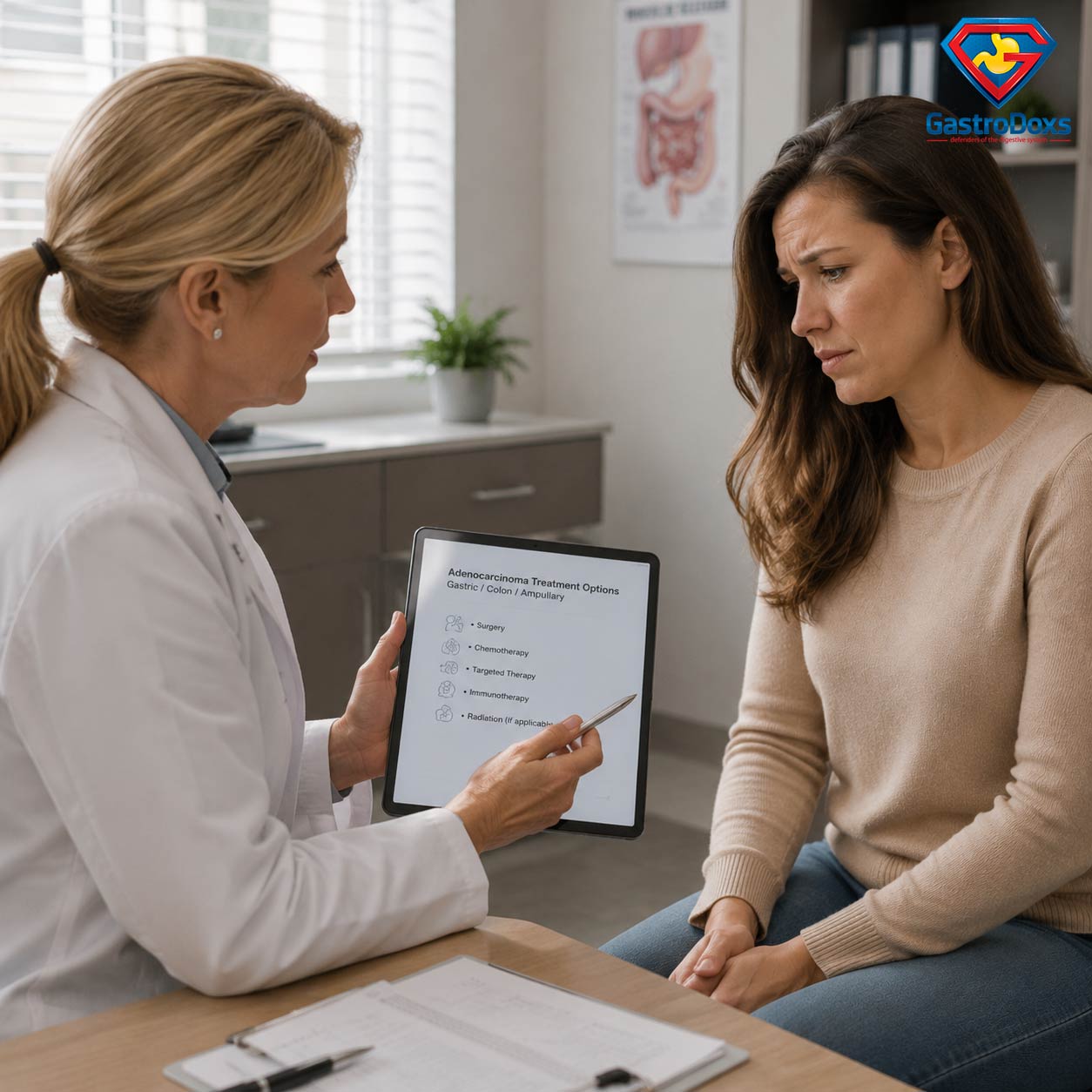
Digestive-focused decision support, records review, testing guidance, and clear next-step planning.
The team helps connect symptoms, endoscopy findings, colonoscopy results, biopsy reports, imaging, and referral needs so patients understand what should happen next.
GI-related adenocarcinoma decisions often depend on pathology, tumor location, procedure reports, CT/MRI findings, labs, and prior specialist notes. GastroDoxs can help review and organize those records.
Upper endoscopy, colonoscopy, EUS, ERCP referral planning, or additional testing may be considered depending on whether the concern involves the stomach, colon, pancreas, bile duct, or esophagus.
When cancer care requires oncology, surgery, radiation oncology, or advanced endoscopy, GastroDoxs helps patients understand the referral path and what information should move with them.
A simple visit path for treatment-stage decision making.
Bring the biopsy report, imaging results, procedure notes, lab work, and referral paperwork so the visit begins with the most important facts.
Your provider reviews whether the concern involves the colon, stomach, esophagus, pancreas, bile duct, liver, or another digestive area.
The team explains whether additional endoscopy, colonoscopy, EUS-style evaluation, imaging review, pathology review, oncology referral, or surgery coordination may be appropriate.
The visit focuses on the safest next action, including records transfer, procedure planning, referral coordination, follow-up timing, and warning signs.
Your guardians. GastroDoxs GutGuardians™ is our team of gastroenterologists board-certified by the American Board of Internal Medicine (ABIM) - a physician-led defense force of specialists, systems, and solution pathways working together to protect, detect, solve, and defend your digestive health through expert GI evaluation, advanced diagnostic screening, and endoscopic evaluation - commanded from your first concern to your last follow-up, and every critical stage in between.
Your rescue plan. When your diagnosis is confirmed, GastroDoxs GutRescue Mission™ deploys at full force - a gastroenterologist-led intervention plan delivering advanced colonoscopy, upper endoscopy, capsule endoscopy, and precision biologic and medication management across the full range of digestive conditions and complex GI emergencies - fighting for you with everything we have.
Schedule a GI-focused visit when symptoms, reports, or prior findings need clearer next steps.
Adenocarcinoma treatment depends on symptoms, test results, risk factors, and prior records. GastroDoxs can help review digestive findings, explain next steps, and coordinate care when needed.
Adenocarcinoma treatment depends on symptoms, test results, risk factors, and prior records. GastroDoxs can help review digestive findings, explain next steps, and coordinate care when needed.
Adenocarcinoma treatment depends on symptoms, test results, risk factors, and prior records. GastroDoxs can help review digestive findings, explain next steps, and coordinate care when needed.
Adenocarcinoma treatment depends on symptoms, test results, risk factors, and prior records. GastroDoxs can help review digestive findings, explain next steps, and coordinate care when needed.
Surgery may be used when adenocarcinoma is localized or resectable, but the decision depends on tumor location, stage, imaging, biopsy findings, and overall health.
Adenocarcinoma treatment depends on symptoms, test results, risk factors, and prior records. GastroDoxs can help review digestive findings, explain next steps, and coordinate care when needed.
GastroDoxs supports GI-related adenocarcinoma care with symptom evaluation, endoscopy and colonoscopy decision-making, pathology-record review, and coordination with oncology or surgical specialists when cancer treatment is needed.





For suspected or confirmed adenocarcinoma involving the digestive tract, GastroDoxs helps patients understand GI testing, biopsy results, staging records, referral timing, and follow-up responsibilities.
Patients with GI-related adenocarcinoma concerns can request GastroDoxs evaluation for symptom review, biopsy-record review, endoscopy or colonoscopy planning, and referral coordination.
Adenocarcinoma treatment often involves oncology and surgery. A gastroenterologist helps when the cancer involves the colon, stomach, esophagus, pancreas, bile duct, or GI symptoms.
Treatment may include surgery, chemotherapy, radiation, targeted therapy, immunotherapy, endoscopic therapy, or clinical trials depending on tumor type, biomarkers, stage, and specialist recommendations.
Surgery may be used when adenocarcinoma is localized or resectable, but the decision depends on tumor location, stage, imaging, biopsy findings, and overall health.
Some early adenocarcinomas can be treated successfully, but outcomes depend on location, stage, biology, and response to treatment. Early diagnosis improves options.
Survival rates vary widely by organ site, stage, grade, spread, and treatment response. Your care team should explain prognosis using your specific reports.
Chemotherapy may be recommended before or after surgery, or for advanced disease, depending on stage, tumor type, lymph node involvement, and oncology guidance.
A biopsy examined by pathology confirms adenocarcinoma. Imaging, endoscopy, colonoscopy, EUS, blood tests, and molecular testing may help stage and guide treatment.
Adenocarcinoma treatment often involves oncology and surgery. A gastroenterologist helps when the cancer involves the colon, stomach, esophagus, pancreas, bile duct, or GI symptoms.
Untreated adenocarcinoma may grow, invade nearby tissue, spread to lymph nodes or organs, and reduce treatment options. Prompt specialist care is important.
The best setting depends on cancer location, stage, and treatment needs. GastroDoxs can help organize GI records before oncology, surgery, or second-opinion review.
Untreated adenocarcinoma may grow, invade nearby tissue, spread to lymph nodes or organs, and reduce treatment options. Prompt specialist care is important.
Warning signs vary by organ but may include bleeding, anemia, weight loss, appetite changes, abdominal pain, swallowing trouble, jaundice, bowel changes, or persistent indigestion.
Radiation may be used for selected adenocarcinomas, often with surgery or chemotherapy, depending on tumor site, stage, and oncology recommendations.
A confirmed adenocarcinoma diagnosis should be reviewed promptly so staging, referrals, treatment planning, and symptom control are not delayed.
Cancer symptoms, biopsy-confirmed cancer, heavy bleeding, jaundice, severe pain, or rapid weight loss should be reviewed promptly. Emergency symptoms should be handled through urgent or emergency care first. Take the next step with GastroDoxs for GI-focused evaluation, records review, treatment planning, and coordinated follow-up.