



★★★★★
"The GastroDoxs team explained that treatment depended on whether my abdominal lump came from a hernia, enlarged organ, cyst, stool buildup, inflammation, or another condition."

 Medically Reviewed by
Dr. Bharat Pothuri, MD, FACG
| Updated July 29, 2026
Medically Reviewed by
Dr. Bharat Pothuri, MD, FACG
| Updated July 29, 2026
Get a structured plan to identify whether an abdominal lump comes from the abdominal wall, an organ, a cyst, inflammation, stool, a vascular problem, or a tumor.
A palpable abdominal mass is a finding, not a diagnosis, and treatment depends on the structure involved. GastroDoxs GutRescue Mission™ connects location, texture, growth, symptoms, imaging, biopsy questions, specialist referral, and urgent warning signs into a clear next-step plan.
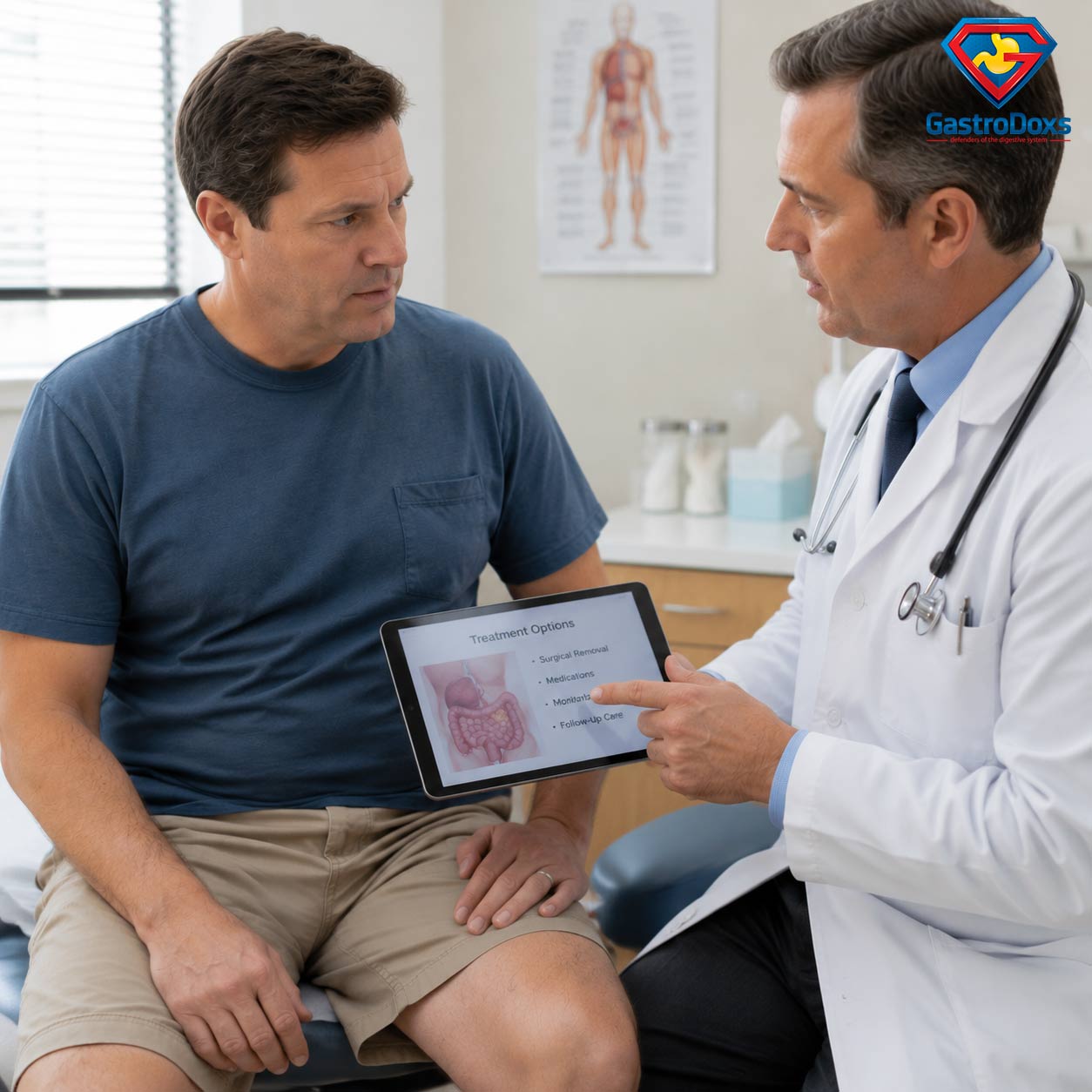
The team reviews location, mobility, tenderness, pulsation, growth, position changes, and imaging to identify the organ or abdominal-wall structure involved.
Ultrasound, CT, MRI, vascular studies, prior surgery reports, endoscopy, colonoscopy, and pathology are reviewed to prevent duplicated or mismatched care.
Hernia, vascular, pelvic, urinary, inflammatory, surgical, or oncologic findings are directed to the appropriate specialist.
Pulsation with pain, severe worsening symptoms, obstruction, bleeding, fever, or fainting are separated from findings suitable for scheduled evaluation.
The goal is to identify the source before treatment and avoid both unnecessary procedures and unsafe delay.
Your guardians. GastroDoxs GutGuardians™ is an elite team of board-certified gastroenterologists - a physician-led defense force of specialists, systems, and solution pathways working together to protect, detect, solve, and defend your digestive health through expert GI evaluation, advanced diagnostic screening, and endoscopic evaluation - commanded from your first concern to your last follow-up, and every critical stage in between.
Your rescue plan. When your diagnosis is confirmed, GastroDoxs GutRescue Mission™ deploys at full force - a gastroenterologist-led intervention plan delivering advanced colonoscopy, upper endoscopy, capsule endoscopy, and precision biologic and medication management across the full range of digestive conditions and complex GI emergencies - fighting for you with everything we have.
Note whether it changes with standing, coughing, eating, bowel movements, urination, or lying down.
Send ultrasound, CT, MRI, endoscopy, colonoscopy, surgery, pathology, laboratory, and hospital records before the visit.
The clinician maps the size, borders, consistency, movement, tenderness, pulsation, and relationship to the abdominal wall or organs.
The next step may be observation, repeat imaging, medication, drainage, endoscopy, biopsy, surgery, vascular care, or another referral.
GastroDoxs evaluates abdominal masses that may involve the digestive tract, liver, pancreas, spleen, abdominal wall, or inflammatory disease and coordinates imaging, endoscopy, biopsy, surgery, or specialty referral.







A scheduled GI evaluation is appropriate for stable, non-emergency masses with digestive symptoms, unclear imaging, or a possible gastrointestinal source. Severe pain, pulsation, fainting, obstruction, or a trapped hernia requires emergency care.
A palpable abdominal mass is a lump, swelling, enlarged organ, or abnormal area that can be felt through the abdominal wall. It is a finding rather than a final diagnosis, so treatment begins by identifying the structure involved.
Possible causes include hernias, cysts, enlarged organs, stool buildup, inflammatory masses, abscesses, vascular abnormalities, uterine or ovarian growths, and benign or malignant tumors. Location, texture, growth, symptoms, and imaging help narrow the cause.
No. Many abdominal masses are benign, including hernias, cysts, fibroids, lipomas, enlarged organs, and inflammatory collections. A new or unexplained mass still needs examination and often imaging because touch alone cannot determine whether it is harmless.
A mass may cause no symptoms or may occur with pain, pressure, fullness, constipation, diarrhea, nausea, vomiting, fever, urinary changes, bleeding, reduced appetite, or unexplained weight change.
Diagnosis starts with history and physical examination. Ultrasound, CT, or MRI may define the size, organ of origin, solid or fluid content, blood flow, and effect on surrounding structures. Endoscopy, colonoscopy, vascular testing, or biopsy may follow.
Testing may include CBC, liver and kidney tests, urinalysis, pregnancy testing when relevant, ultrasound, CT, MRI, angiographic imaging, upper endoscopy, colonoscopy, pelvic imaging, or tissue sampling. The safest sequence depends on the suspected source.
Yes. Hernias, cysts, lipomas, fibroids, stool loading, enlarged organs, and some inflammatory conditions can produce benign lumps. Monitoring or treatment still depends on symptoms, growth, imaging findings, and the risk of complications.
Concern is higher when a mass is growing, hard, fixed, pulsating, very tender, associated with severe pain, fever, vomiting, obstruction, bleeding, jaundice, anemia, or unexplained weight loss.
Yes. A hernia may feel like a bulge that becomes more noticeable with standing, coughing, lifting, or straining and may flatten when lying down. A painful bulge that cannot be reduced needs urgent evaluation.
A soft, mobile, or reducible mass may contain fat, fluid, bowel, or herniated tissue. A hard or fixed mass can reflect scar, calcification, organ enlargement, inflammation, or a tumor. Texture alone cannot establish the diagnosis.
Some larger or superficial tumors can be felt through the abdominal wall, while many cannot. Imaging and sometimes biopsy are needed to distinguish a tumor from a cyst, enlarged organ, hernia, inflammatory mass, or stool.
Treatment is cause-specific. Options may include observation with repeat imaging, constipation treatment, antibiotics and drainage for infection, hernia repair, organ-disease treatment, endoscopic therapy, surgery, or oncology care.
Yes. Crohn disease, diverticulitis, bowel obstruction, stool impaction, pancreatic cysts, liver enlargement, and gastrointestinal tumors can create a palpable finding. GI evaluation may include imaging, endoscopy, colonoscopy, or referral.
Ultrasound is useful for superficial, fluid-filled, pelvic, liver, gallbladder, and vascular questions. CT gives a broad view of abdominal organs and complications. MRI provides detailed soft-tissue characterization when needed.
A temporary bulge from gas, stool, muscle spasm, or a reducible hernia may change, but disappearance does not confirm the cause. New, recurring, growing, or symptomatic masses should be assessed.
Arrange medical evaluation for any new, unexplained, growing, recurring, or symptomatic abdominal lump. Seek emergency care for a painful pulsating mass, sudden severe pain, fainting, persistent vomiting, a rigid abdomen, or a painful nonreducible hernia.
Get a clear plan for examination, imaging review, biopsy questions, treatment, and referral. Seek emergency care for a painful pulsating mass, fainting, severe pain, persistent vomiting, obstruction symptoms, or a trapped hernia.