Hematemesis (vomiting blood) is a serious symptom that indicates gastrointestinal (GI) bleeding, which may arise from several sources such as peptic ulcers, esophageal varices, and gastritis. One significant risk factor for GI bleeding and hematemesis is alcohol consumption.
Excessive alcohol intake can lead to a range of GI issues that contribute to vomiting blood. Alcohol causes irritation and inflammation in the stomach lining and can also increase the risk of esophageal varices, which are enlarged veins in the esophagus. When these varices rupture, they can lead to massive bleeding, which may manifest as hematemesis.
In this blog, we'll explore how alcohol consumption is linked to gastrointestinal bleeding and hematemesis, the specific risks associated with heavy drinking, and strategies to prevent alcohol-related GI bleeding.
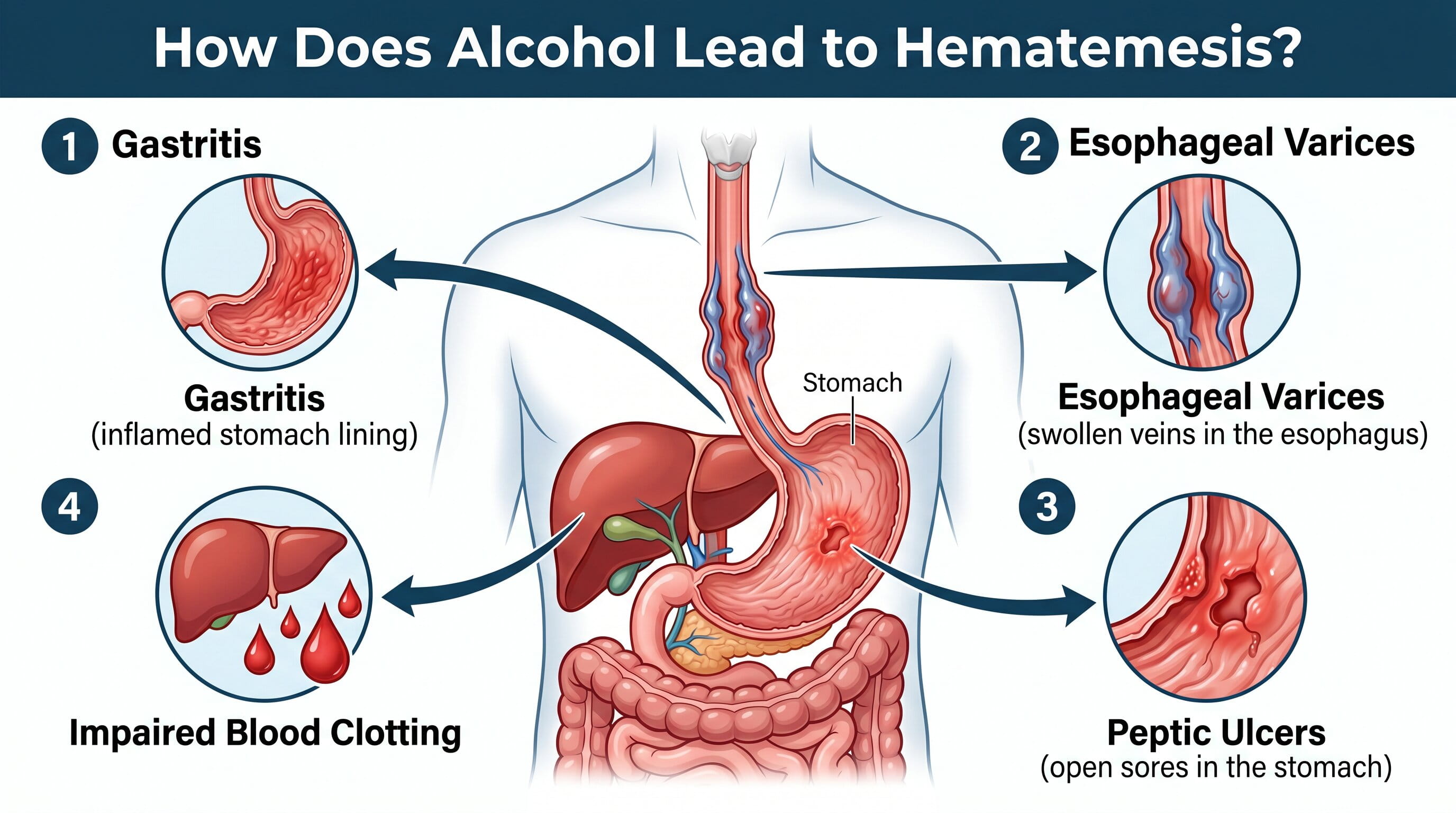
How Does Alcohol Lead to Hematemesis?
Alcohol affects the gastrointestinal system in multiple ways, all of which can increase the risk of bleeding and vomiting blood. Here's how alcohol contributes to hematemesis:
1. Irritation of the Stomach Lining (Gastritis)
Gastritis is the inflammation of the stomach lining, and it is one of the most common alcohol-related causes of hematemesis. Alcohol irritates the mucosal lining of the stomach, increasing acid production and making the stomach more susceptible to damage. Chronic alcohol use can lead to erosive gastritis, where the lining of the stomach becomes worn down, leading to ulcers, bleeding, and the potential for vomiting blood.
2. Increased Risk of Esophageal Varices
Esophageal varices are swollen veins in the lower esophagus that are prone to rupture. They often occur as a result of portal hypertension, a condition commonly associated with liver cirrhosis, which is linked to chronic alcohol use. When these varices rupture, they can cause massive bleeding, resulting in vomiting blood (hematemesis).
3. Risk of Peptic Ulcers
Excessive alcohol intake can irritate the stomach lining and increase the production of stomach acid, which may lead to the development of peptic ulcers. These ulcers can bleed if they erode into blood vessels, resulting in hematemesis. Alcohol can also interfere with the healing of existing ulcers, prolonging bleeding.
4. Impaired Blood Clotting
Heavy alcohol consumption can also impair blood clotting by affecting the liver's ability to produce clotting factors. This makes it more difficult for the body to stop bleeding, exacerbating the effects of gastrointestinal bleeding and increasing the likelihood of hematemesis.
Signs and Symptoms of Alcohol-Related Hematemesis
Alcohol-related hematemesis often comes with additional symptoms due to the underlying conditions causing the bleeding. Common signs include:
- Bright red blood in vomit: Indicates active, fresh bleeding from the upper GI tract.
- Coffee-ground appearance: Dark, partially digested blood from the stomach or duodenum.
- Abdominal pain or discomfort: Often associated with gastritis or ulcers.
- Fatigue and dizziness: Due to blood loss.
- Low blood pressure and rapid heart rate: Signs of shock, which can occur if the bleeding is significant.
Risks of Alcohol-Related Hematemesis
The connection between alcohol consumption and hematemesis underscores the serious risks associated with excessive drinking. These risks include:
- Increased Bleeding from Varices: Heavy drinking can cause liver damage, leading to portal hypertension and the development of esophageal varices. These varices are fragile and can rupture easily, leading to life-threatening bleeding.
- Chronic Gastritis and Ulcers: Alcohol irritates the stomach lining, causing long-term damage that can result in gastritis and peptic ulcers, both of which can lead to hematemesis.
- Liver Disease: Chronic alcohol use is a leading cause of liver disease, which can exacerbate bleeding disorders and increase the risk of GI bleeding.
- Impaired Coagulation: Alcohol interferes with the liver's ability to produce clotting factors, increasing the difficulty of controlling bleeding once it begins.
Diagnosis of Alcohol-Related Hematemesis
When a patient presents with hematemesis and a history of alcohol use, doctors will perform several tests to determine the underlying cause of bleeding:
1. Endoscopy (Upper GI)
Endoscopy is the gold standard for diagnosing the cause of hematemesis. It allows doctors to directly visualize the esophagus, stomach, and duodenum to identify bleeding sources such as ulcers, varices, or tumors. For alcohol-related bleeding, endoscopy can confirm the presence of esophageal varices or gastritis.
2. Blood Tests
Blood tests are essential for assessing the extent of blood loss and evaluating liver function. A complete blood count (CBC) will check for anemia due to blood loss, and liver function tests will help assess the damage caused by alcohol consumption.
3. Imaging Studies
In some cases, imaging studies like a CT scan may be used to assess the liver and esophagus, particularly if a patient has liver disease or cirrhosis. These studies help detect complications like varices or liver damage.
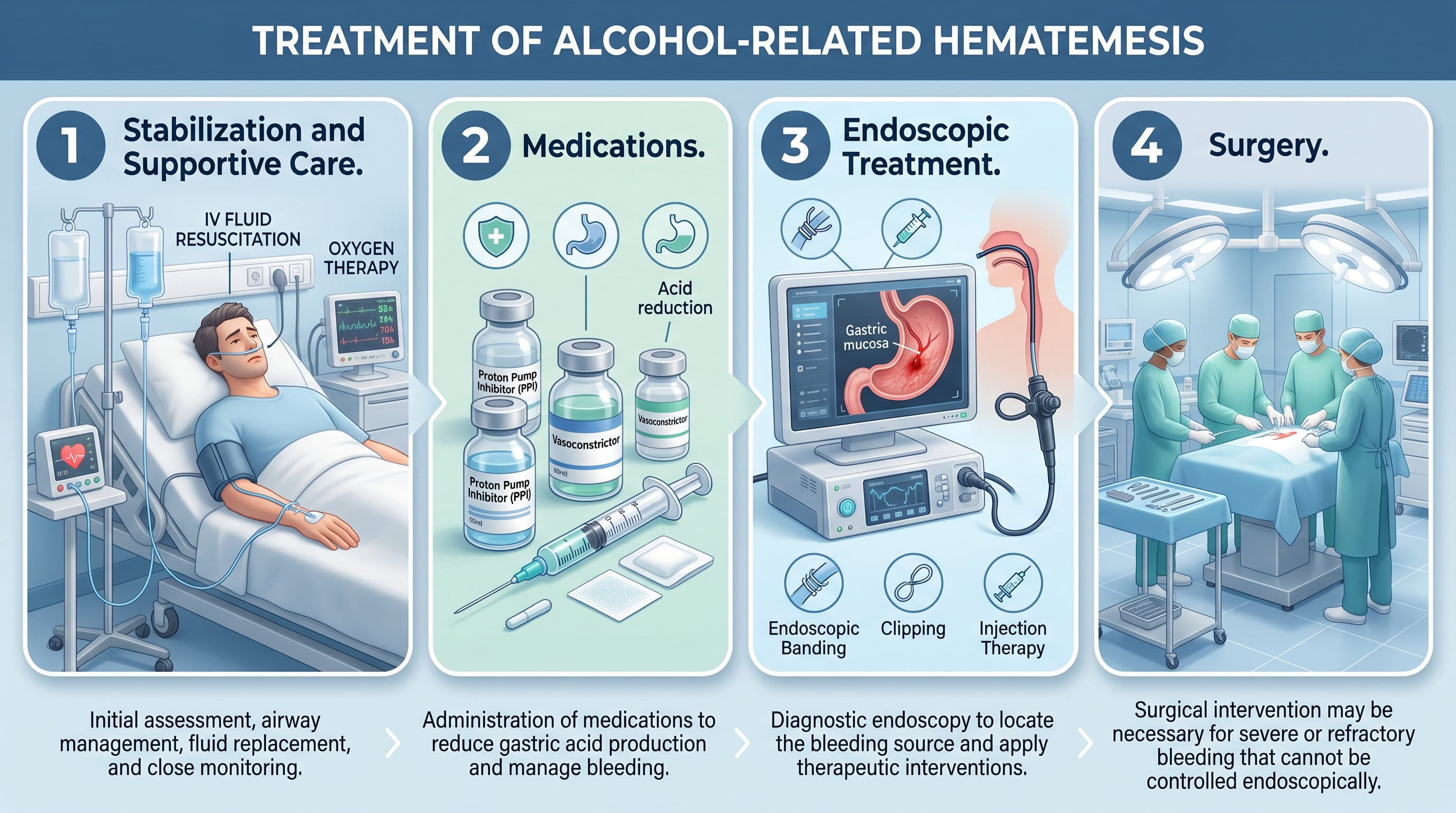
Treatment of Alcohol-Related Hematemesis
Treatment for alcohol-related hematemesis focuses on both stopping the bleeding and addressing the underlying cause. Here's how doctors typically approach the treatment:
1. Stabilization and Supportive Care
In emergency cases, patients will be stabilized with IV fluids and possibly blood transfusions to replace lost blood. Monitoring vital signs, including heart rate and blood pressure, is essential to prevent shock.
2. Medications
- Proton Pump Inhibitors (PPIs): Used to reduce stomach acid and promote healing of ulcers or gastritis.
- Beta-blockers: Prescribed to patients with esophageal varices to reduce portal hypertension and lower the risk of rupture.
- Antibiotics: If an H. pylori infection is present, antibiotics will be used to treat the infection and prevent further damage to the stomach lining.
3. Endoscopic Treatment
- Banding or Sclerotherapy: Used to treat esophageal varices by reducing the bleeding risk and stabilizing the patient.
- Cauterization or Injection: Used to treat ulcers or tears in the stomach or esophagus that are causing bleeding.
4. Surgery
In severe cases where bleeding cannot be controlled with endoscopic treatment, surgery may be required. This is particularly true for patients with liver disease or large, recurrent ulcers.
Preventing Alcohol-Related Hematemesis
The best way to prevent alcohol-related hematemesis is to reduce or eliminate alcohol consumption. Here are some additional tips to protect your GI health:
- Limit alcohol consumption: Drink in moderation, following the guidelines for safe alcohol use.
- Quit smoking: Smoking worsens the effects of alcohol on the stomach and liver.
- Manage stress: Stress can exacerbate the symptoms of ulcers and gastritis.
- Seek medical help for liver disease: If you have liver disease, work closely with your healthcare provider to manage it and avoid complications.
Conclusion
Alcohol consumption is a significant risk factor for hematemesis, particularly when it leads to gastritis, peptic ulcers, or esophageal varices. While hematemesis caused by alcohol-related conditions is treatable, prevention through responsible drinking and early intervention is key to maintaining GI health and avoiding life-threatening complications.