
Is Mucus in Stool Normal in Ulcerative Colitis? Insights for Cypress, TX Residents
The bowel naturally makes mucus, and ulcerative colitis can make it more noticeable. A new or increasing amount deserves context, especially if blood, diarrhea, urgency, or pain appears.
Key Takeaways
- Small amounts of mucus can be normal; mucus is also a recognized ulcerative colitis symptom.
- A change from your baseline matters more than mucus color alone.
- Infection and other bowel problems can resemble a flare and may require stool testing.
- Continue prescribed maintenance treatment unless your clinician directs a change.
- Heavy bleeding, fainting, severe abdominal pain, or significant dehydration needs urgent assessment.
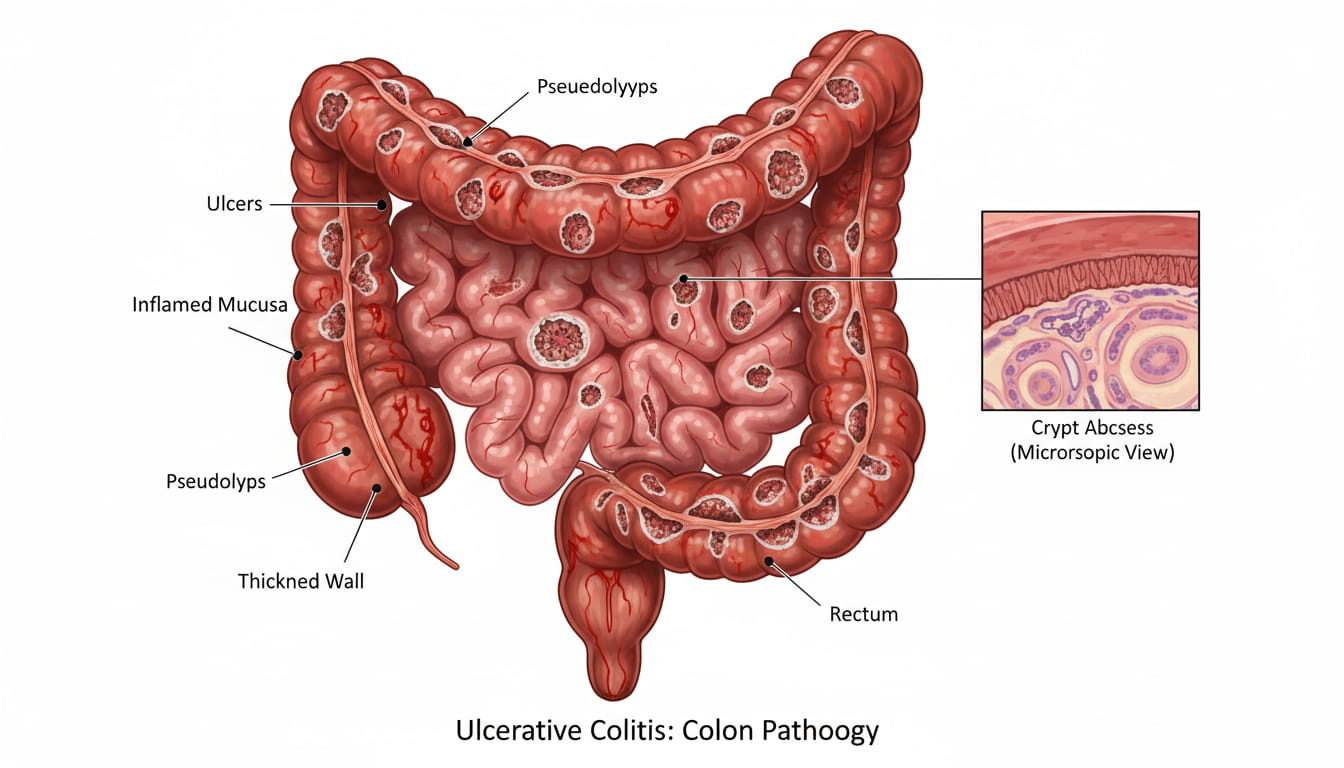

Why mucus appears in stool
Mucus helps lubricate and protect the intestinal lining. You may occasionally notice a small clear or whitish amount even without disease. With ulcerative colitis, inflammation in the colon or rectum can produce more visible mucus, sometimes with an urgent feeling that you still need to pass stool.
For someone in Cypress living with UC, the useful question is whether this is a new pattern. Mucus by itself does not prove active inflammation, and the absence of mucus does not confirm remission. Start with the mucus in stool overview and compare today's symptoms with your usual bowel habits.
Changes that help put mucus in context
Amount
Note whether mucus is occasional, repeatedly coats stool, or passes by itself. There is no reliable home quantity cutoff for diagnosing a flare.
Blood
Pink, red, or maroon material may represent bleeding. Report suspected blood, even when the amount looks small.
Frequency
More bowel movements than usual, especially repeated loose stools, adds information that mucus alone cannot provide.
Urgency
A sudden need to reach a bathroom or an empty-bowel urge can occur with inflammation near the rectum.
Nighttime symptoms
Waking from sleep to pass stool is a useful change to report rather than dismiss as a meal reaction.
General health
Fever, appetite loss, fatigue, and unintentional weight loss can change how quickly assessment is needed.
Recent exposures
Travel, sick contacts, antibiotics, or an interrupted prescription can help explain a sudden change.
Trend
A short symptom log is more useful than repeatedly inspecting one bowel movement for a specific mucus color.
What medical guidance says about mucus and UC
NIDDK: Symptoms and causes of ulcerative colitis lists mucus among possible UC symptoms. Its presence must be interpreted with bleeding, diarrhea, pain, and urgency; no single visible feature establishes how much inflammation is present.
NIDDK: Diagnosis of ulcerative colitis describes blood tests, stool studies, and endoscopy with biopsies when appropriate. A person with an established diagnosis may still need testing for infection when symptoms change.
How a clinician checks a possible flare
Expect questions about how many stools you pass, whether you see blood, and whether symptoms wake you. Bring the names and doses of UC medicines, any missed doses, and the date the change began.
Testing may include a blood count for anemia, inflammation markers, and stool testing for infection or intestinal inflammation. Fecal calprotectin can help assess bowel inflammation, but it is not a diagnosis by itself.
Your clinician may recommend flexible sigmoidoscopy or colonoscopy if the results will clarify disease activity or change treatment. Not every episode of visible mucus requires an immediate scope.
Different patterns, different next steps
Mucus can also occur with constipation, infection, or other rectal conditions. Having UC does not mean every bowel change comes from the same cause.
Brief, isolated mucus
If you otherwise feel well and your bowel pattern is unchanged, record the episode and watch for persistence. Follow your existing UC action plan.
Increasing mucus and urgency
Contact your GI team about a sustained change, especially with diarrhea, bleeding, or nighttime stools. Ask whether stool testing is needed.
Mucus with severe illness
Heavy bleeding, severe pain, faintness, or inability to drink requires urgent assessment instead of waiting for routine follow-up.
Managing mucus by treating its cause
Treatment targets the reason mucus has increased. For active UC, the plan depends on severity, location of inflammation, and previous response. The NIDDK treatment overview explains the role of medicines that control inflammation.
Do not start leftover steroids, increase prescription doses, or stop maintenance therapy on your own. Ask about hydration, food tolerance, and a follow-up date. A restrictive diet or supplement cannot reliably establish or treat a flare.
Warning signs that should not wait
New severe abdominal pain or swelling, substantial rectal bleeding, or marked weakness can signal a complication. Seek emergency care when symptoms are severe.
Contact your care team promptly for a rising number of bloody stools, fever, dizziness, or reduced urination. Use the urgency advice in your personal UC plan.
- Heavy bleeding, clots, or fainting
- Severe pain, swelling, fever, or confusion
- Repeated diarrhea with dehydration or rapid deterioration
What to record before your appointment
- Record the first day mucus increased and how often it occurs.
- Count stools and note blood, urgency, nighttime stools, and temperature.
- List medicines, missed doses, recent antibiotics, and possible infection exposures.
- Ask when to send a stool sample and when to expect results.
Frequently Asked Questions
Can mucus be normal even when I have ulcerative colitis?
Yes. The bowel normally produces mucus. A small occasional amount may not mean a flare, but a new persistent change should be discussed.
Does more mucus mean my UC is getting worse?
It can accompany inflammation, but mucus alone cannot measure severity. Stool frequency, bleeding, symptoms, and selected tests provide a more reliable picture.
Can mucus continue while ulcerative colitis is in remission?
It can. Persistent symptoms deserve review because inflammation, constipation, infection, and other causes may overlap. Symptoms alone do not prove or exclude remission.
Is yellow mucus proof of an infection?
No. Color cannot reliably distinguish infection from UC or other causes. Fever, exposures, diarrhea, and stool testing help guide that decision.
Should I stop my UC medicine if mucus appears?
Do not stop prescribed maintenance medicine without guidance. Contact your clinician if symptoms change or you think a medicine is causing a problem.
Can constipation cause mucus in someone with UC?
Yes. Constipation and rectal irritation may contribute. A clinician can assess the pattern before recommending a laxative or changing UC treatment.
Do I need a colonoscopy every time I see mucus?
Usually the first step is a symptom review and selected testing. Endoscopy is used when needed to clarify inflammation, complications, or another diagnosis.
What should I tell GastroDoxs about a mucus change?
Share the onset, bowel frequency, blood, urgency, pain, fever, nighttime symptoms, and current medicines. Mention dehydration or heavy bleeding immediately.
Medical References
- NIDDK: Symptoms and causes of ulcerative colitis
- NIDDK: Diagnosis of ulcerative colitis
- NIDDK: Treatment for ulcerative colitis
This article provides general education for readers in Cypress, TX. It does not replace an individual diagnosis or treatment plan. GastroDoxs sees patients ages 18 and older. In the United States, call 911 for a medical emergency.

Discuss a Change in Your UC Symptoms in Cypress
Bring your symptom log and medicine list to GastroDoxs. A focused review can help determine whether you need monitoring, stool testing, or a treatment reassessment.