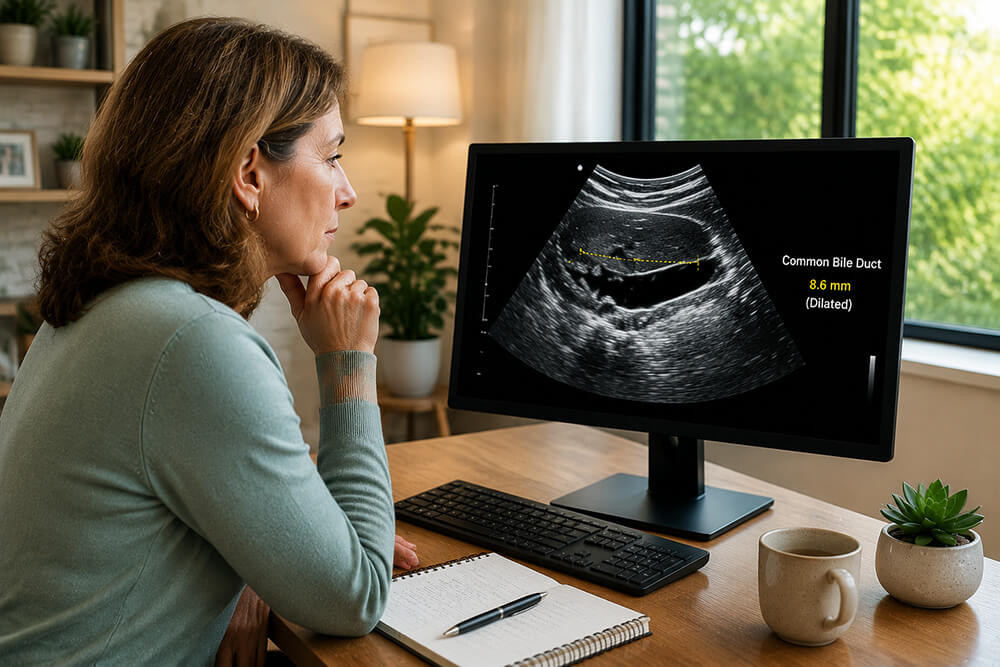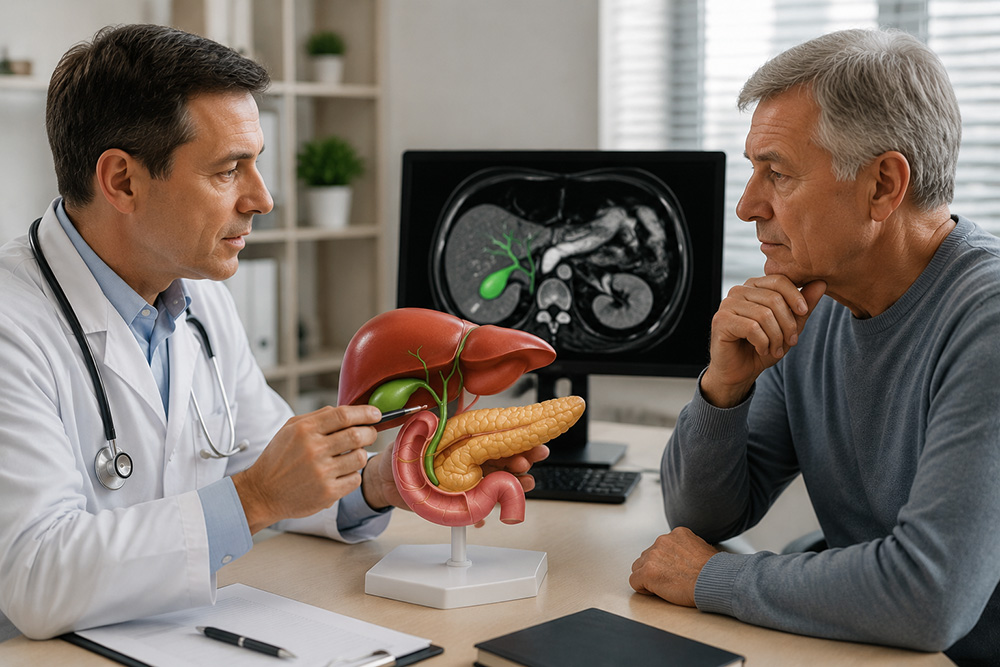
The common bile duct runs close to the pancreas and drains near the pancreatic duct. Pancreatitis, stones, ampullary narrowing, strictures, or pancreatic lesions can affect bile flow. Dilation of both the bile duct and pancreatic duct may require careful evaluation.
Key Takeaways
- A dilated common bile duct is an imaging finding, not a final diagnosis.
- Symptoms, liver blood tests, age, gallbladder history, and imaging details decide how concerning the finding is.
- Gallstones, strictures, inflammation, pancreatitis, and less commonly tumors can block bile flow and cause duct widening.
- MRCP and EUS are commonly used for diagnosis; ERCP is usually reserved when treatment may be needed.
Why the bile duct and pancreas are connected
The common bile duct and pancreatic duct drain near the same area of the small intestine. Because of this shared anatomy, problems near the pancreas, ampulla, or lower bile duct can affect both bile and pancreatic drainage.
Pancreatitis and CBD dilation
Gallstones can block the lower bile duct and trigger pancreatitis. Pancreatic inflammation can also cause swelling near the bile duct. This is why upper abdominal pain, vomiting, and high pancreatic enzymes may change the evaluation.
The "double duct" concern
If both the common bile duct and pancreatic duct are dilated, doctors may look carefully for obstruction near the ampulla or pancreas. This does not prove cancer, but it is a finding that usually deserves thoughtful evaluation.
Symptoms that matter
Symptoms that raise concern include jaundice, dark urine, pale stools, itching, worsening upper abdominal pain, back pain, weight loss, appetite loss, new diabetes symptoms, or pancreatitis.
Tests used for pancreas-related questions
CT, MRCP, MRI, and EUS may be used to evaluate the pancreas and bile ducts. EUS is especially helpful for close-up evaluation of the pancreas, lower bile duct, and ampullary area.
Patient takeaway
CBD dilation does not automatically mean a pancreas problem. But when imaging mentions the pancreas, pancreatic duct, ampulla, or a possible mass, follow-up should be timely and guided by a gastroenterologist.